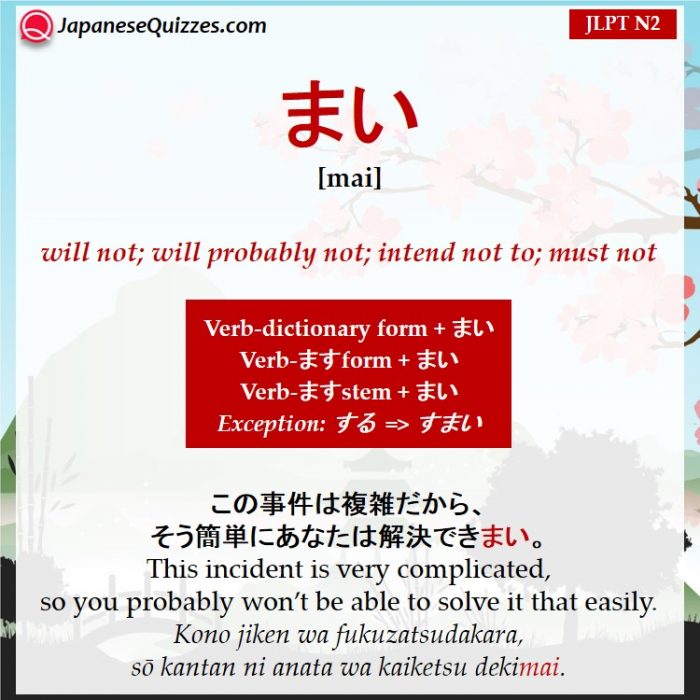
will not; will probably not; intend not to; must not

Formations
Verb-dictionary form + まい
Verb-ますform + まい
Verb-ますstem + まい
Exception: する => すまい
Examples
弟にわたしの気持ちはわかるまい。
Otōto ni watashi no kimochi wa wakarumai.
My younger brother won’t understand my feelings.
新しい駅を建設するのに反対する人はあるまい。
Atarashī eki o kensetsu suru no ni hantai suru hito waarumai.
Perhaps no one’s against the decision to build a new station.
社長は何も言うまいと決心しているようだ。
Shachō wa nani mo iumai to kesshin shite iru yōda.
It seems that the president has determined not to say anything.
あの重要な交渉での私のミスを部長は決して許すまい。
Ano jūyōna kōshō de no watashi no misu o buchō wa kesshite yurusumai.
The department director never forgives my mistakes in that important negotiation.
この事件は複雑だから、そう簡単にあなたは解決できまい。
Kono jiken wa fukuzatsudakara, sō kantan ni anata wa kaiketsu dekimai.
This incident is very complicated so, you probably won’t be able to solve it that easily.
自動運転技術の普及により、ほとんどの人が車の運転の仕方を学ばなくなる日も遠くあるまい。
Jidō unten gijutsu no fukyū ni yori, hotondo no hito ga kuruma no unten no shikata o manabanaku naru hi mo tōku arumai.
Because of the spread of automatic driving technology, it will not be long before most people don’t learn how to drive a car.
See also


Formations
Verb-casual + ことは + Verb-casual + が
いadj + ことは + (same) いadj + が
なadj + ことは + (same) なadj + が
Examples
このレストランの食事はおいしいことはおいしいが、値段が高すぎる。
Kono resutoran no syokuji wa oishii koto wa oishii ga, nedan ga takasugiru.
Although the food in this restaurant is delicious, the prices are too high.
家賃が安いことは安いが、交通の便がよくない。
Yachin ga yasui koto wa yasui ga, koutsuu no ben ga yokunai.
Although the rent is cheap, it’s not easily accessible by public transportation.
この薬は効くことは効くが、飲むと眠くなってしまう。
Kono kusuri wa kiku koto wa kiku ga, nomu to nemuku natte shimau.
Although this medicine works, I feel sleepy when I take it.
彼女のことは好きなことは好きだが、結婚したいほどではない。
Kanojo no koto wa suki na koto wa suki da ga, kekkon shitai hodo dewanai.
Although I love her, it’s not like I want to marry her.
レポートは最後まで書いたことは書いたが、まだ足りない部分がある。
Repooto wa saigo made kaita koto wa kaita ga, mada tarinai bubun ga aru.
Although I wrote my report to the end, there are still parts that need to be edited.
See also
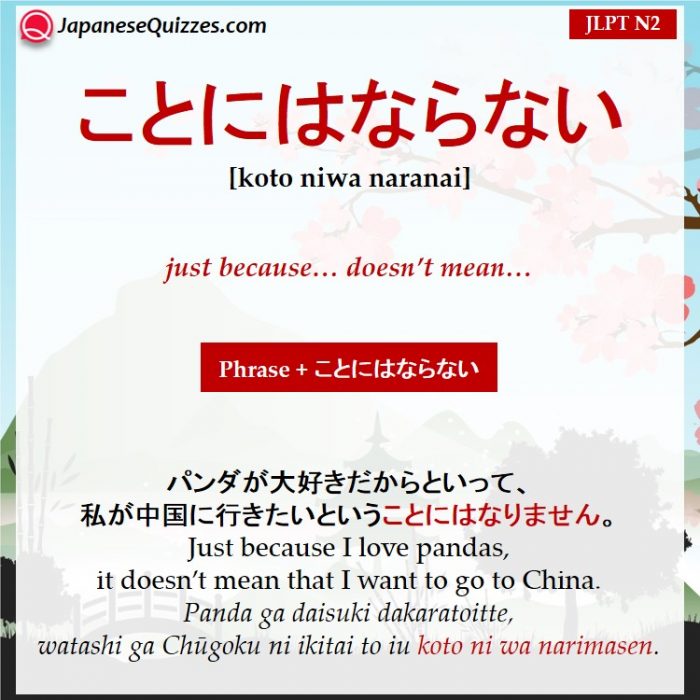
just because… doesn’t mean…

Formations
Phrase + ことにはならない
Examples
パンダが大好きだからといって、私が中国に行きたいということにはならない / ことにはなりません。
Panda ga daisuki dakaratoitte, watashi ga Chūgoku ni ikitai to iu koto ni wa naranai/ kotoni wa narimasen.
Just because I love pandas, it doesn’t mean that I want to go to China.
彼女は貧しいからといって不幸だということにはならない / ことにはなりません。
Kanojo wa mazushīkara to itte fukōda to iu koto ni wa naranai/ kotoni wa narimasen.
Just because she’s poor, it doesn’t follow that she’s unhappy.
彼が絵が好きだからといって絵がうまいということにはならない / ことにはなりません。
Kare ga e ga suki dakaratoitte e ga umai to iu koto ni wa naranai/ kotoni wa narimasen.
Because he likes painting, it does not follow that he paints well.
会話上手であることは日本語がうまいということにはならない / ことにはなりません。
Kaiwa jōzudearu koto wa nihongo ga umai to iu koto ni wa naranai/ kotoni wa narimasen.
Being a good conversationalist does not just mean being a good speaker of Japanese.
本やインターネットの資料を写しただけではレポートを書いたことにはならない / ことにはなりません。
Hon ya intānetto no shiryō o utsushita dakede wa repōto o kaita koto ni wa naranai/ kotoni wa narimasen.
Just because you copied text from the internet or books doesn’t mean that you’ve written a report.
一度嫌なことがあったからといって、あきらめなければならないことにはならない / ことにはなりません。
Ichido iyana koto ga attakara to itte, akiramenakereba naranai koto ni wa naranai/ kotoni wa narimasen.
Just because you’ve had one bad experience doesn’t mean that you have to give up.
See also
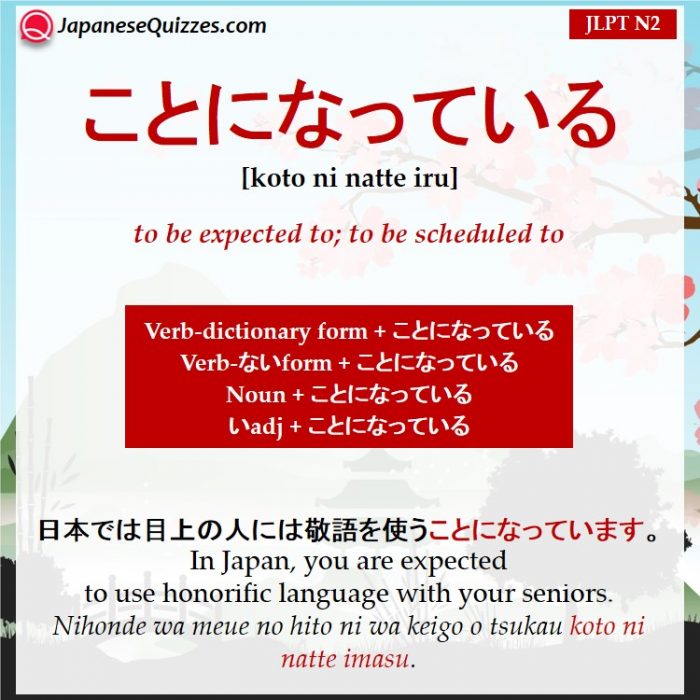
to be expected to; to be scheduled to

Formations
Verb-dictionary form + ことになっている
Verb-ないform + ことになっている
Noun + ことになっている
いadj + ことになっている
Examples
彼は明日、旅行から帰って来ることになっている / 帰ってくることになっています。
Kare wa ashita ryokō kara kaette kuru koto ni natte iru/ kaette kuru koto ni natte imasu.
He is scheduled to come back from his trip tomorrow.
この宿題は月曜日に提出することになっている / 提出することになっています。
Kono shukudai wa getsuyōbi ni teishutsu suru koto ni natte iru/ teishutsu suru koto ni natte imasu.
This assignment is to be handed in on Monday.
彼女のお母さんは来週大きな手術を受けることになっている / 受けることになっています。
Kanojo no okāsan wa raishū ōkina shujutsu o ukeru koto ni natte iru/ ukeru koto ni natte imasu.
Her mother is going to undergo a major operation next week.
60点以上が合格ということになっている / 合格ということになっています。
Rokujyutten ijō ga gōkaku to iu koto ni natte iru/ gōkaku to iu koto ni natte imasu.
A passing grade has been decided to be above 60 points.
日本では目上の人には敬語を使うことになっている / 使うことになっています。
Nihonde wa meue no hito ni wa keigo o tsukau koto ni natte iru/ tsukau koto ni natte imasu.
In Japan, you are expected to use honorific language with your seniors.
この劇場では酒は飲めないことになっている / 飲めないことになっています。
Kono gekijōde wa sake wa nomenai koto ni natte iru/ nomenai koto ni natte imasu.
We are not supposed to drink in this theater.
See also
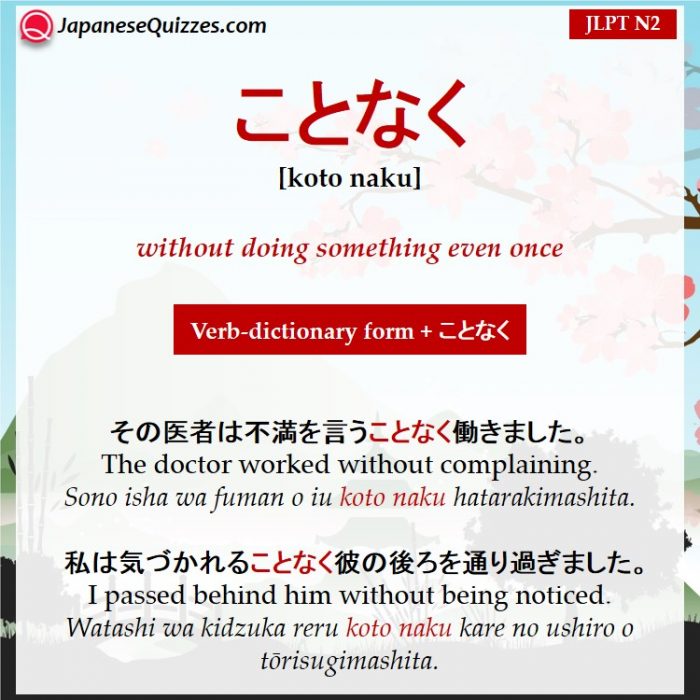
without doing something even once

Formations
Verb-dictionary form + ことなく
Examples
その医者は不満を言うことなく働いた / 働きました。
Sono isha wa fuman o iu koto naku hataraita/ hatarakimashita.
The doctor worked without complaining.
私は気づかれることなく彼の後ろを通り過ぎた / 通り過ぎました。
Watashi wa kidzuka reru koto naku kare no ushiro o tōrisugita/ tōrisugimashita.
I passed behind him without being noticed.
こんどは躊躇することなく、私は彼女のあとを追った / 追いました。
Kondo wa chūcho suru koto naku, watashi wa kanojo no ato o otta/ oimashita.
This time I followed her without hesitation.
彼女は何度失敗してもあきらめることなく、研究を続けた / 研究をつづけました。
Kanojo wa nando shippai shite mo akirameru koto naku, kenkyū o tsudzuketa/ kenkyū o tsudzukemashita.
No matter how many times she failed, she never gave up and continued his research.
彼女は年金に頼ることなく、その仕事に応募することを決心した / 決心しました。
Kanojo wa nenkin ni tayoru koto naku, sono shigoto ni ōbo suru koto o kesshin shita/ kesshin shimashita.
Instead of relying on a pension, she resolved to apply for the job.
人々が休む時でさえ、工場の機械は365日休むことなく働いている / 働いています。
Hitobito ga yasumu tokide sae, kōjō no kikai wa san byaku roku ju go nichi yasumu koto naku hataraite iru/ hataraite imasu.
Even when people rest, factory machines work 365 days a year without resting.
See also
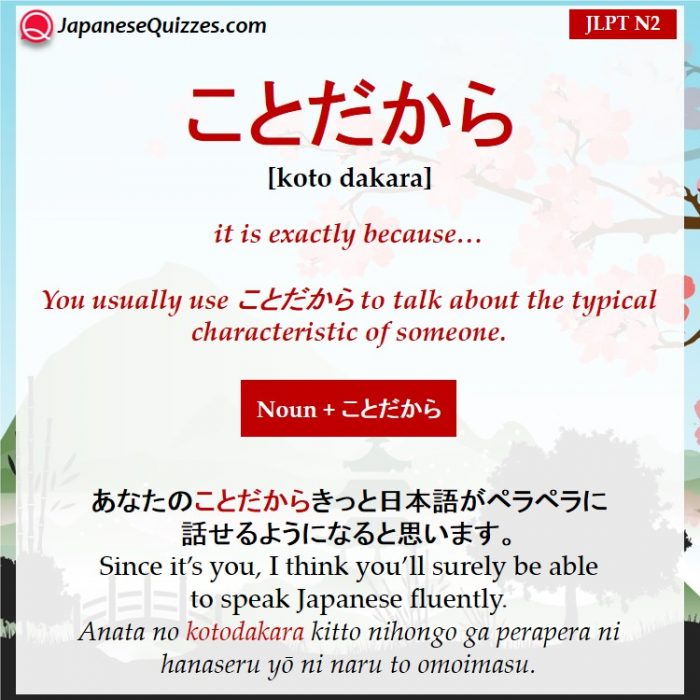
it is exactly because…
You usually use ことだから to talk about the typical characteristic of someone.

Formations
Noun + ことだから
Examples
真面目なあの人のことだから、時間どおりにくるに違いない / 違いありません。
Majimena ano hito no kotodakara, jikandōrini kuru ni chigainai/ chigai arimasen.
Because this guy is serious, no doubt that he will come just on time.
有能な加藤さんのことだから、きっといい仕事をするだろう / いい仕事をするでしょう。
Yūnōna Katō-san no kotodakara, kitto ī shigoto o surudarou/ ī shigoto o surudeshou.
Since Kato is a man of ability, he’ll find a good job for sure.
のんきなミナミのことだから、何も心配していないだろう / 心配していないでしょう。
Nonkina Minami no kotodakara, nani mo shinpai shite inaidarou/ shinpai shite inaideshou.
As easy-going as ever, Minami’s probably not at all worried about anything.
コアラ好きのヨシコのことだから、次の休暇はまたオーストラリアに行くだろう / 行くでしょう。
Koara-zuki no Yoshiko no kotodakara,tsugi no kyūka wa mata ōsutoraria ni ikudarou/ ikudeshou.
Yoshiko, who loves Koala, will also go to Australia again on her next vacation.
けちなあの人のことだから、こんな高い会費を払うわけない / 払うわけありません。
Kechina ano hito no kotodakara, kon’na takai kaihi o harau wake nai/ harau wake arimasen.
Since that person’s stingy, he won’t pay such a high membership fee.
あなたのことだからきっと日本語がペラペラに話せるようになると思う / なると思います。
Anata no kotodakara kitto nihongo ga perapera ni hanaseru yō ni naru to omou/ naru to omoimasu.
Since it’s you, I think you’ll surely be able to speak Japanese fluently.
See also