
[Japanese grammar books]

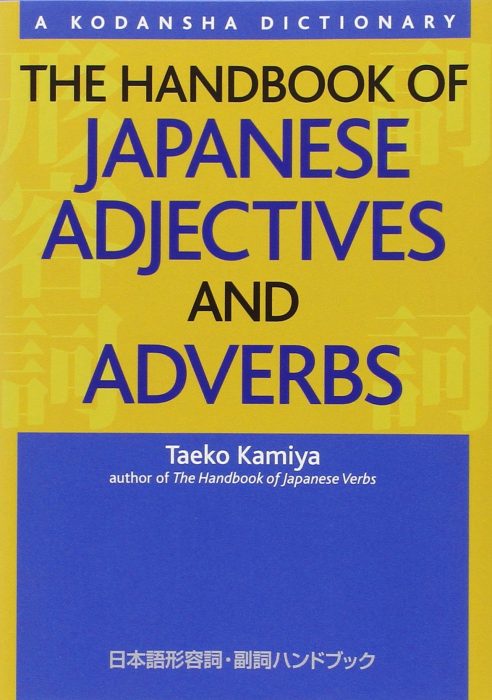
 For any beginner of Japanese, adjectives and adverbs are bound to present a challenge. Unlike English adjectives, Japanese ones conjugate, meaning that you must memorize their various forms before being able to build sentences of any complexity. Adverbs do not conjugate, but make use of particles to show their grammatical relationship to other words, and some have very subtle shades of meaning that are difficult to grasp. Moreover, many do not translate into adverbs in English.

or become member to request
 DOWNLOAD THE FULL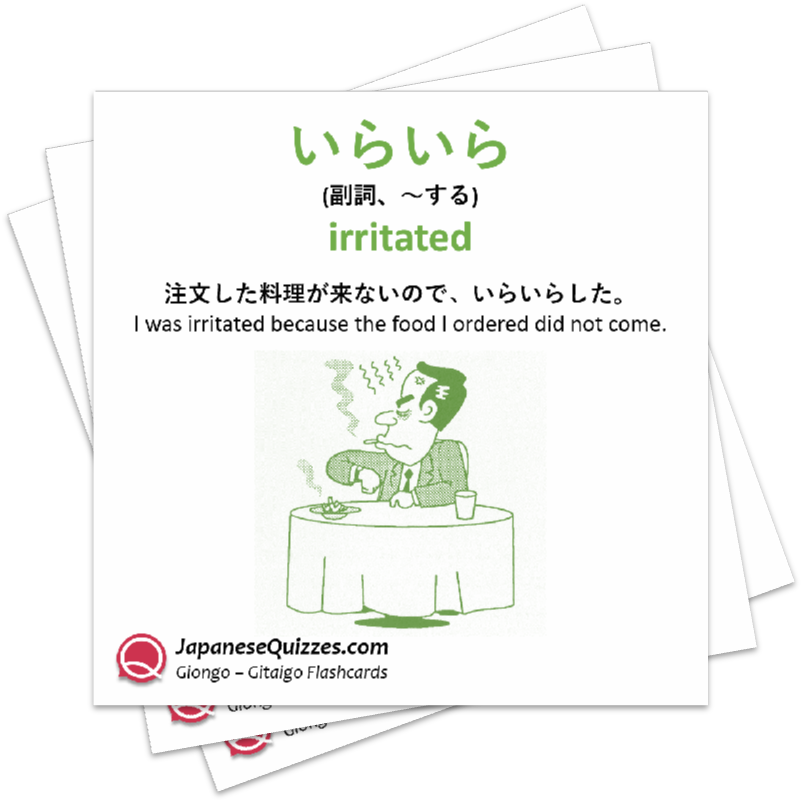


 This Nihongo Hyogen Bunkei Jiten is a comprehensive dictionary to Japanese expressions, perfect for all levels. Dictionaries are probably one of the most important materials for learners of a foreign language, but sometimes even dictionaries cannot help, especially when it comes to expressions. You will find it quite difficult to look up a Japanese expression with a general dictionary as most just show the single vocabularies and not the combined expression.However, this dictionary contains them all. It includes more than 1,000 entries and will teach you like no other book the most essential expressions applicable to JLPT Level NI – N5, organized by the kana-system from あ to ん. Each expression provides several example sentences in Japanese with hiragana writing on top of the Kanji and explanations of the word usage in English, Chinese and Korean 529 pages language: Japanese, English, Chinese and Korean

 Making Sense of Japanese Grammar explains in a lively and highly informative manner basic principles that underlie a wide range of phenomena in Japanese. Students–irrespective of proficiency level and linguistic training–will find clarification on matters of grammar that often seem idiosyncratic and Japanese-specific, such as avoiding the use of certain pronouns, employing the same word order for questions, hidden subjects, polite and direct forms.
 This book provides useful information about verbs for beginning and intermediate students of Japanese. It’s a handy reference to turn to when you have questions about Japanese verbs and how to use them.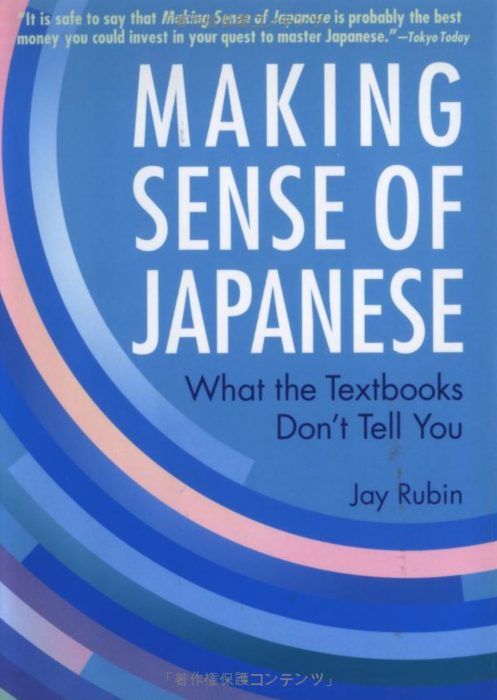
 Making Sense of Japanese is the fruit of one foolhardy American’s thirty-year struggle to learn and teach the Language of the Infinite. Previously known as Gone Fishin’, this book has brought Jay Rubin more feedback than any of his literary translations or scholarly tomes, “even if,” he says, “you discount the hate mail from spin-casters and the stray gill-netter.”
 Particles are an essential component of the Japanese language, and a facility with their use is essential for a mastery of both spoken and written forms. This new workbook will help students acquire that facility. It introduces 60 particles and their 188 basic functions in order of frequency of usage. Each function is illustrated with example sentences, and exercises are presented every few lessons to allow users to test their understanding, writing directly in the workbook and checking their work against the answers provided. A basic vocabulary is employed throughout to allow students to concentrate fully on one important goal—the mastery of Japanese particles.
 A very small book, but contains really good insights into the Japanese language and culture.
 Japanese: A Comprehensive Grammar is a complete reference guide to modern Japanese grammar. It explores the complexities of the language thoroughly, filling many gaps left by previous textbooks.