

[Japanese grammar books]
 Particles are an essential component of the Japanese language, and a facility with their use is essential for a mastery of both spoken and written forms. This new workbook will help students acquire that facility. It introduces 60 particles and their 188 basic functions in order of frequency of usage. Each function is illustrated with example sentences, and exercises are presented every few lessons to allow users to test their understanding, writing directly in the workbook and checking their work against the answers provided. A basic vocabulary is employed throughout to allow students to concentrate fully on one important goal—the mastery of Japanese particles.

or become member to request
 DOWNLOAD THE FULL



 A very small book, but contains really good insights into the Japanese language and culture.

 Japanese: A Comprehensive Grammar is a complete reference guide to modern Japanese grammar. It explores the complexities of the language thoroughly, filling many gaps left by previous textbooks.
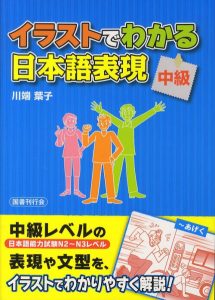 Irasuto de wakaru Nihongo Hyougen Chuukyuu
 By grouping particles that are similar in function, this book helps students pin down differences in usage that would ordinarily take years to master. Definitions, sample sentences, usage notes, and quizzes enable students to move to a higher level of comprehension.

 Chuukyuu Nihongo Bunpo Youten Seiri Pointo 20.
 Shokyuu Nihongo Bunpo Soumatome Pointo 20.
 A concise summary of Japanese grammar is presented for beginning students of the language. Topics include parts of speech, sentence structure, idioms, and pronunciation advice. All Japanese words are presented phonetically. Important points of grammar or vocabulary, as well as subject heads, are printed in a second color as a quick-reference aid for students. New to this edition is a Japanese-English vocabulary list.
 An invaluable reference for students and scholars alike. Part 1 explains and illustrates the uses of hundreds of particles, key vocabulary, and other function words. Each entry includes many sample sentences in Japanese, romaji, and English. Free of dense grammatical jargon, Part 2 provides concise overviews of all Japanese parts of speech, polite language (keigo), counters, and other facets of everyday language.
 For English-speaking students of Japanese, particles are perhaps the most difficult aspect of the language to learn. It would be no exaggeration to say that, for most people, they can never be completely mastered. Thus, the study of particles is a lifetime undertaking, and students need a lifelong companion to help them along the way. That companion is A Dictionary of Japanese Particles.