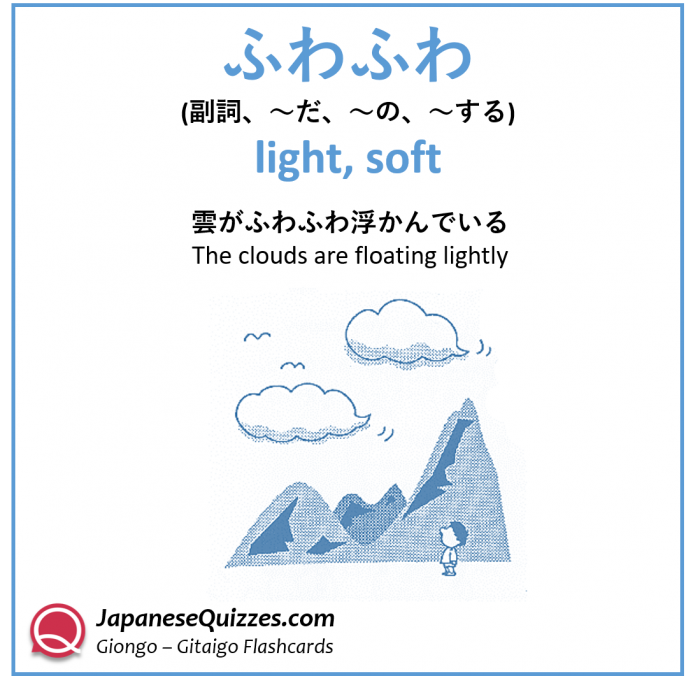
ふわふわ
(副詞、~だ、~の、~する)
“Light and soft. Also, to be floating lightly.”

Sample text:
- ふわふわの羽毛布団に寝た。
I slept on a soft duvet.
- 雲がふわふわ浮かんでいる。
The clouds are floating lightly.
(Source: E de wakaru Giongo Gitaigo)
Japanese Giongo Gitaigo
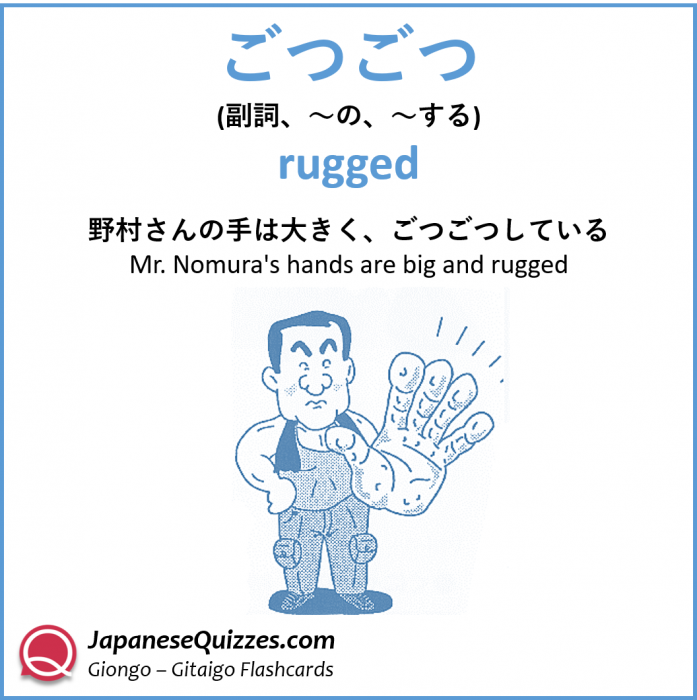
ごつごつ
(副詞、~の、~する)
“Hard with many surface irregularities. Also used to describe something crude and unpolished.”

Sample text:
- 野村さんの手は大きく、ごつごつしている。
Mr. Nomura’s hands are big and rugged.
- 田中さんの書いた文章はごつごつしていて、読みにくい。
The text written by Mr. Tanaka is rugged and difficult to read.
(Source: E de wakaru Giongo Gitaigo)
Japanese Giongo Gitaigo
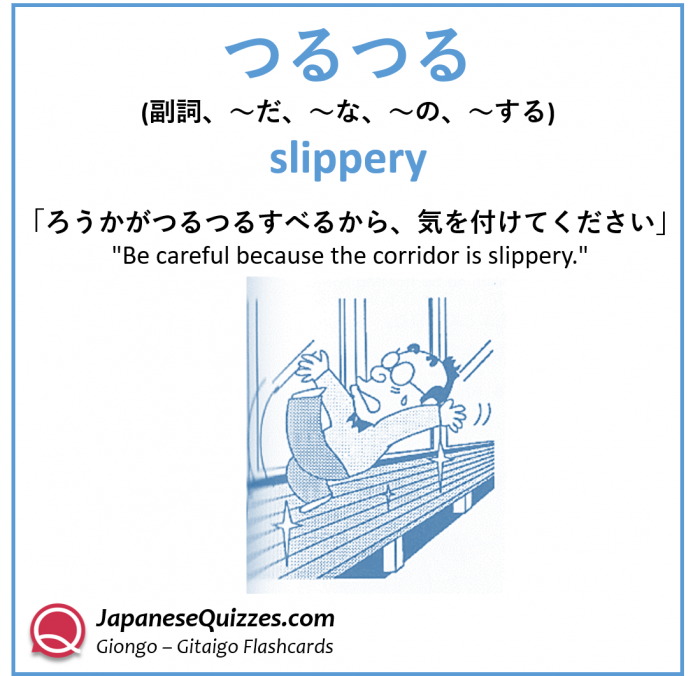
つるつる
(副詞、~だ、~の、~する)
“Smooth with a flat surface. Very slippery.”

Sample text:
- よくみがいたので、石がつるつるになった。
I polished it well so that the stone became slippery.
- 「ろうかがつるつるすべるから、気を付けてください」
“Be careful because the corridor is slippery.“
(Source: E de wakaru Giongo Gitaigo)
Japanese Giongo Gitaigo
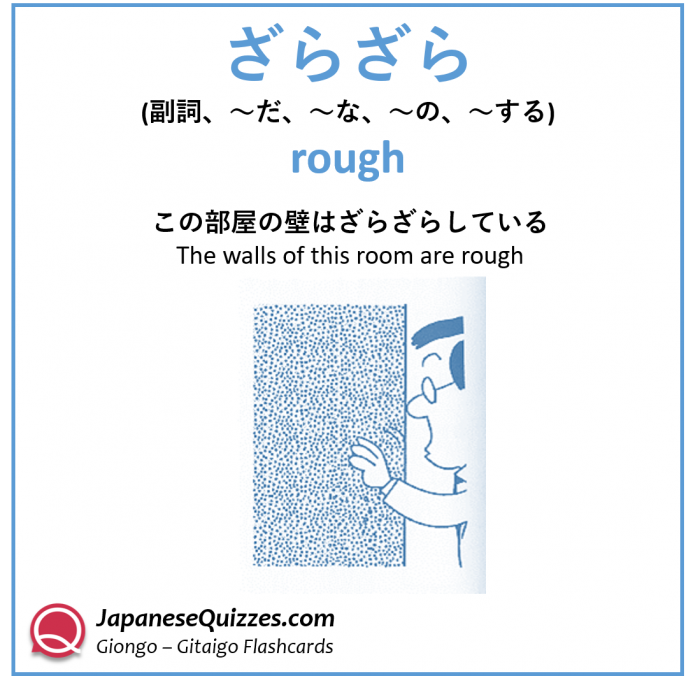
ざらざら
(副詞、~だ、~な、~の、~する)
“Describes a surface which is rough due to small bumps, clinging sand, etc.”

Sample text:
- この部屋の壁はざらざらしている。
The walls of this room are rough.
- 風で砂が入って来たので、ゆかがざらざらだ。
The wind came in with sand, so it was rough.
(Source: E de wakaru Giongo Gitaigo)
Japanese Giongo Gitaigo
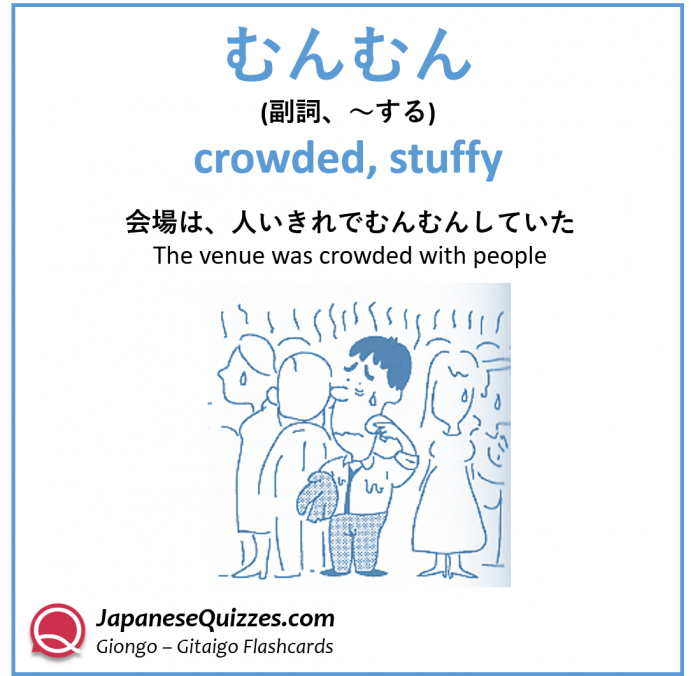
むんむん
(副詞、~する)
“Unpleasantly stuffy from heat or an odor.”

Sample text:
- 会場は、人いきれでむんむんしていた。
The venue was crowded with people.
- 部屋の中は、むし暑くてむんむんする。
The inside of the room is hot and stuffy.
(Source: E de wakaru Giongo Gitaigo)
Japanese Giongo Gitaigo
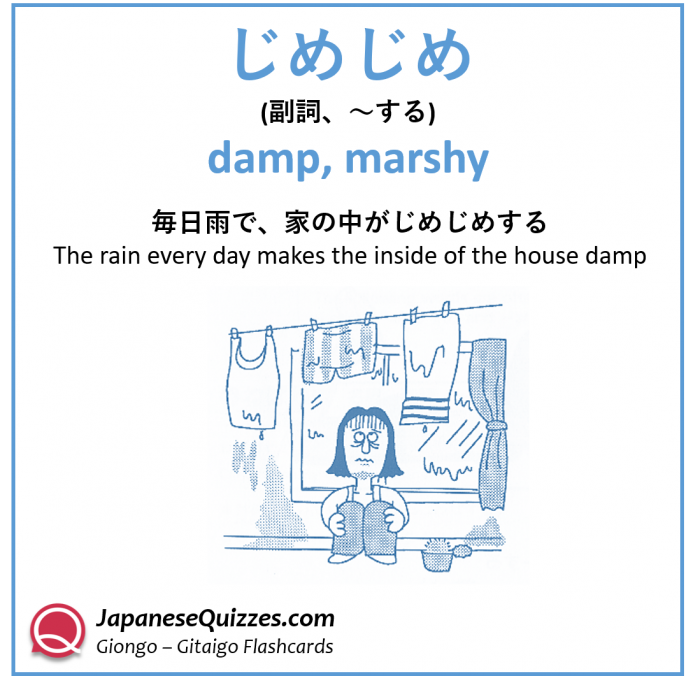
じめじめ
(副詞、~する)
“Discomfort or displeasure due to high humidity.”

Sample text:
- 毎日雨で、家の中がじめじめする。
The rain every day makes the inside of the house damp.
- この土地は一年中じめじめしている。
This land is marshy all year round.
(Source: E de wakaru Giongo Gitaigo)
Japanese Giongo Gitaigo