and
や is used to link nouns in an incomplete list.

Formations
Noun + や + Noun
Examples
私は日本の神社や寺に行ったことがあります。
Watashi wa Nihon no jinja ya tera ni itta koto ga arimasu.
I have been to Japanese shrines and temples.
部長はアメリカやアフリカに行ったことがあります。
Buchō wa Amerika ya Afurika ni itta koto ga arimasu.
The department manager has been to America and Africa.
私の弟は、サッカーや野球が下手です。
Watashi no otōto wa, sakkā ya yakyū ga hetadesu.
My brother is poor at playing soccer and baseball.
ベッキーはピアノやギターを弾くのが上手です。
Bekkī wa piano ya gitā o hajiku no ga jōzudesu.
Becky is good at playing the piano and the guitar.
私の娘は、ラーメンやパスタが好きだ。
Watashi no musume wa, rāmen ya pasuta ga sukida.
My daughter likes ramen and pasta.
明日の授業では、日本語の文法や漢字について勉強しよう。
Ashita no jugyōde wa, nihongo no bunpō ya kanji ni tsuite benkyō shiyou.
Let’s study Japanese grammar and kanji in the class tomorrow.
See also
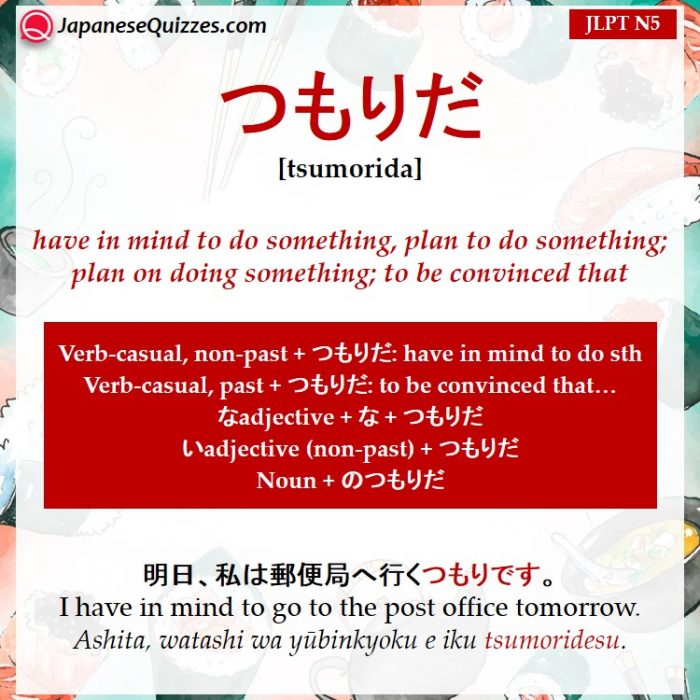
have in mind to do something, plan to do something; plan on doing something; to be convinced that

Formations
Verb-casual, non-past + つもりだ: have in mind to do something
Verb-casual, past + つもりだ: to be convinced that…
なadjective + な + つもりだ
いadjective (non-past) + つもりだ
Noun + のつもりだ
Examples
明日、私は郵便局へ行くつもりです。
Ashita, watashi wa yūbinkyoku e iku tsumori desu.
I have in mind to go to the post office tomorrow.
今日の午後、わたしはその店で時計を買う買うつもりです。
Kyō no gogo, watashi wa sono mise de tokei o kau tsumori desu.
This afternoon I have in mind to buy a watch at the store.
6月の終わりに私たちは結婚する結婚するつもりです。
Rokugatsu no owari ni watashitachi wa kekkon suru tsumoridesu.
At the end of June, we’ll marry.
今月、私たちは、あの山に登るつもりだ。
Kongetsu, watashitachi wa, ano yama ni noboru tsumori da.
This month we have in mind to climb that mountain.
あなたは夏休みの間に何をするつもりですか。
Anata wa natsuyasumi no aida ni nani o suru tsumori desu ka.
What are you going to do during the summer holidays?
See also

Examples
あなたの家はどこですか。
Anata no ie wa dokodesu ka.
Where is your house?
あなたの会社はどこにありますか。
Anata no kaisha wa doko ni arimasu ka.
Where is your company?
あなたはどこの町の出身ですか。
Anata wa doko no machi no shusshindesu ka.
What city are you from?
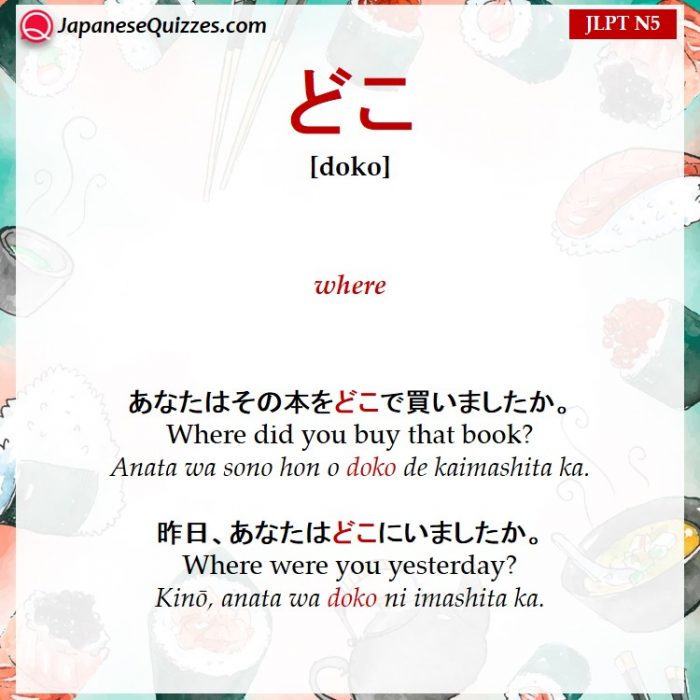
あなたはその本をどこで買いましたか。
Anata wa sono-hon o doko de kaimashita ka.
Where did you buy that book?
昨日、あなたはどこにいましたか。
Kinō, anata wa doko ni imashita ka.
Where were you yesterday?
明日、あなたはどこに行く予定ですか。
Ashita, anata wa doko ni iku yotei desuka.
Where are you going to go tomorrow?
冬休み中、あなたはどこに旅行へ行きますか。
Fuyuyasumichuu, anata wa doko ni ryokou he ikimasuka.
Where will you go on a trip during the winter vacation?
See also
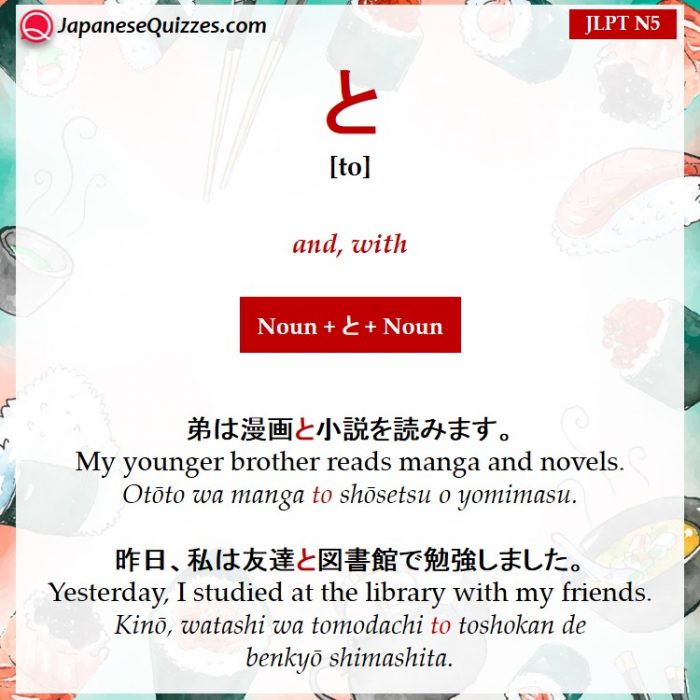

Formations
Noun + と + Noun
Examples
弟は漫画と小説を読みます。
Otōto wa manga to shōsetsu o yomimasu.
My younger brother reads manga and novels.
次の土曜日に私は洗濯と掃除をします。
Tsugi no doyōbi ni watashi wa sentaku to sōjiwoshimasu.
On next Saturday I do the laundry and cleaning.
今日、私の奥さんはスーパーで豚肉と鶏肉と卵を買いました。
Kyō, watashi no okusan wa sūpā de butaniku to toriniku to tamago o kaimashita.
Today my wife bought pork, chicken, and eggs at the supermarket.
火曜日に、弟は加藤さんと大阪に行った。
Kayōbi ni, otōto wa katō san to Ōsaka ni itta.
On Tuesday my brother went to Osaka with Mr. Kato.
昨日、私は友達と図書館で勉強した。
Kinō, watashi wa tomodachi to toshokan de benkyō shita.
Yesterday, I studied at the library with my friends.
先週、ドロシーはお母さんと買い物に行った。
Senshū, doroshī wa okāsan to kaimono ni itta.
Last week, Dorothy went shopping with her mother.
See also


Formations
Verb-てform + はいけない/ちゃいけない/てはだめ/ちゃだめ
だめ=casual, いけない/いけません=formal, ならない/なりません=used in prohibition that applies to more than one person like rules or policies
Examples
あなたは、ここに入ってはいけません。
Anata wa, koko ni haitte wa ikemasen.
You must not enter here.
あなたは、お酒を飲んではいけません。
Anata wa, o sake o nonde wa ikemasen.
You are not allowed to drink alcohol.
あなたは、ここでタバコを吸ってはいけない。
Anata wa, koko de tabako o sutte wa ikenai.
You must not smoke here.
私たちは、ここに自転車を止めてはいけない。
Watashitachiha, koko ni jitensha o tomete wa ikenai.
We must not park our bicycles here.
私たちは、美術館で写真を撮ってはいけません。
Watashitachiha, bijutsukan de shashin o totte wa ikemasen.
We shouldn’t take a picture in the museum.
私たちは、眠いときに運転してはいけません。
Watashitachiha, nemui toki ni unten shite wa ikemasen.
We must not drive when we are sleepy.
See also

after doing something, since
Express a direct continuity between two actions.

Formations
Verbてfrom + から
Examples
いつも私は手を洗ってから食事をします。
Itsumo watashi wa te o aratte kara shokuji o shimasu.
I always eat a meal after washing my hands.
毎朝、私は日本語を勉強してから、朝ご飯を食べます。
Maiasa, watashi wa nihongo o benkyō shite kara, asa gohanwotabemasu.
Every morning I eat breakfast after studying Japanese.
毎週土曜日、私は部屋を掃除してから、洗濯をします。
Maishū doyōbi, watashi wa heya o sōji shite kara, sentaku o shimasu.
Every Saturday I do the laundry after cleaning the room.
今夜、私はもう少しテレビを見てから寝ます。
Kon’ya, watashi wa mōsukoshi terebi o mite kara nemasu.
I will go to bed tonight after I watch TV a little more.
今朝、先生はコンビニで買い物をしてから、学校に来ました。
Kesa, sensei wa konbini de kaimono o shite kara, gakkō ni kimashita.
This morning, my teacher came to school after shopping at a convenience store.
彼女は電車を降りてから、切符をなくしたことに気づきました。
Kanojo wa densha o orite kara, kippu o nakushita koto ni kidzukimashita.
After she got off the train she realized she lost her ticket.
風邪が治ってから、学校に来てください。
Kaze ga naotte kara, gakkō ni kitekudasai.
Please come to school after you recover from your cold.
See also