JLPT N3 Grammar List
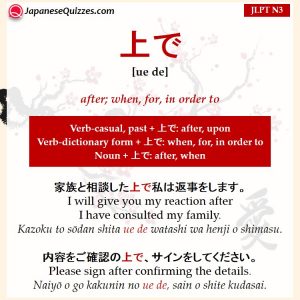
Meaning 1: after
Meaning 2: when, for, in order to .
Formations
Verb-casual, past + 上で: after, upon
Verb-dictionary form + 上で: when, for, in order to
Noun + 上で: after, when
Examples
家族と相談した上で私は返事をします。
Kazoku to sōdan shita ue de watashi wa henji o shimasu.
I will give you my reaction after I have consulted my family.
内容をご確認の上で、サインをしてください。
Naiyō o go kakunin no ue de, sain o shite kudasai.
Please sign after confirming the details.
この薬は説明書をよく読んだ上で、ご使用ください。
Kono kusuri wa setsumeisho o yoku yonda ue de, go shiyō kudasai.
Please use this medicine after reading the instructions carefully.
See also

JLPT N3 Grammar List
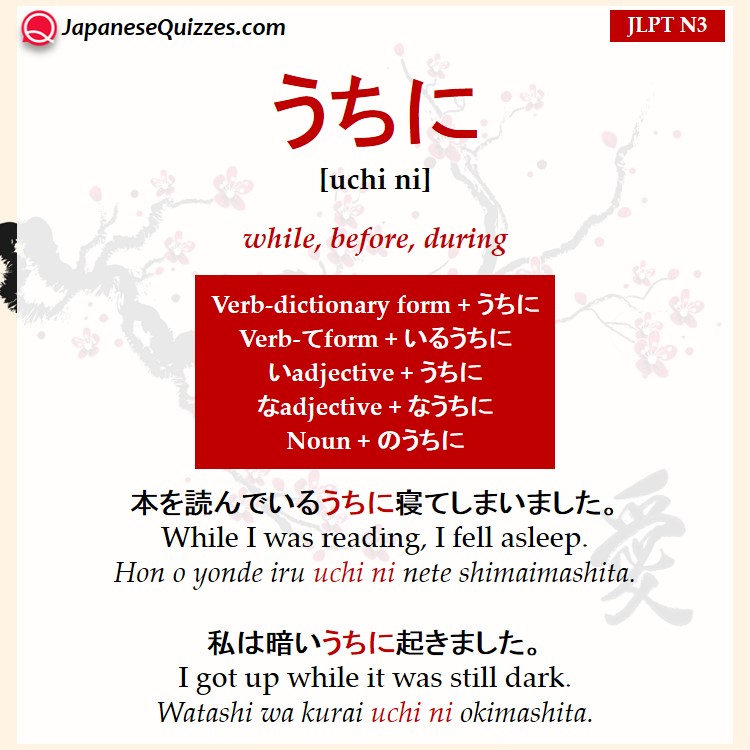
Formations
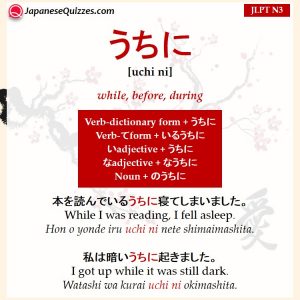
Verb-dictionary form + うちに
Verb-てform + いるうちに
いadjective + うちに
なadjective + なうちに
Noun + のうちに
Examples
本を読んでいるうちに寝てしまいました。
Hon o yonde iru uchi ni nete shimaimashita.
While I was reading, I fell asleep.
私は暗いうちに起きました。
Watashi wa kurai uchi ni okimashita.
I got up while it was still dark.
若いうちに一生懸命勉強してください。
Wakai uchi ni isshōkenmei benkyō shite kudasai.
Study hard while you’re still young.
See also

JLPT N3 Grammar List

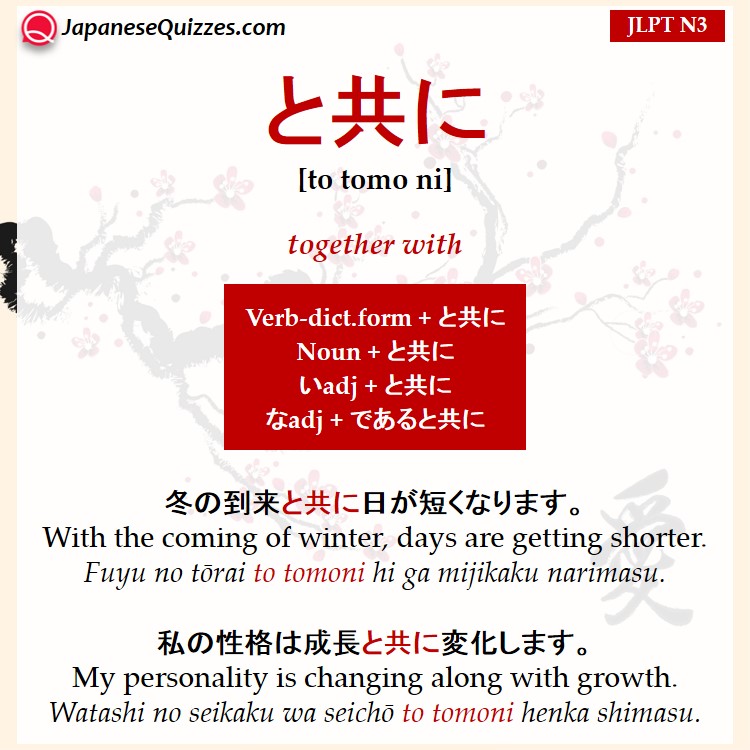
Formations
Verb-dict.form + と共に
Noun + と共に
いadj + と共に
なadj + であると共に
Examples
冬の到来と共に日が短くなります。
Fuyu no tōrai to tomoni hi ga mijikaku narimasu.
With the coming of winter, days are getting shorter.
年を取ると共に体が弱ってきたようです。
Toshiwotoru to tomoni karada ga yowa tte kita yōdesu.
As I become older, my body becomes weaker.
私の性格は成長と共に変化します。
Watashi no seikaku wa seichō to tomoni henka shimasu.
My personality is changing along with growth.
See also

JLPT N3 Grammar List
in other words; that is to say .

Formations
Phrase 1 + つまり + phrase 2
Examples
彼は獣医、つまり、動物の医者です。
Kare wa jūi, tsumari, dōbutsu no ishadesu.
He’s a veterinarian. In other words, he’s an animal doctor.
父は天文学、つまり星に関する科学を研究しています。
Chichi wa tenmongaku, tsumari hoshi ni kansuru kagaku o kenkyū shite imasu.
My father studies astronomy, or the science of stars.
彼女は姉の娘。つまり、私の姪です。
Kanojo wa ane no musume. Tsumari, watashi no meidesu.
She’s my elder sister’s daughter. In other words, she’s my niece.
See also

JLPT N3 Grammar List
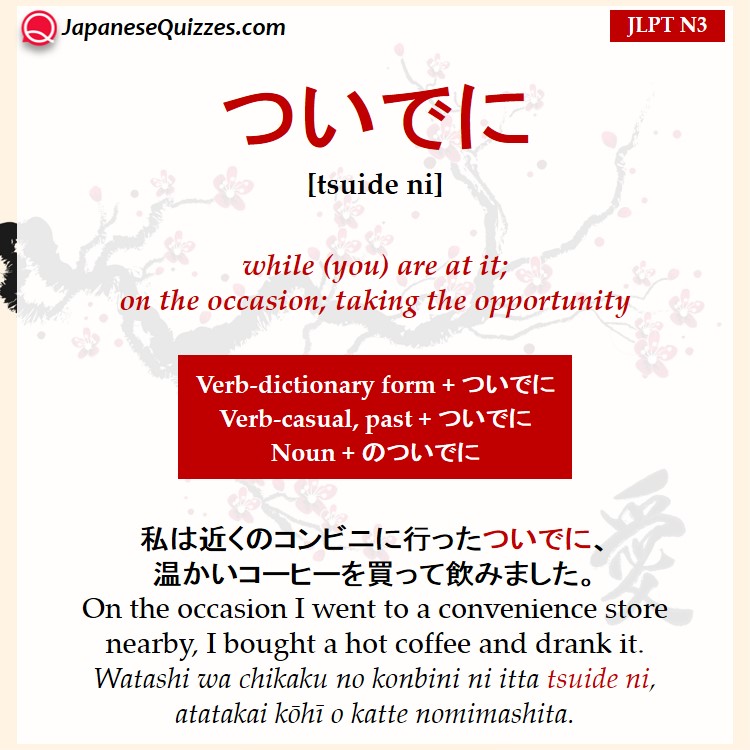
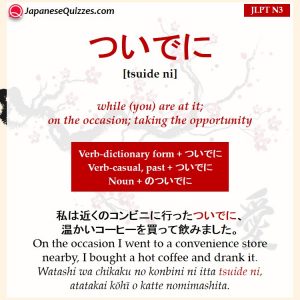
while (you) are at it; on the occasion; taking the opportunity .
Formations
Verb-dictionary form + ついでに
Verb-casual, past + ついでに
Noun + のついでに
Examples
私は近くのコンビニに行ったついでに、温かいコーヒーを買って飲みました。
Watashi wa chikaku no konbini ni itta tsuide ni, atatakai kōhī o katte nomimashita.
On the occasion I went to a convenience store nearby, I bought a hot coffee and drank it.
私はそこに行くついでに、彼にお金を返します。
Watashi wa soko ni iku tsuide ni, kare ni okane o kaeshimasu.
I will go there and on the same occasion, I will return him the money.
あなたが入れるついでに私にもコーヒーを入れてください。
Anata ga ireru tsuide ni watashi ni mo kōhī o iretekudasai.
While you are about it, please make a cup of coffee for me, too.
See also

JLPT N3 Grammar List
not always, not necessarily .

Formations
かならずしも) + Verb-casual + とは限らない
(かならずしも) + Noun + だとは限らない
(かならずしも) + いadj + とは限らない
(かならずしも) + なadj + だとは限らない
comparison
とは限らない casual / とは限りません polite
Examples
値段が高いものが質がいいとは限らない。
Nedan ga takai mono ga shitsu ga ī to wa kagiranai.
Expensive items are not necessarily good.
仕事がいつも9時に始まるとは限りません。
Shigoto ga itsumo ku-ji ni hajimaru to wa kagirimasen.
Work doesn’t always begin at nine.
春の日がいつも暖かいとは限りません。
Haru no hi ga itsumo attakai to wa kagirimasen.
Daylight hours in spring are not always warm.
See also