JLPT N3 Grammar List
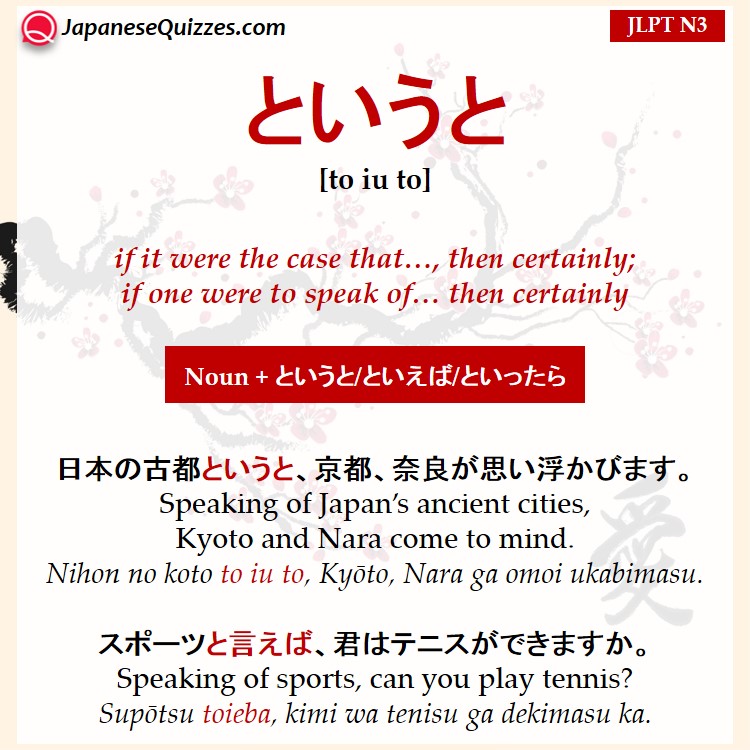
if it were the case that…, then certainly; if one were to speak of… then certainly .

Formations
Noun + というと/といえば/といったら
Examples
インド料理というと多くの人々がカレーを思い出します。
Indo ryōri to iu to ōku no hitobito ga karē o omoidashimasu.
Speaking of Indian food, many people think of curry.
日本の古都というと、京都、奈良が思い浮かびます。
Nihon no koto to iu to, Kyōto, Nara ga omoi ukabimasu.
Speaking of Japan’s ancient cities, Kyoto and Nara come to mind.
スポーツと言えば、君はテニスができますか。
Supōtsu toieba, kimi wa tenisu ga dekimasu ka.
Speaking of sports, can you play tennis?
See also

JLPT N3 Grammar List
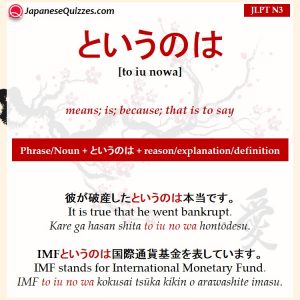
means; is; because; that is to say .
Formations
Phrase/Noun + というのは + reason/explanation/definition
Examples
彼が破産したというのは本当です。
Kare ga hasan shita to iu no wa hontōdesu.
It is true that he went bankrupt.
IMFというのは国際通貨基金を表しています。
IMF to iu no wa kokusai tsūka kikin o hyō shite imasu.
IMF stands for International Monetary Fund.
習慣の力というものは強力です。
Shūkan no chikara to iu mono wa kyōryoku desu.
The force of habit is strong.
See also

JLPT N3 Grammar List
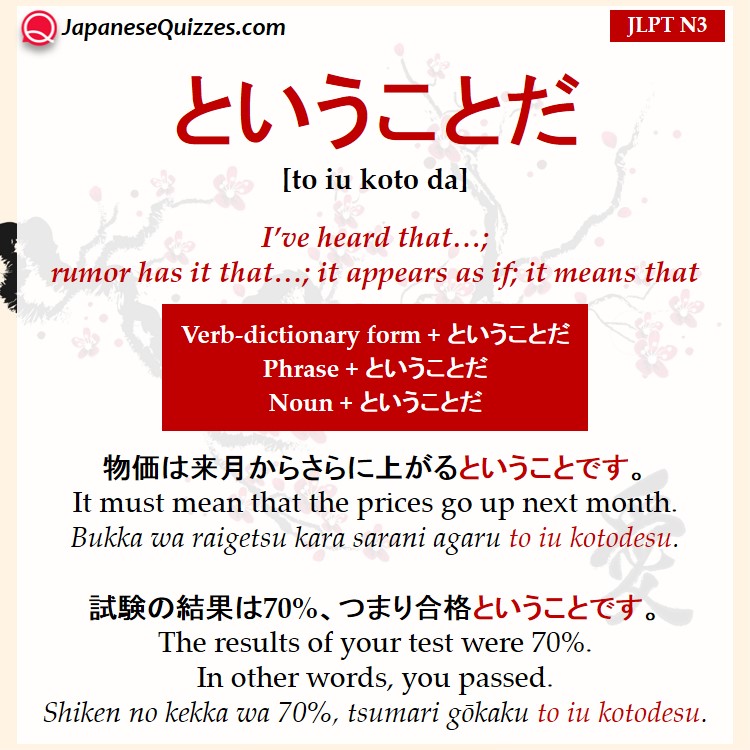
I’ve heard that…; rumor has it that…; it appears as if; it means that .

Formations
Verb-dictionary form + ということだ
Phrase + ということだ
Noun + ということだ
ということだ (toiukotoda) can be used to give an explanation or interpretation of something. Sometimes this can be based on fact, and sometimes it is based on things that people have heard.
Examples
物価は来月からさらに上がるということです。
bukka wa raigetsu kara sarani agaru to iu koto desu.
It must mean that the prices go up next month.
店の人の話では、この地方の米はとてもおいしいということです。
miseno hito no hanashi dewa kono chihou no kome wa totemo oishii to iu koto desu.
The clerk told me that rice grown in this region was quite delicious.
試験の結果は70%、つまり合格ということです。
shiken no kekka wa nanajuu paasento, tsumari goukaku to iu koto desu.
The results of your test were 70%. In other words, you passed.
See also

JLPT N3 Grammar List
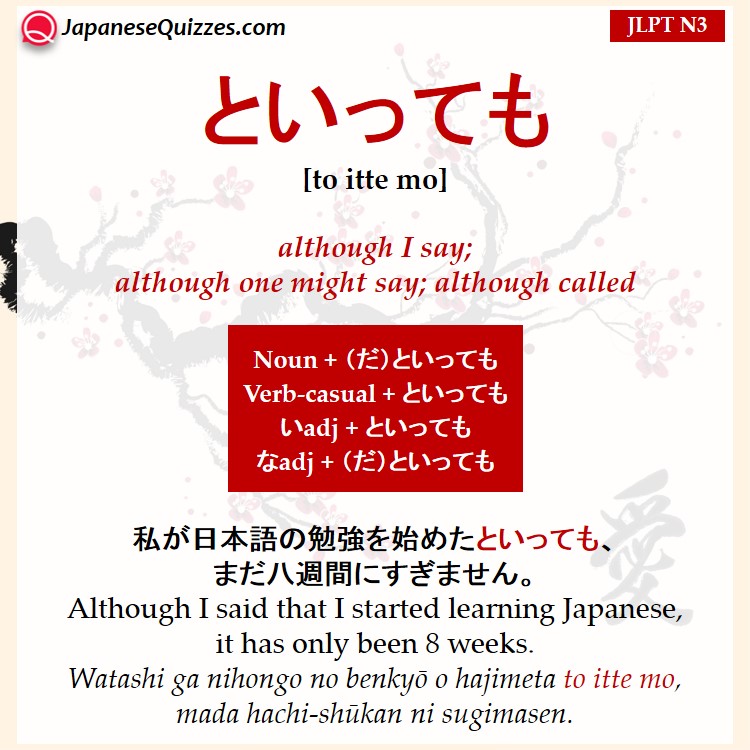
although I say; although one might say; although called .

Formations
Noun + (だ)といっても
Verb-casual + といっても
いadj + といっても
なadj + (だ)といっても
Examples
彼女は女優といっても、有名ではありません。
Kanojyo wa jyoyuu toittemo, yū mei dewa arimasen.
Although she is an actress, she’s not famous.
私が料理ができるといっても、カレーライスがつくれるだけです。
Watashi ga ryōri ga dekiru to itte mo, karē raisu ga tsukureru dakedesu.
Although I said that I can cook, I can only make curry and rice.
私が日本語の勉強を始めたといっても、まだ八週間にすぎません。
Watashi ga nihon go no benkyō o hajimeta to itte mo, mada hasshū kan ni sugimasen.
Although I said that I started learning Japanese, it has only been 8 weeks.
See also

JLPT N3 Grammar List
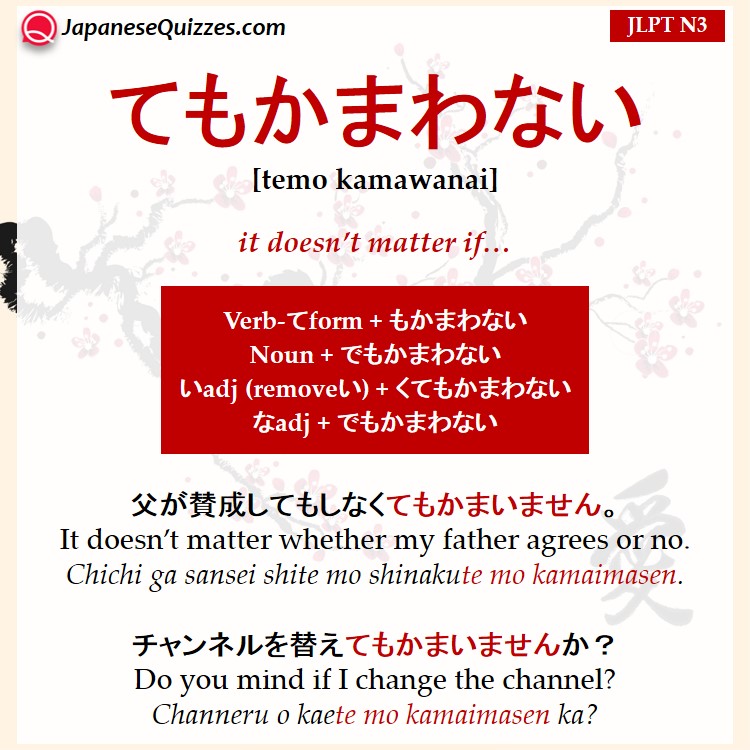
Formations
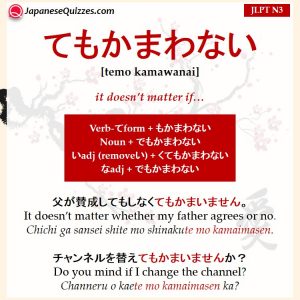
Verb-てform + もかまわない
Noun + でもかまわない
いadj (removeい) + くてもかまわない
なadj + でもかまわない
Examples
父が賛成してもしなくてもかまいません。
Chichi ga sansei shite mo shinakute mo kamaimasen.
It doesn’t matter whether my father agrees or no.
チャンネルを替えてもかまいませんか?
Channeru o kaete mo Kamaimasen ka?
Do you mind if I change the channel?
ちょっと暑いので、窓を開けてもかまいませんか?
Chotto atsuinode, mado o akete mo Kamaimasen ka?
Since it’s a little bit hot, can I open the window?
See also

JLPT N3 Grammar List
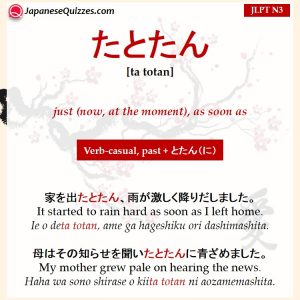
just (now, at the moment), as soon as .
Formations
Verb-casual, past + とたん(に)
Examples
家を出たとたん、雨が激しく降りだしました。
Ie o deta totan, ame ga hageshiku furiimashita.
It started to rain hard as soon as I left home.
母はその知らせを聞いたとたんに青ざめました。
Haha wa sono shirase o kiita totan ni aozamemashita.
My mother grew pale on hearing the news.
私が部屋に入ったとたんに彼らは話を止めました。
Watashi ga heya ni haitta totan ni karera wa hanashi o yamemashita.
They stopped talking as soon as I came into the room.
See also