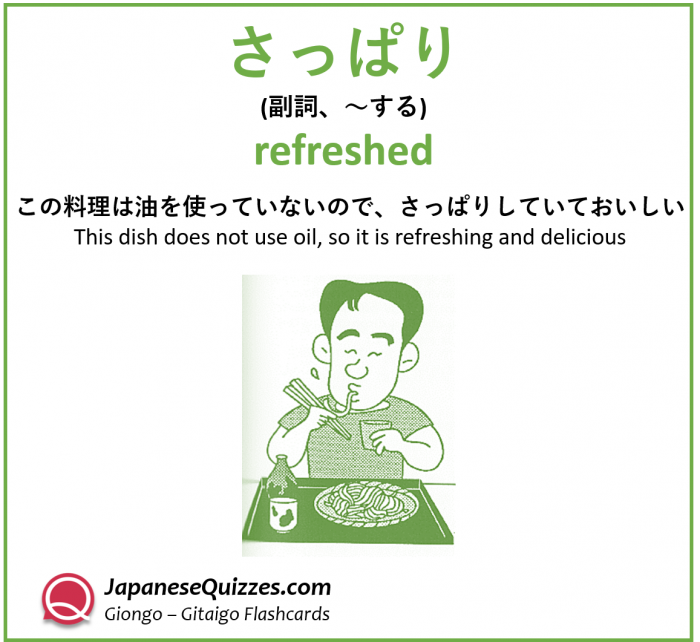
さっぱり
(副詞、~する)
“Refreshing flavors that do not linger unpleasantly. Things that do not leave an objectionable feeling. Carrying a good nuance, this world is often used in reference to the clothing and personalities of people.”

Sample text:
- この料理は油を使っていないので、さっぱりしていておいしい。
This dish does not use oil, so it is refreshing and delicious.
- 外から帰って、シャワーをあびたら、さっぱりした。
When I got home from the outside and took a shower, it was refreshing.
(Source: E de wakaru Giongo Gitaigo)
Japanese Giongo Gitaigo
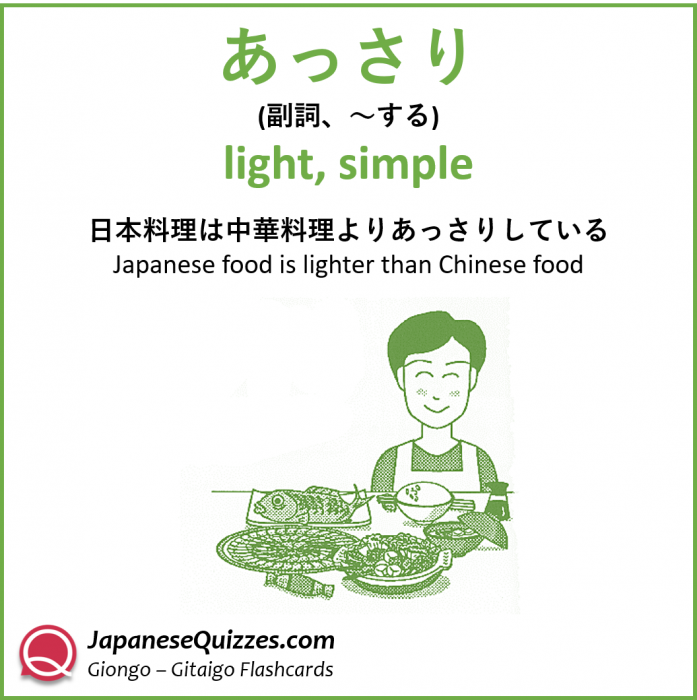
あっさり
(副詞、~する)
“Flavors or colors that are not heavy or lingering. Also used to describe the attitude or personality of people who make decisions without becoming obsessed with the details.”

Sample text:
- 日本料理は中華料理よりあっさりしている。
Japanese food is lighter than Chinese food.
- 彼はその計画をあっさりあきらめた。
He simply gave up on the plan.
(Source: E de wakaru Giongo Gitaigo)
Japanese Giongo Gitaigo
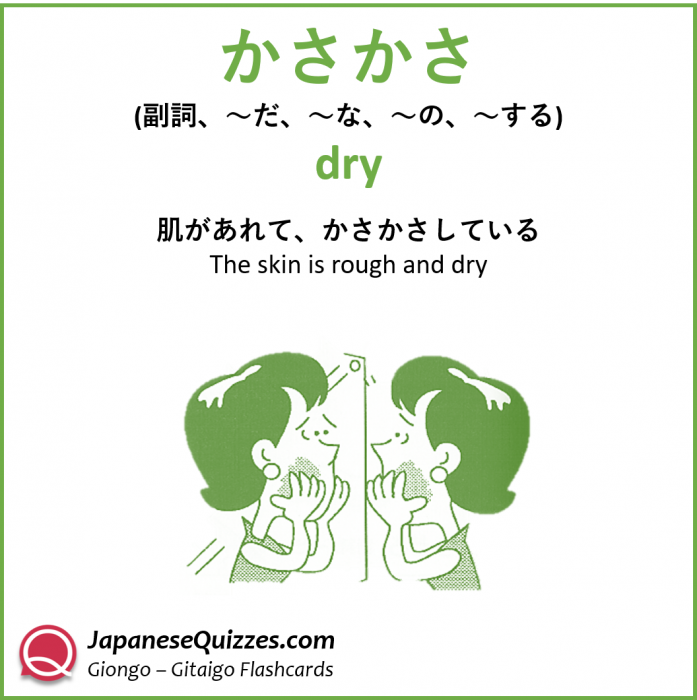
かさかさ
(副詞、~だ、~な、~の、~する)
“Dried out and rough.”

Sample text:
- 肌があれて、かさかさしている。
The skin is rough and dry.
- 雨が降らないので、土がかさかさに乾いている。
It doesn’t rain, so the soil is dry.
(Source: E de wakaru Giongo Gitaigo)
Japanese Giongo Gitaigo
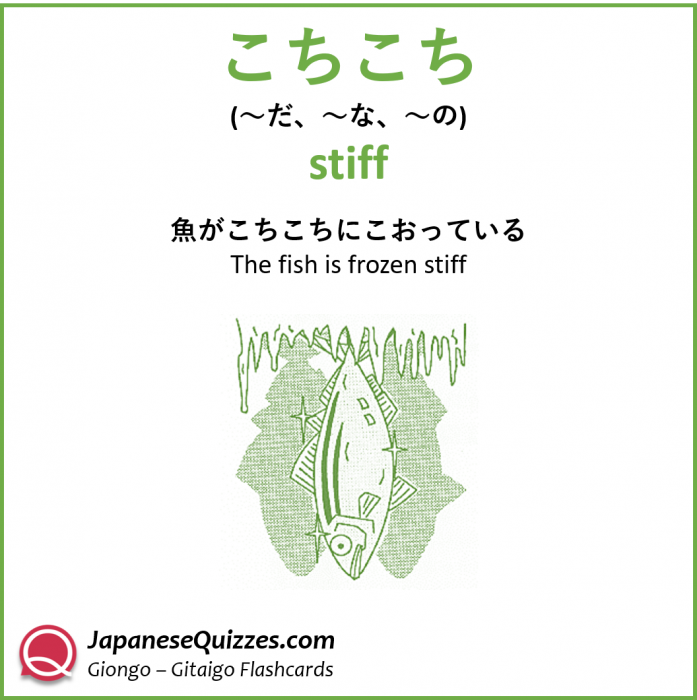
こちこち
(~だ、~な、~の)
“Hard due to being dried out or becoming rigid. Also used to express a stiff, rigid attitude or way of thinking.”

Sample text:
- 魚がこちこちにこおっている。
The fish is frozen stiff.
- 面接のとき、こちこちになってしまった。
I got stiff during the interview.
(Source: E de wakaru Giongo Gitaigo)
Japanese Giongo Gitaigo
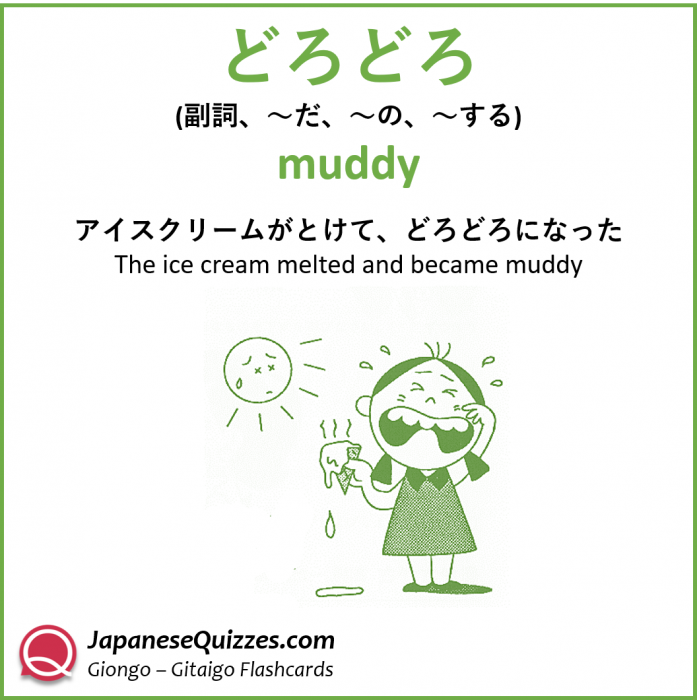
どろどろ
(副詞、~だ、~の、~する)
“Melted and of a muddy consistency. Also, soiled by mud.”

Sample text:
- アイスクリームがとけて、どろどろになった。
The ice cream melted and became muddy.
- 大雨でズボンがどろどろだ。
The heavy rain made my pants muddy.
(Source: E de wakaru Giongo Gitaigo)
Japanese Giongo Gitaigo
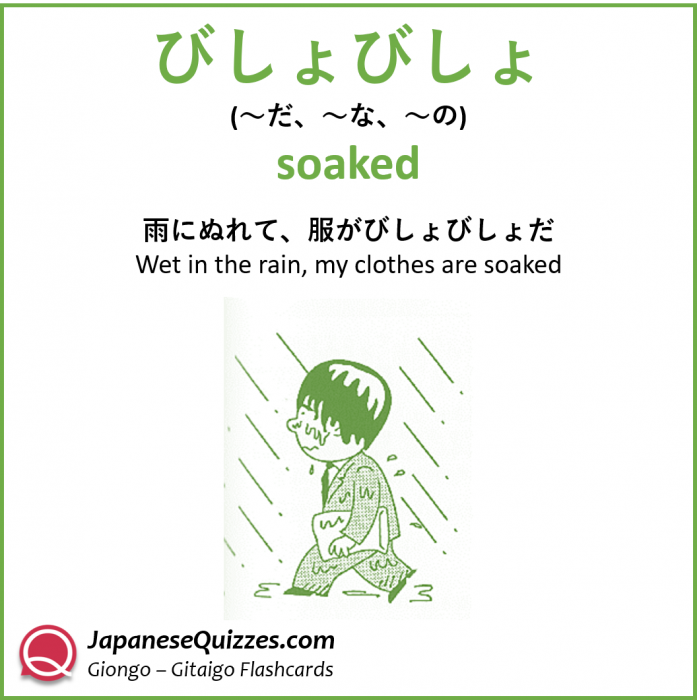
びしょびしょ
(~だ、~な、~の)
“Sopping wet.”

Sample text:
- 雨にぬれて、服がびしょびしょだ。
Wet in the rain, my clothes are soaked.
- 水をこぼして、本がびしょびしょになってしまった。
I spilled water and my book was soaked.
(Source: E de wakaru Giongo Gitaigo)
Japanese Giongo Gitaigo