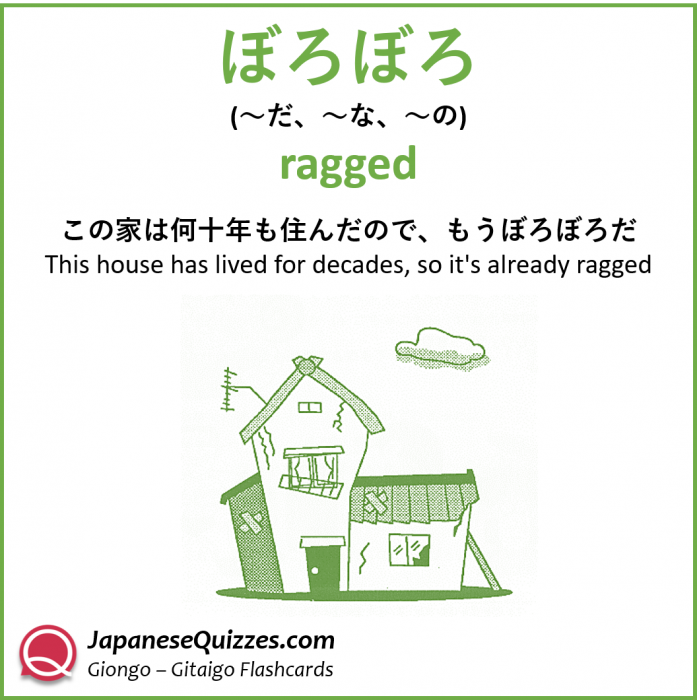
ぼろぼろ
(~だ、~な、~の)
“Old and worn out from overuse.”

Sample text:
- この家は何十年も住んだので、もうぼろぼろだ。
This house has lived for decades, so it’s already ragged.
- 使いすぎて、辞書がぼろぼろになった。
I used it too much so the dictionary became ragged.
(Source: E de wakaru Giongo Gitaigo)
Japanese Giongo Gitaigo
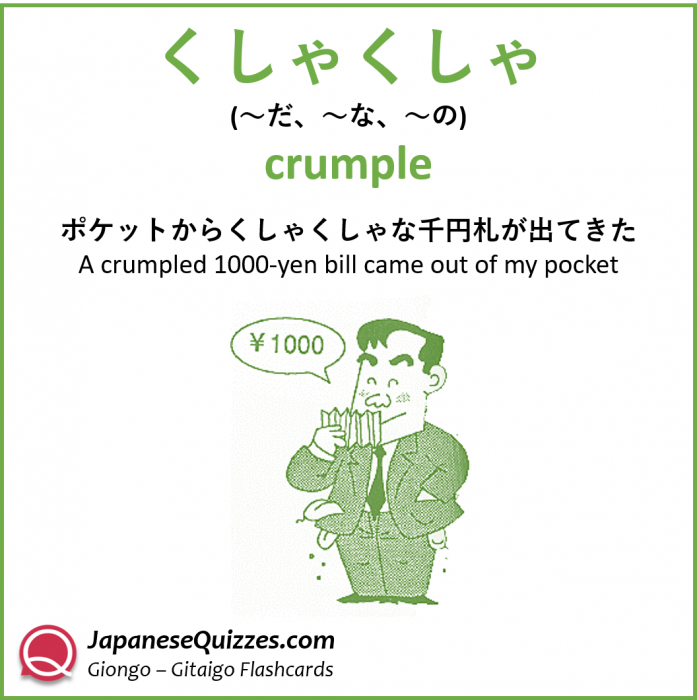
くしゃくしゃ
(~だ、~な、~の)
“Paper or cloth that has become wrinkled.”

Sample text:
- ポケットからくしゃくしゃな千円札が出てきた。
A crumpled 1000-yen bill came out of my pocket.
- 涙をふいたら、ハンカチがくしゃくしゃになってしまった。
When I wiped my tears, my handkerchief became crumpled.
(Source: E de wakaru Giongo Gitaigo)
Japanese Giongo Gitaigo
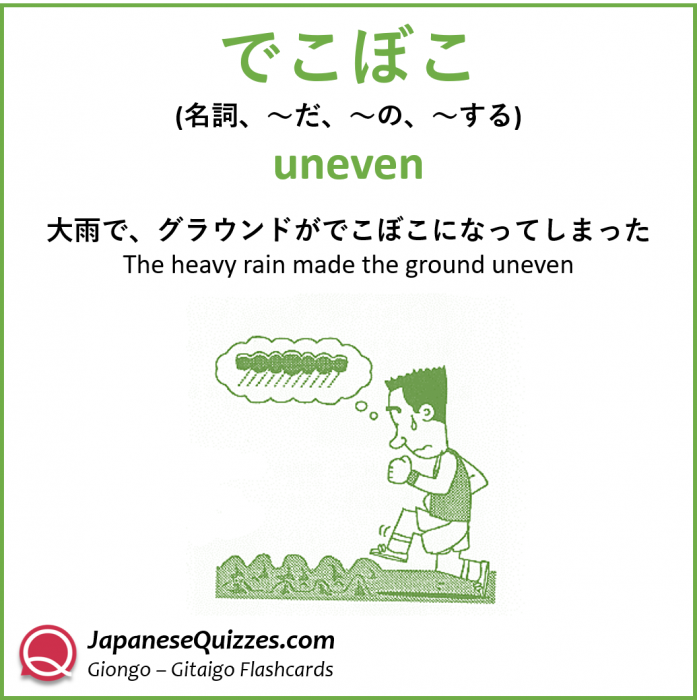
でこぼこ
(名詞、~だ、~の、~する)
“Uneven and bumpy.”

Sample text:
- 大雨で、グラウンドがでこぼこになってしまった。
The heavy rain made the ground uneven.
- この道はでこぼこしていて、歩きにくい。
This road is bumpy and hard to walk.
(Source: E de wakaru Giongo Gitaigo)
Japanese Giongo Gitaigo
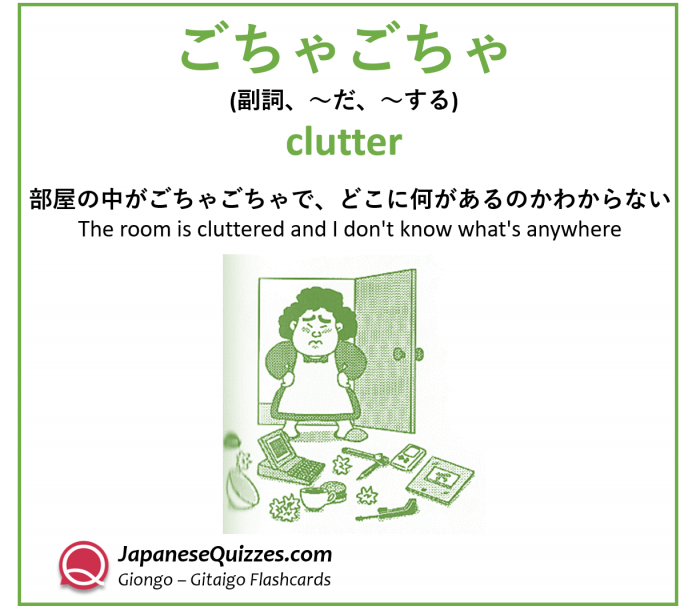
ごちゃごちゃ
(副詞、~だ、~する)
“A disordered collection of various objects.”

Sample text:
- 部屋の中がごちゃごちゃで、どこに何があるのかわからない。
The room is cluttered and I don’t know what’s anywhere.
- つくえの上に、いろいろなものがごちゃごちゃ置いてある。
Various things are messed up on the desk.
(Source: E de wakaru Giongo Gitaigo)
Japanese Giongo Gitaigo
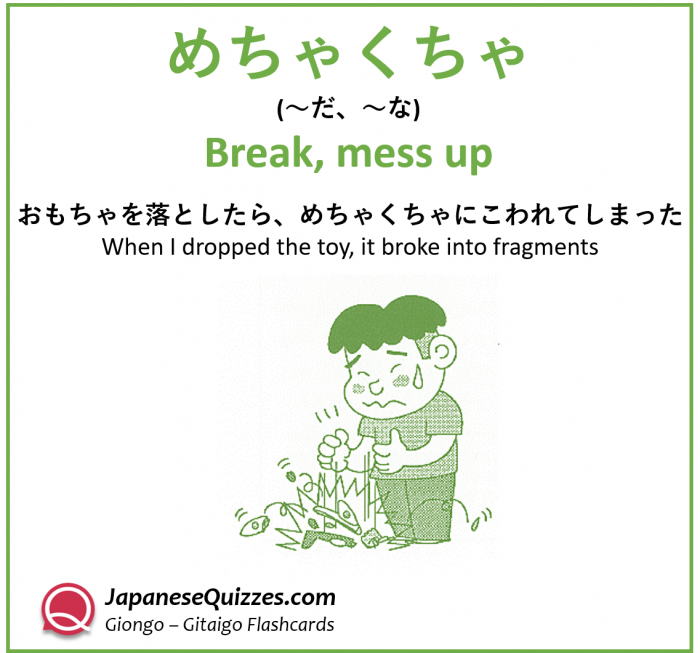
めちゃくちゃ
(~だ、~な)
“Broken or disordered, not in a normal state.”

Sample text:
- おもちゃを落としたら、めちゃくちゃにこわれてしまった。
When I dropped the toy, it broke into fragments.
- 彼の話はめちゃくちゃで、よくわからない。
His story is messed up so I can’t understand.
(Source: E de wakaru Giongo Gitaigo)
Japanese Giongo Gitaigo
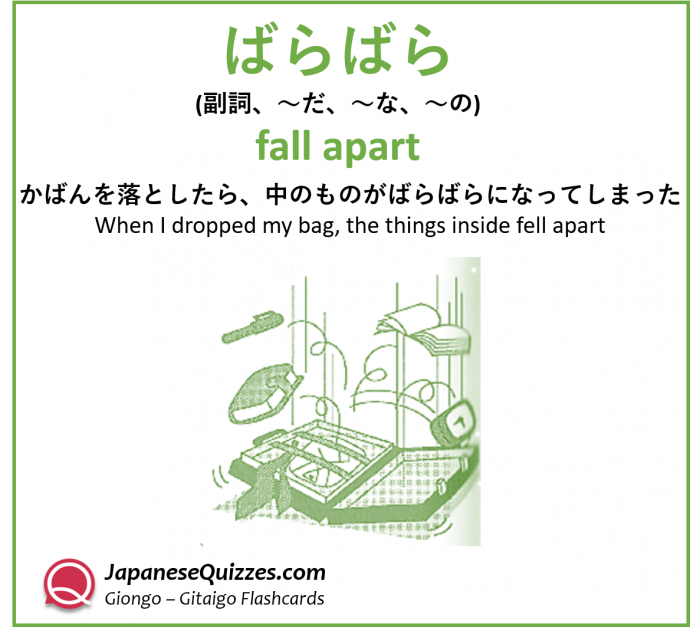
ばらばら
(副詞、~だ、~な、~の)
“The breaking up something that once was a whole.”

Sample text:
- かばんを落としたら、中のものがばらばらになってしまった。
When I dropped my bag, the things inside fell apart.
- 卒業の後、クラスメートはばらばらになった。
After graduation, my classmates fell apart.
(Source: E de wakaru Giongo Gitaigo)
Japanese Giongo Gitaigo