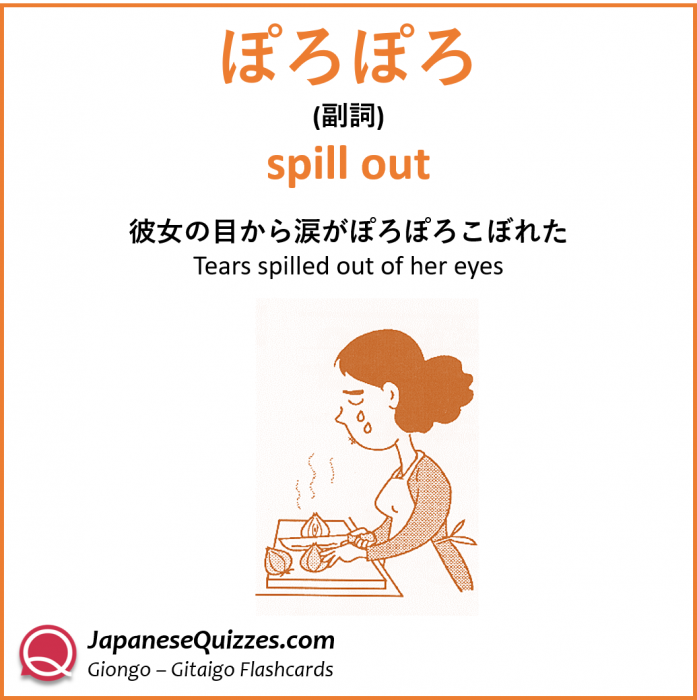
ぽろぽろ
(副詞)
“Continuously overflowing of something small. (Typically used with koboreru or ochiru.) ”

Sample text:
- 彼女の目から涙がぽろぽろこぼれた。
Tears spilled out of her eyes.
- はしの使い方がへたで、ご飯つぶがぽろぽろ落ちた。
I was not good at using chopsticks and the rice grains fell down.
(Source: E de wakaru Giongo Gitaigo)
Japanese Giongo Gitaigo
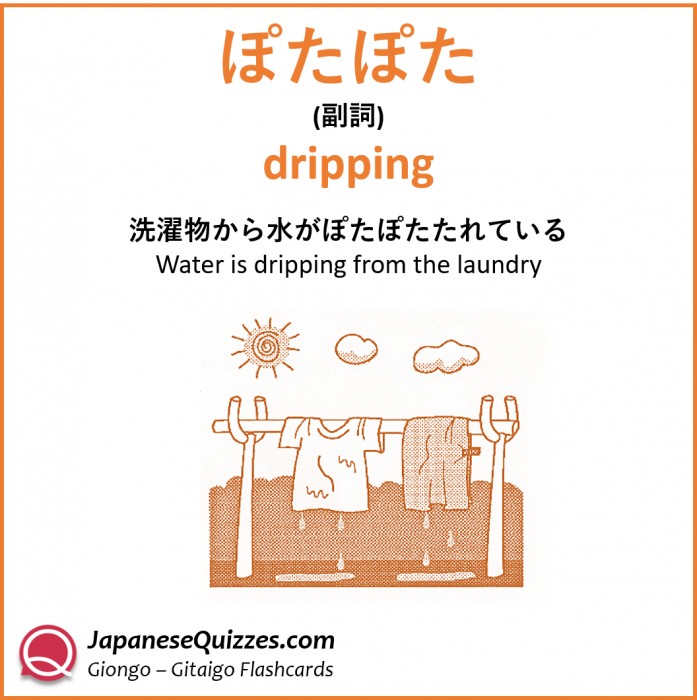
ぽたぽた
(副詞)
“The sound or appearance of water or other liquid continuously dripping. (Typically used with ochiru or tareru.)”

Sample text:
- 洗濯物から水がぽたぽたたれている。
Water is dripping from the laundry.
- ひたいから汗がぽたぽた落ちた。
My sweat dripped from my forehead.
(Source: E de wakaru Giongo Gitaigo)
Japanese Giongo Gitaigo
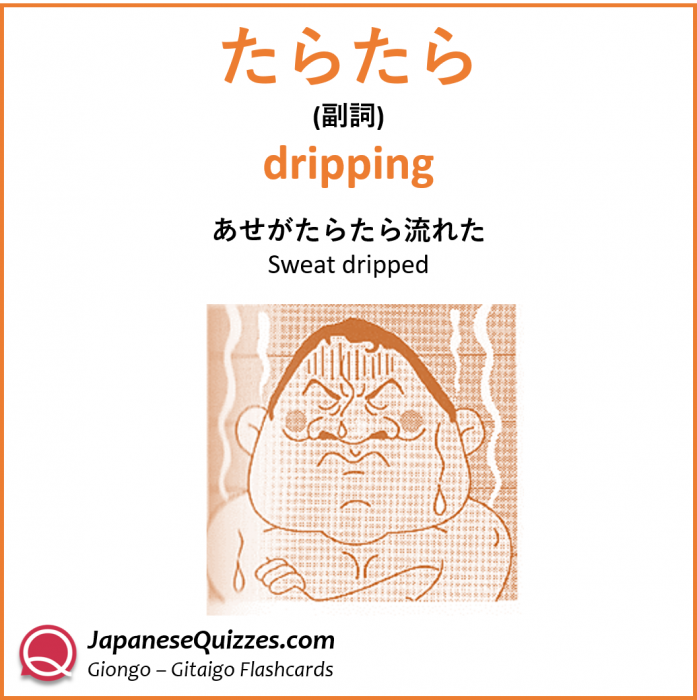
たらたら
(副詞)
“The continuous dripping of a liquid. (Typically used with nagareru or tateru.)”

Sample text:
- あせがたらたら流れた。
Sweat dripped.
- 腕から血がたらたらたれている。
Blood is dripping from my arm.
(Source: E de wakaru Giongo Gitaigo)
Japanese Giongo Gitaigo
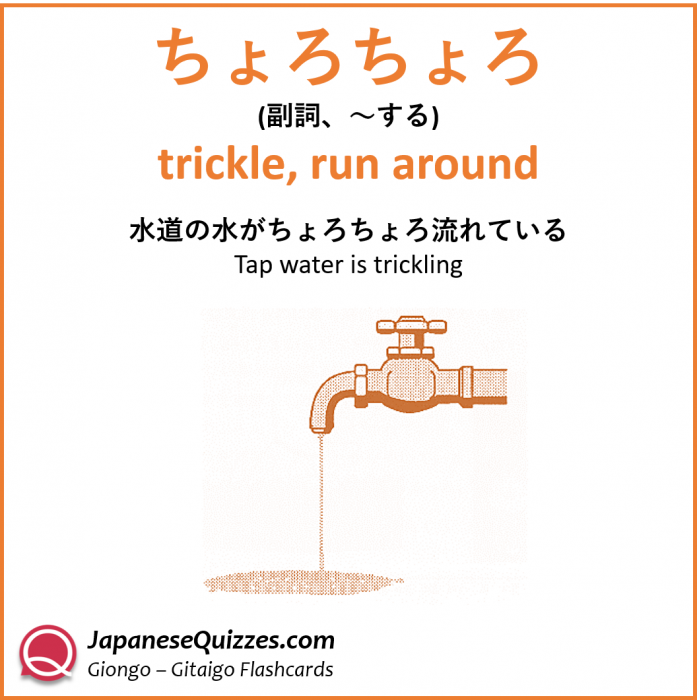
ちょろちょろ
(副詞、~する)
“The sound or appearance of water or other liquid tricking. (Typically used with nagareru or deru.)
Used to describe a small thing running around. (Typically used with suru or ugoku.)”

Sample text:
- 水道の水がちょろちょろ流れている。
Tap water is trickling.
- 子供がちょろちょろしていて、仕事のじゃまだ。
My child is running around, disturbing my work.
(Source: E de wakaru Giongo Gitaigo)
Japanese Giongo Gitaigo
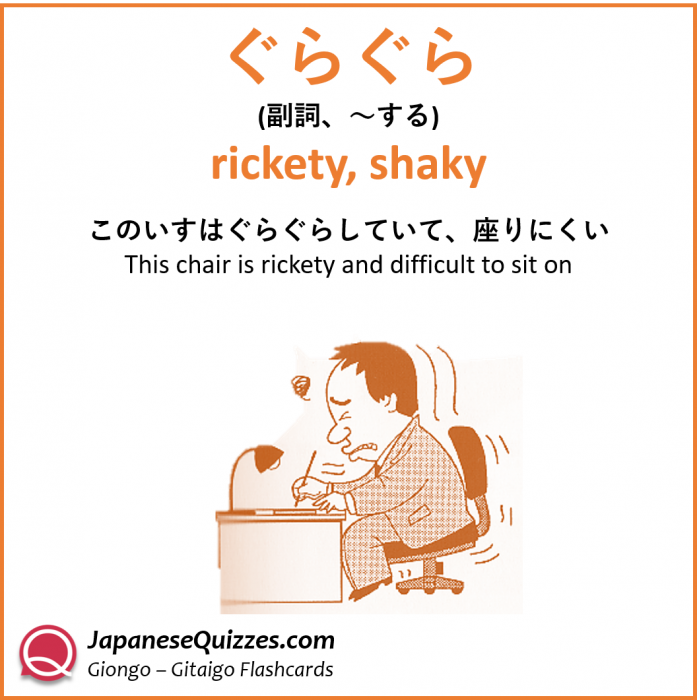
ぐらぐら
(副詞、~する)
“Shaking greatly over and over. Unstable. (Typically used with yureru, ugoku, or suru.)”

Sample text:
- 地震で家がぐらぐらゆれた。
The earthquake caused my house to shake.
- このいすはぐらぐらしていて、座りにくい。
This chair is rickety and difficult to sit on.
(Source: E de wakaru Giongo Gitaigo)
Japanese Giongo Gitaigo
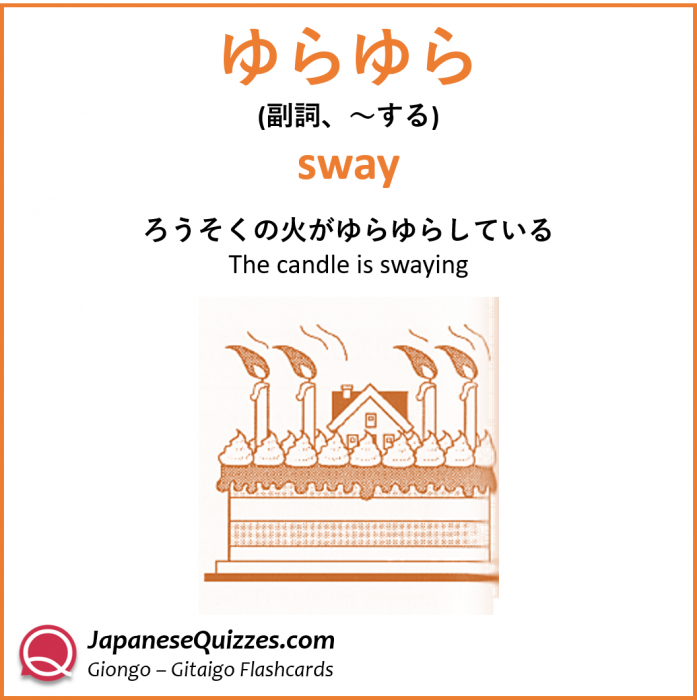
ゆらゆら
(副詞、~する)
“Shaking quietly and softly. (Typically used with yureru or ugoku.)”

Sample text:
- ろうそくの火がゆらゆらしている。
The candle is swaying.
- 風で木の枝ががゆらゆらゆれている。
The wind is swaying the branches of the tree.
(Source: E de wakaru Giongo Gitaigo)
Japanese Giongo Gitaigo