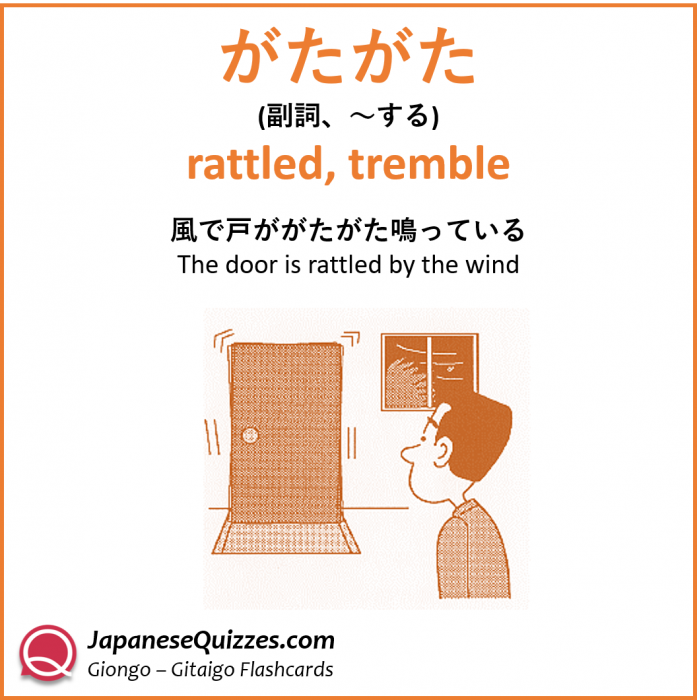
がたがた
(副詞、~する)
“The sound or appearance of two hard objects hitting. (Typically used with iu or naru.)
Trembling from the cold or fear. (Typically used with furueru.)”

Sample text:
- 風で戸ががたがた鳴っている。
The door is rattled by the wind.
- 寒さでからだが、がたがたふるえた。
It was cold so I trembled.
(Source: E de wakaru Giongo Gitaigo)
Japanese Giongo Gitaigo
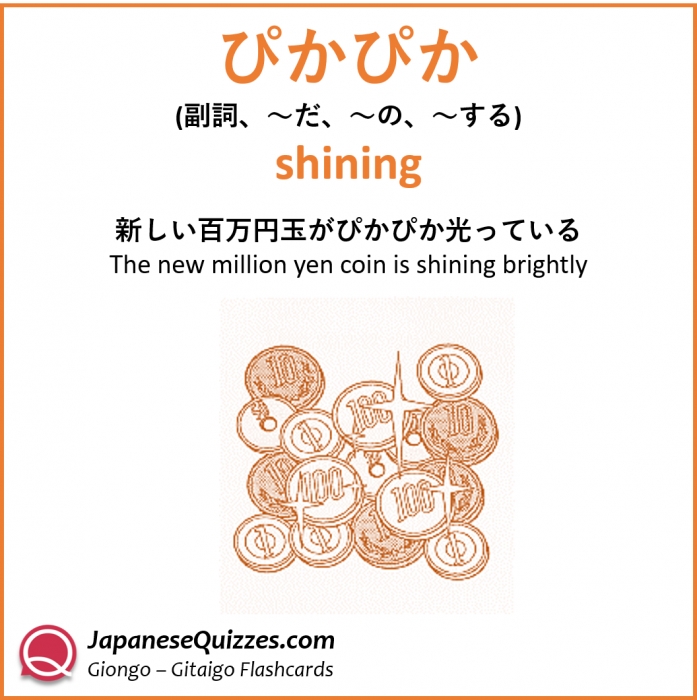
ぴかぴか
(副詞、~だ、~の、~する)
“Giving off a bright light. The glittering of a polished object. (Typically used with hikaru or kagayaku.)”

Sample text:
- 新しい百万円玉がぴかぴか光っている。
The new million yen coin is shining brightly.
- ネオンサインがぴかぴか光っている。
The neon sign is shiny.
(Source: E de wakaru Giongo Gitaigo)
Japanese Giongo Gitaigo
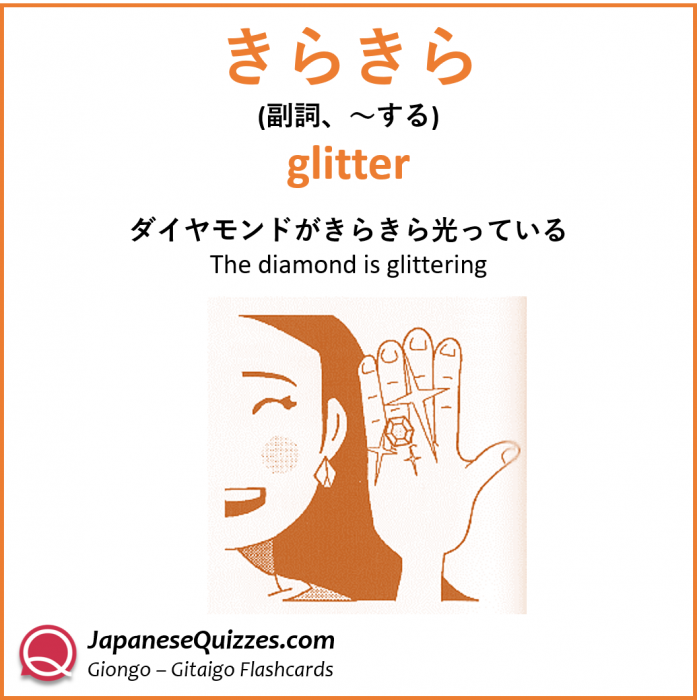
きらきら
(副詞、~する)
“Attractive, repeated glimmerings from a small, fine object. (Typically used with hikaru or kagayaku.)”

Sample text:
- ダイヤモンドがきらきら光っている。
The diamond is glittering.
- 太陽の光で波がきらきらかがやいている。
The waves are glittering in the sunlight.
(Source: E de wakaru Giongo Gitaigo)
Japanese Giongo Gitaigo
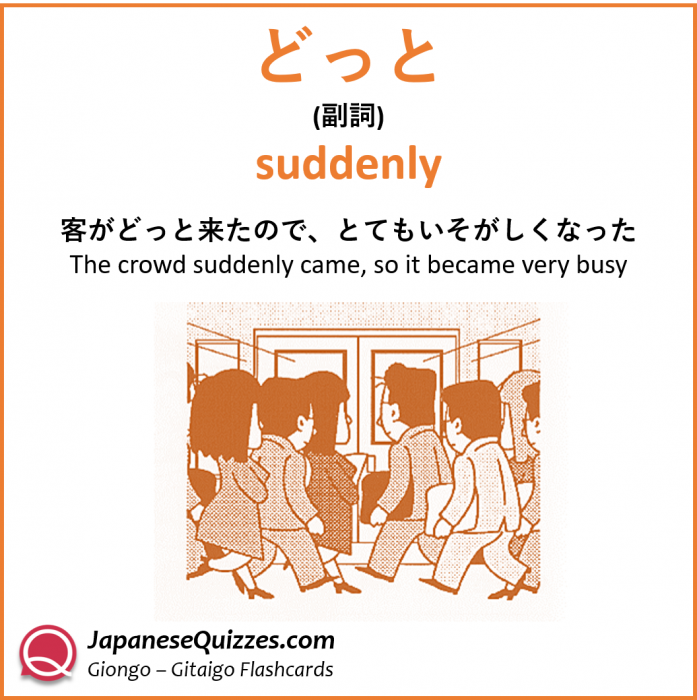
どっと
(副詞)
“The sudden appearance of many things.”

Sample text:
- 客がどっと来たので、とてもいそがしくなった。
The crowd suddenly came, so it became very busy.
- 旅行の後で、つかれがどっと出た。
After the trip, I got tired suddenly.
(Source: E de wakaru Giongo Gitaigo)
Japanese Giongo Gitaigo
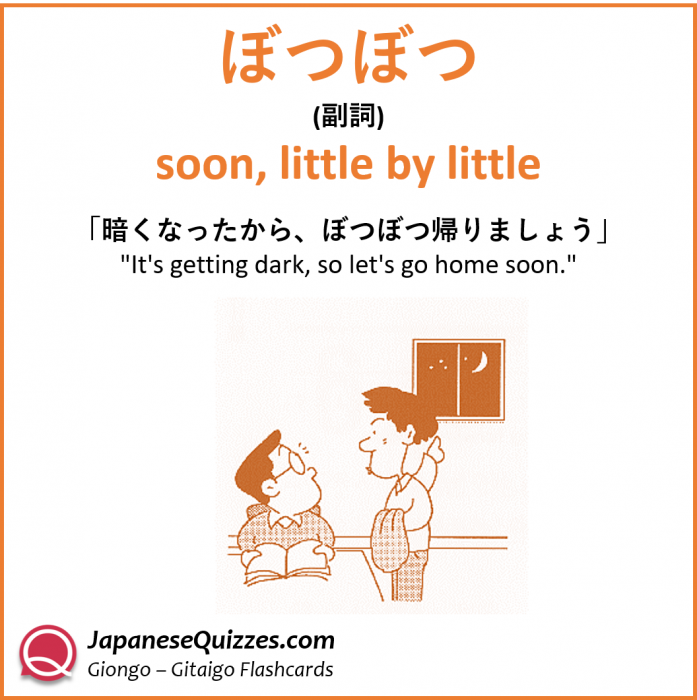
ぼつぼつ
(副詞)
“To start something little by little.”

Sample text:
- 「暗くなったから、ぼつぼつ帰りましょう」
“It’s getting dark, so let’s go home soon.“
- みかんが店にぼつぼつ出回り始めた。
Mandarins have begun to come to the store.
(Source: E de wakaru Giongo Gitaigo)
Japanese Giongo Gitaigo
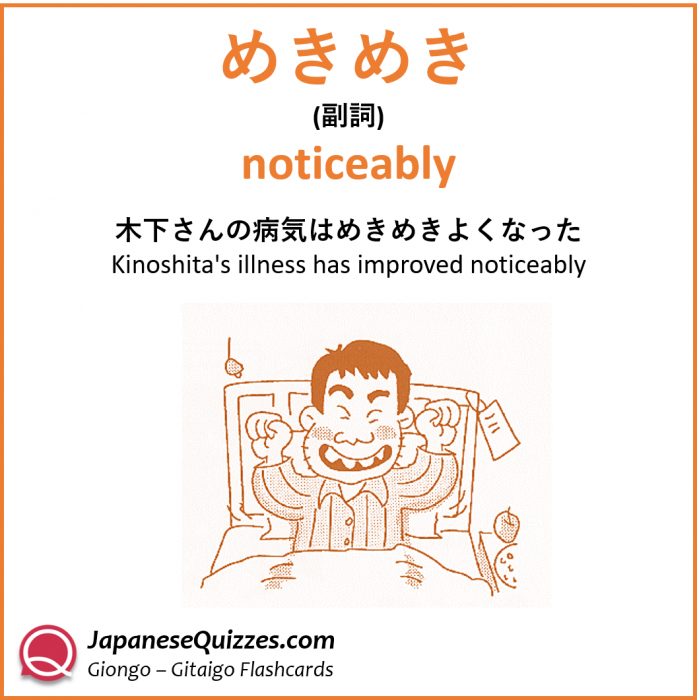
めきめき
(副詞)
“Progressing or improving noticeably.”

Sample text:
- 林さんのピアノのうではめきめき上がった。
Hayashi’s piano skill has improved noticeably.
- 木下さんの病気はめきめきよくなった。
Kinoshita’s illness has improved noticeably.
(Source: E de wakaru Giongo Gitaigo)
Japanese Giongo Gitaigo