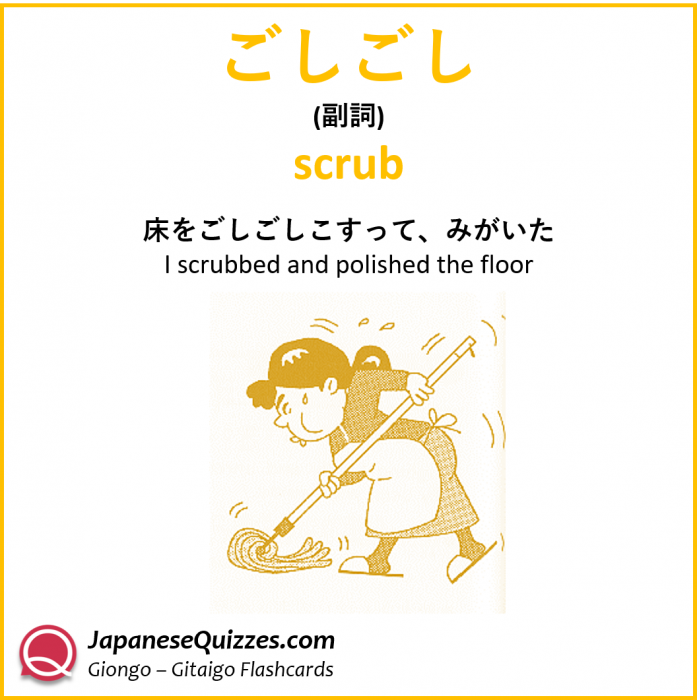
ごしごし
(副詞)
“Rubbing vigorously. (Typically used with kosuru or arau.)”

Sample text:
- 床をごしごしこすって、みがいた。
I scrubbed and polished the floor.
- 子供が父親の背中をごしごし洗っている。
A child is scrubbing his father’s back.
(Source: E de wakaru Giongo Gitaigo)
Japanese Giongo Gitaigo
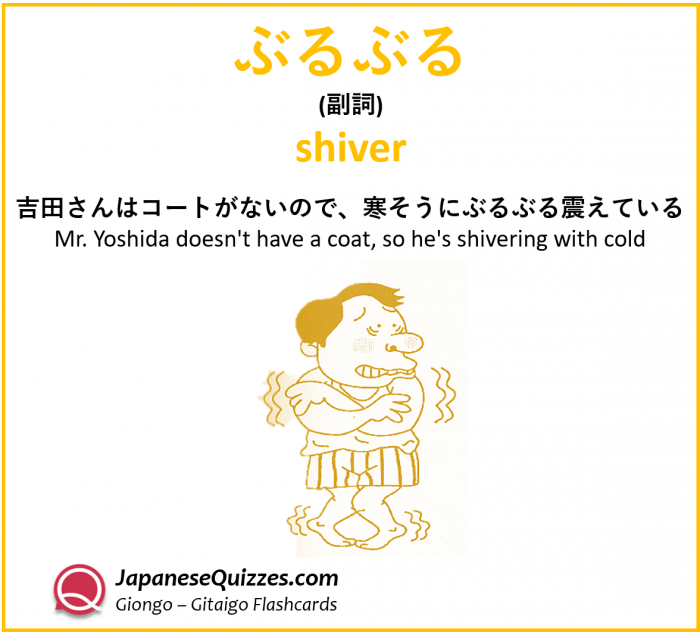
ぶるぶる
(副詞)
“Trembling due to cold, fear, etc. (Typically used with furueru.)”

Sample text:
- 吉田さんはコートがないので、寒そうにぶるぶるふるえている。
Mr. Yoshida doesn’t have a coat, so he’s shivering with cold.
- 先生にしかられるかもしれないので、その子はぶるぶるふるえていた。
The child was quivering because he might be scolded by his teacher.
(Source: E de wakaru Giongo Gitaigo)
Japanese Giongo Gitaigo
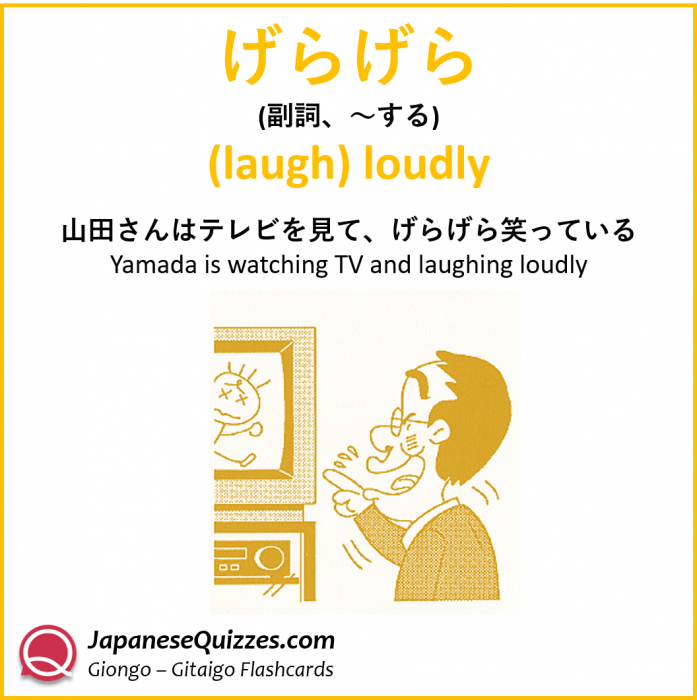
げらげら
(副詞)
“Laughing loudly and unrestrainedly. (Typically used with warau.)”

Sample text:
- 山田さんはテレビを見て、げらげら笑っている。
Yamada is watching TV and laughing loudly.
- 鈴木さんはズボンがやぶれていたので、みんなにげらげら笑われた。
Mr. Suzuki had torn trousers, so everyone was laughing unrestrainedly.
(Source: E de wakaru Giongo Gitaigo)
Japanese Giongo Gitaigo
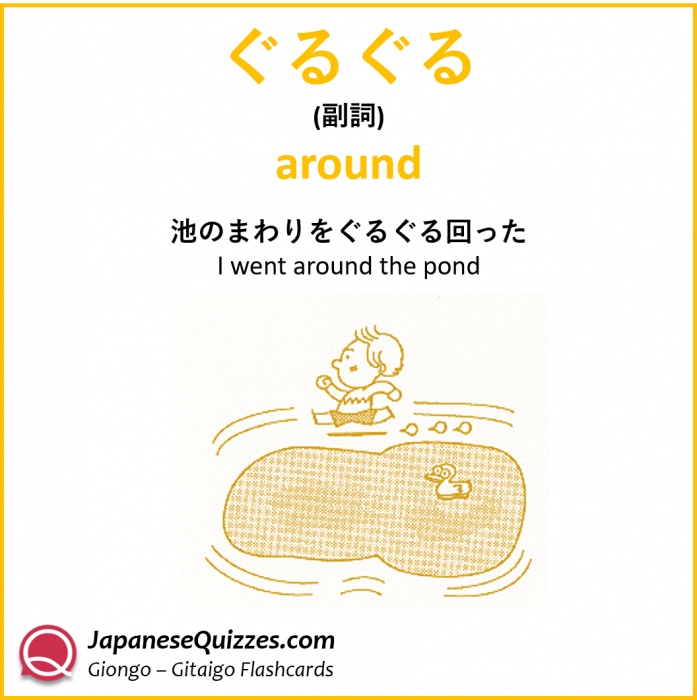
ぐるぐる
(副詞)
“Repeated rotating or wrapping. (Typical used with mawaru or maku.)”

Sample text:
- 池のまわりをぐるぐる回った。
I went around the pond.
- けがをしたところに、包帯をぐるぐる巻いた。
A bandage was wrapped around where I was injured.
(Source: E de wakaru Giongo Gitaigo)
Japanese Giongo Gitaigo
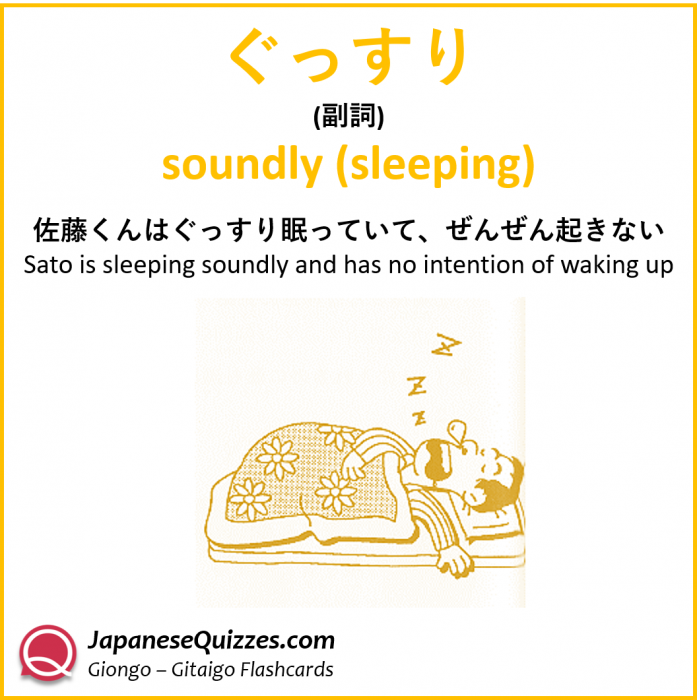
ぐっすり
(副詞)
“Deep, satisfying sleep. (Typical used with nemuru or neru.)”

Sample text:
- 佐藤くんはぐっすり眠っていて、ぜんぜん起きない。
Sato is sleeping soundly and has no intention of waking up.
- ゆうべはぐっすり寝た。
Last night I slept soundly.
(Source: E de wakaru Giongo Gitaigo)
Japanese Giongo Gitaigo
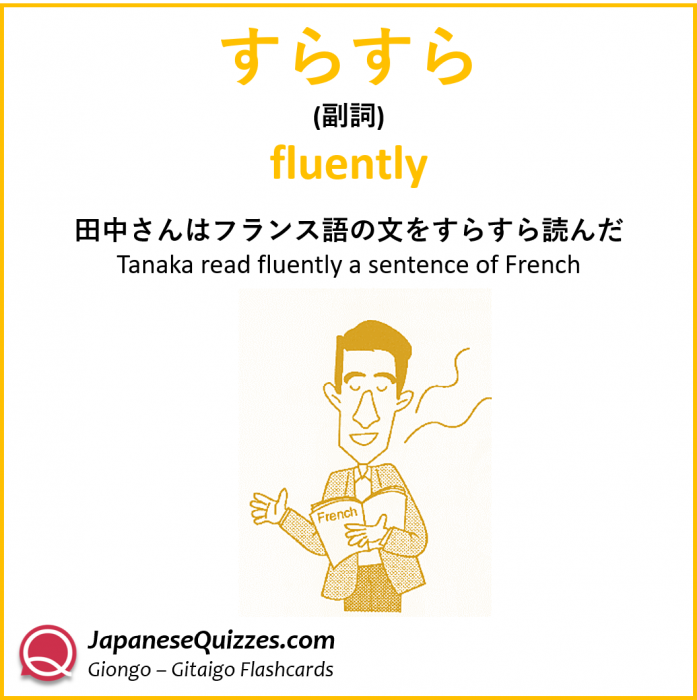
すらすら
(副詞)
“The smooth, unbroken progression of spoken remarks, a job, etc. (Typically used with hanasu, yomu, kaku, kotaeru, or susumu.)”

Sample text:
- 田中さんはフランス語の文をすらすら読んだ。
Tanaka read fluently a sentence of French.
- 黒川さんはその問題にすらすら答えた。
Kurokawa’s answered fluently to the problem.
(Source: E de wakaru Giongo Gitaigo)
Japanese Giongo Gitaigo