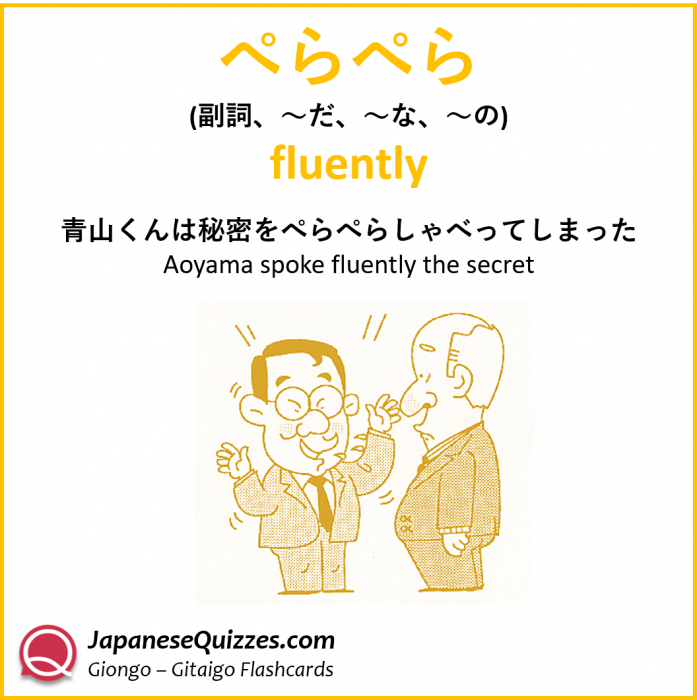
ぺらぺら
(副詞、~だ、~な、~の)
“Talkativeness, in a negative sense. (Typical used with hanasu or shaberu.
Proficiency in a foreign language. (Typically used with da or hanasu.)”

Sample text:
- 青山くんは秘密をぺらぺらしゃべってしまった。
Aoyama spoke fluently the secret.
- 水野さんはインドネシア語がぺらぺらだ。
Mr. Mizuno speaks Indonesian fluently.
(Source: E de wakaru Giongo Gitaigo)
Japanese Giongo Gitaigo
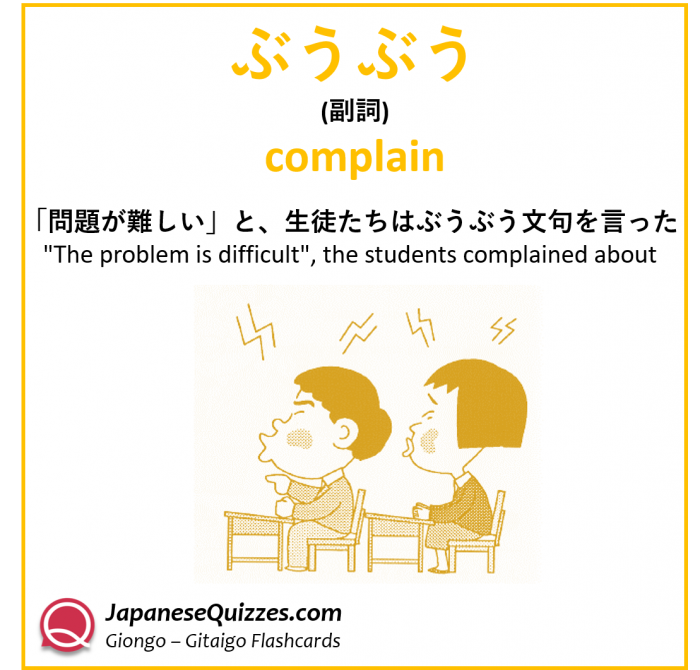
ぶうぶう
(副詞)
“Incessant voicing of gripes and complaints (Typically used with iu.)”

Sample text:
- 「問題が難しい」と、生徒たちはぶうぶう文句を言った。
“The problem is difficult”, the students complained about.
- クーラーがこわれているので、みんなぶうぶう言っている。
The air conditioner is broken, so everyone is complaining.
(Source: E de wakaru Giongo Gitaigo)
Japanese Giongo Gitaigo
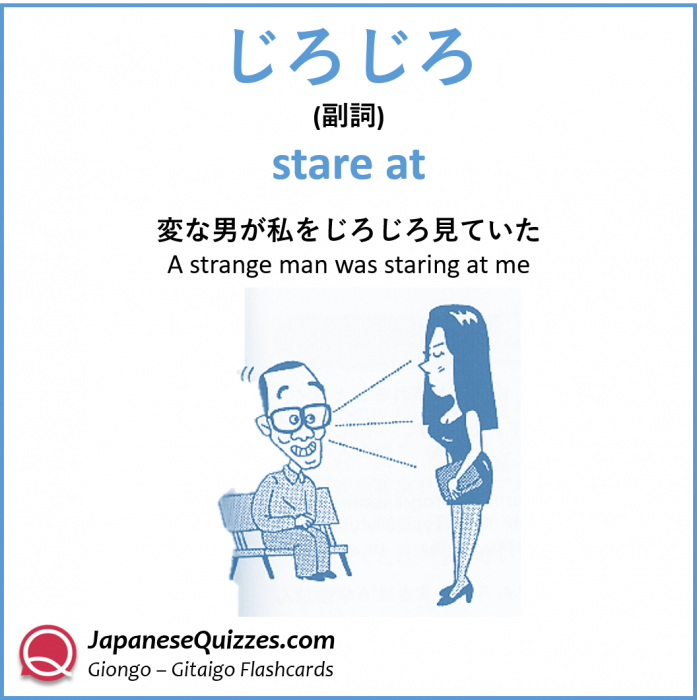
じろじろ
(副詞)
“Staring unreservedly at a person in a negative sense. (Typical used with miru.)”

Sample text:
- 変な男が私をじろじろ見ていた。
A strange man was staring at me.
- 子供に顔をじろじろ見られた。
The child stared at me.
(Source: E de wakaru Giongo Gitaigo)
Japanese Giongo Gitaigo
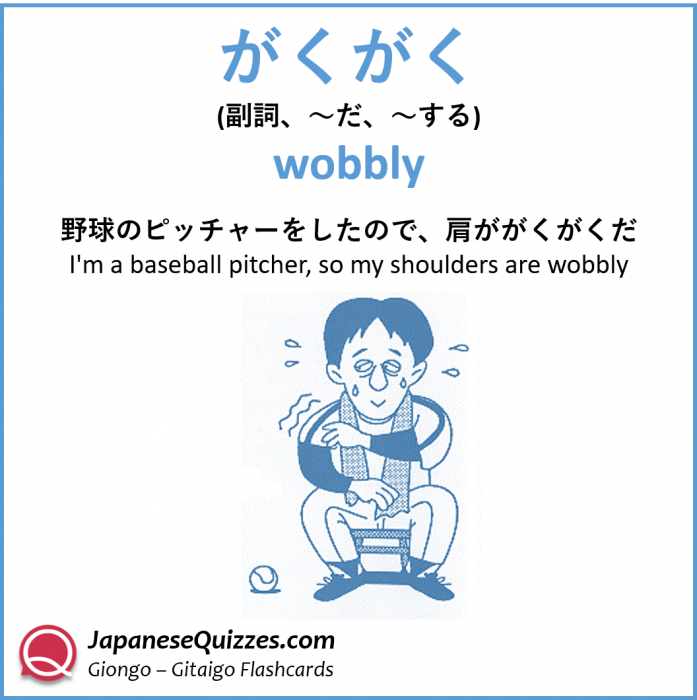
がくがく
(副詞、~だ、~する)
“The instability of an object that has lost its stability due to wear and tear, etc.”

Sample text:
- 野球のピッチャーをしたので、肩ががくがくだ。
I’m a baseball pitcher, so my shoulders are wobbly.
- いすのあしががくがくしている。
The legs of the chair are wobbly.
(Source: E de wakaru Giongo Gitaigo)
Japanese Giongo Gitaigo
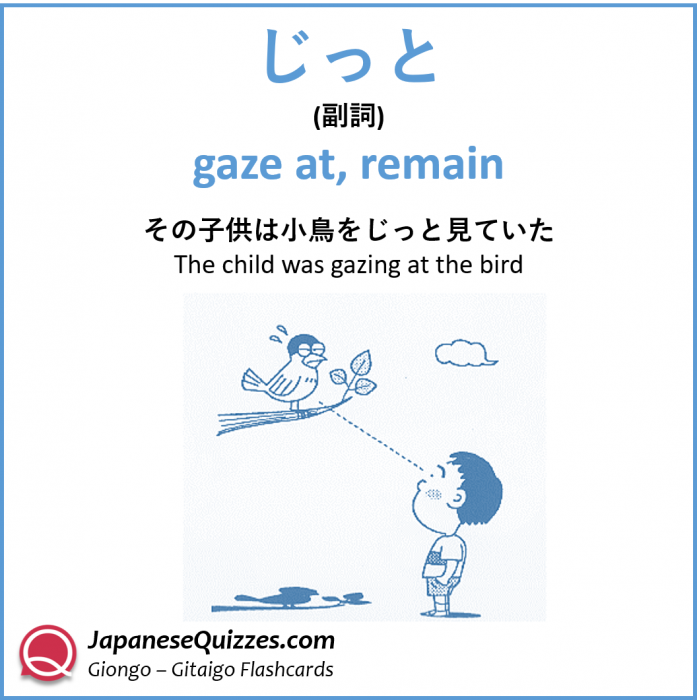
じっと
(副詞)
“Concentration on a specific thing or event. (Typically used with miru or kangaeru.)
Motionlessness. Quiet perseverance. (Typically used with suru or gaman-suru.) ”

Sample text:
- その子供は小鳥をじっと見ていた。
The child was gazing at the bird.
- 注射が終わるまで、その子はじっとしていた。
The child remained still until the injection was over.
(Source: E de wakaru Giongo Gitaigo)
Japanese Giongo Gitaigo
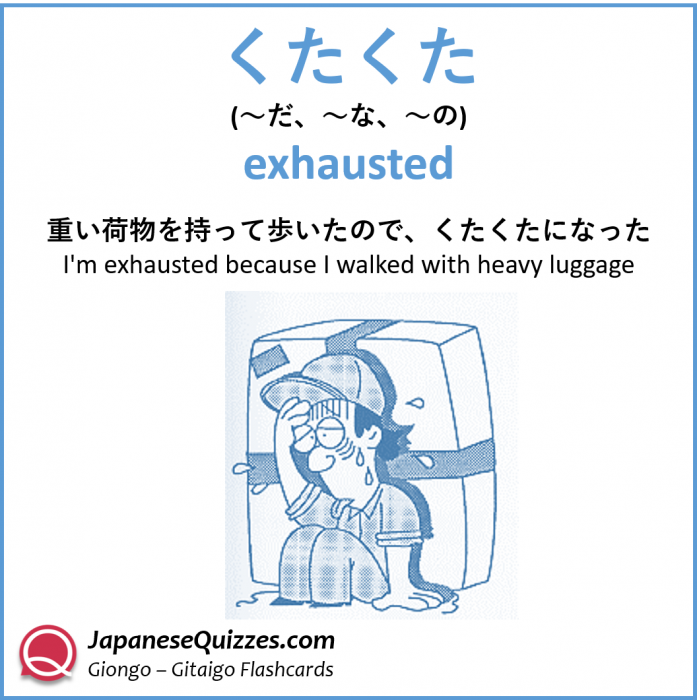
くたくた
(~だ、~な、~の)
“Exhaustion to the point of being almost unable to move.”

Sample text:
- 重い荷物を持って歩いたので、くたくたになった。
I’m exhausted because I walked with heavy luggage.
- くたくたで、何もしたくない。
I’m exhausted and don’t want to do anything.
(Source: E de wakaru Giongo Gitaigo)
Japanese Giongo Gitaigo