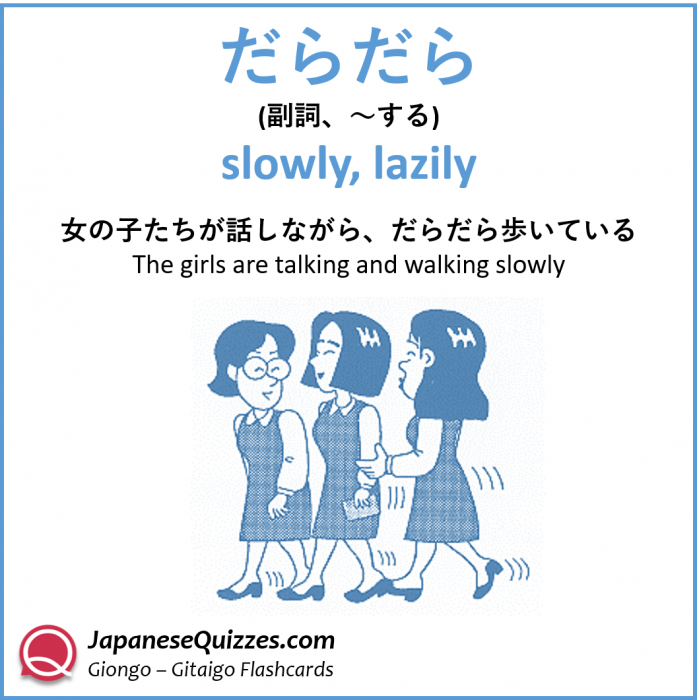
だらだら
(副詞、~する)
“Slothfulness with a lack of energy in movements.”

Sample text:
- 女の子たちが話しながら、だらだら歩いている。
The girls are talking and walking slowly.
- 「だらだらしないで、早く仕事をしなさい」
“Don’t be lazy, do your job quickly.”
(Source: E de wakaru Giongo Gitaigo)
Japanese Giongo Gitaigo
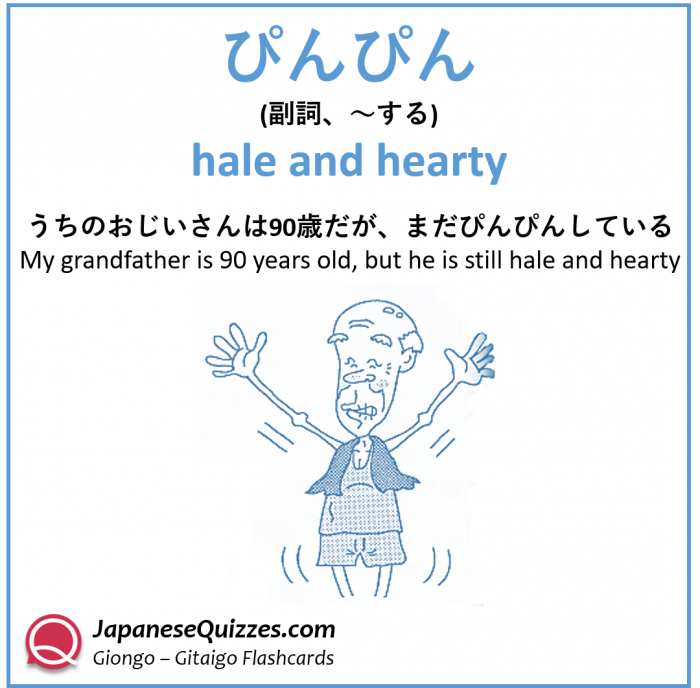
ぴんぴん
(副詞、~する)
“Used when someone such as an elderly person seems hale and hearty.”
Sample text:
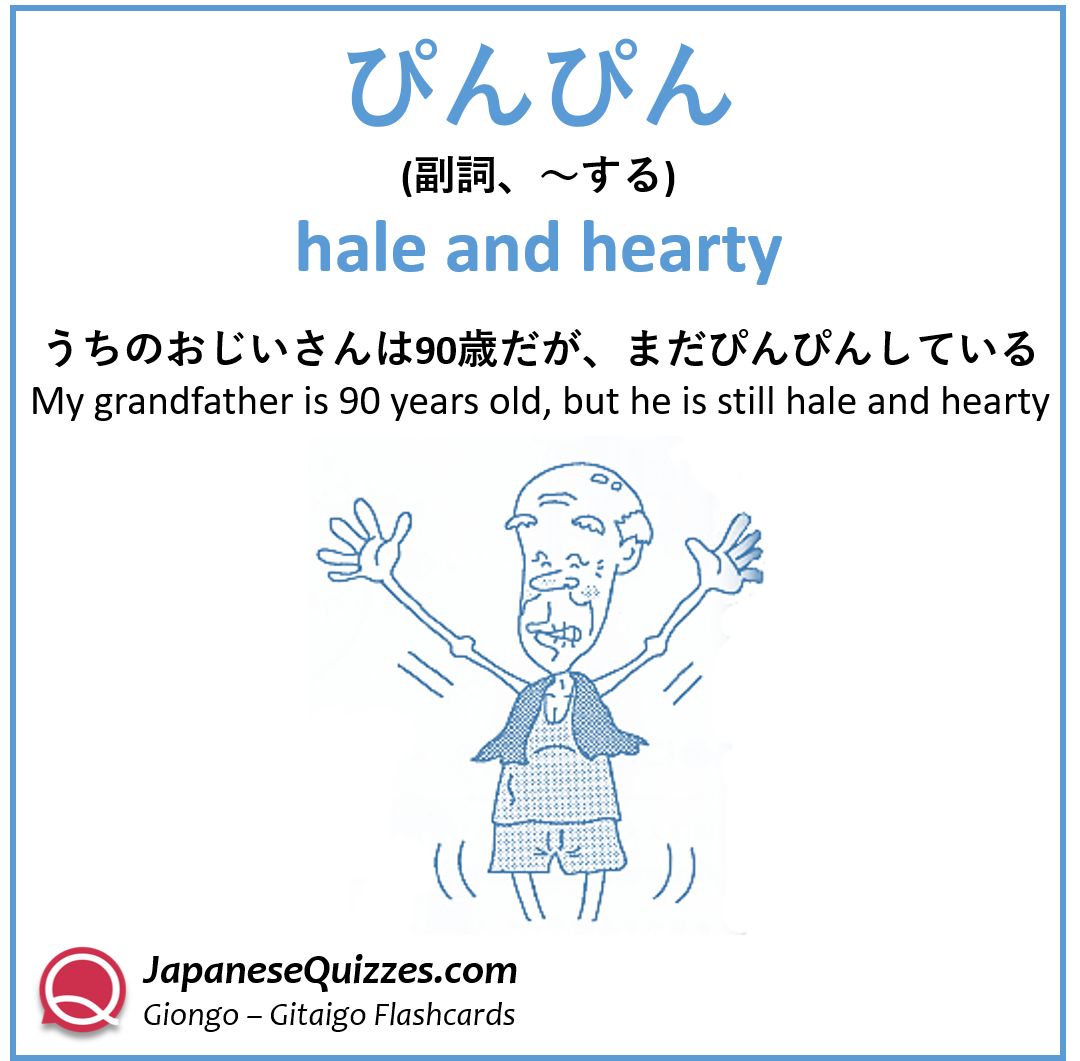
- うちのおじいさんは90歳だが、まだぴんぴんしている。
My grandfather is 90 years old, but he is still hale and hearty.
- 小林さんは事故にあったと聞いたが、ぴんぴんしていた。
I heard Kobayashi had an accident, but he is still full of life.
(Source: E de wakaru Giongo Gitaigo)
Japanese Giongo Gitaigo
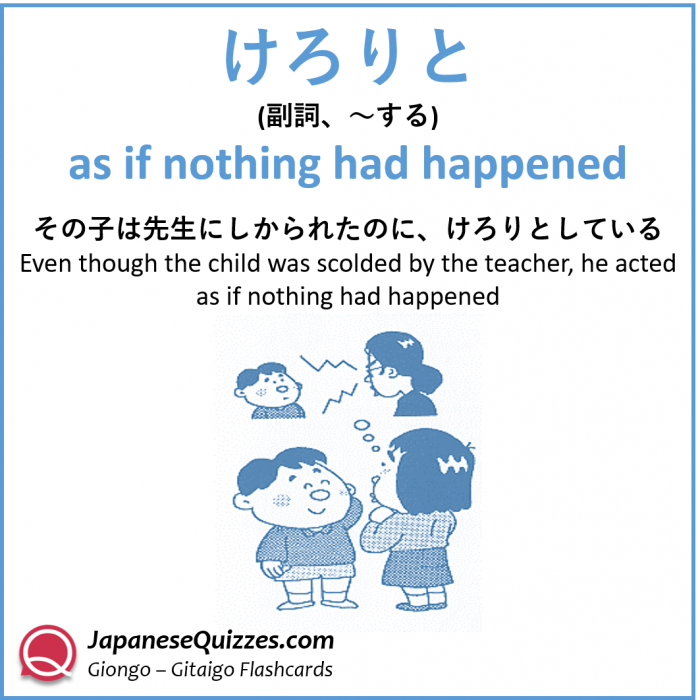
けろりと
(副詞、~する)
“Cooly acting as though nothing happened when something major occurred. (The variant kerotto is also used.)”
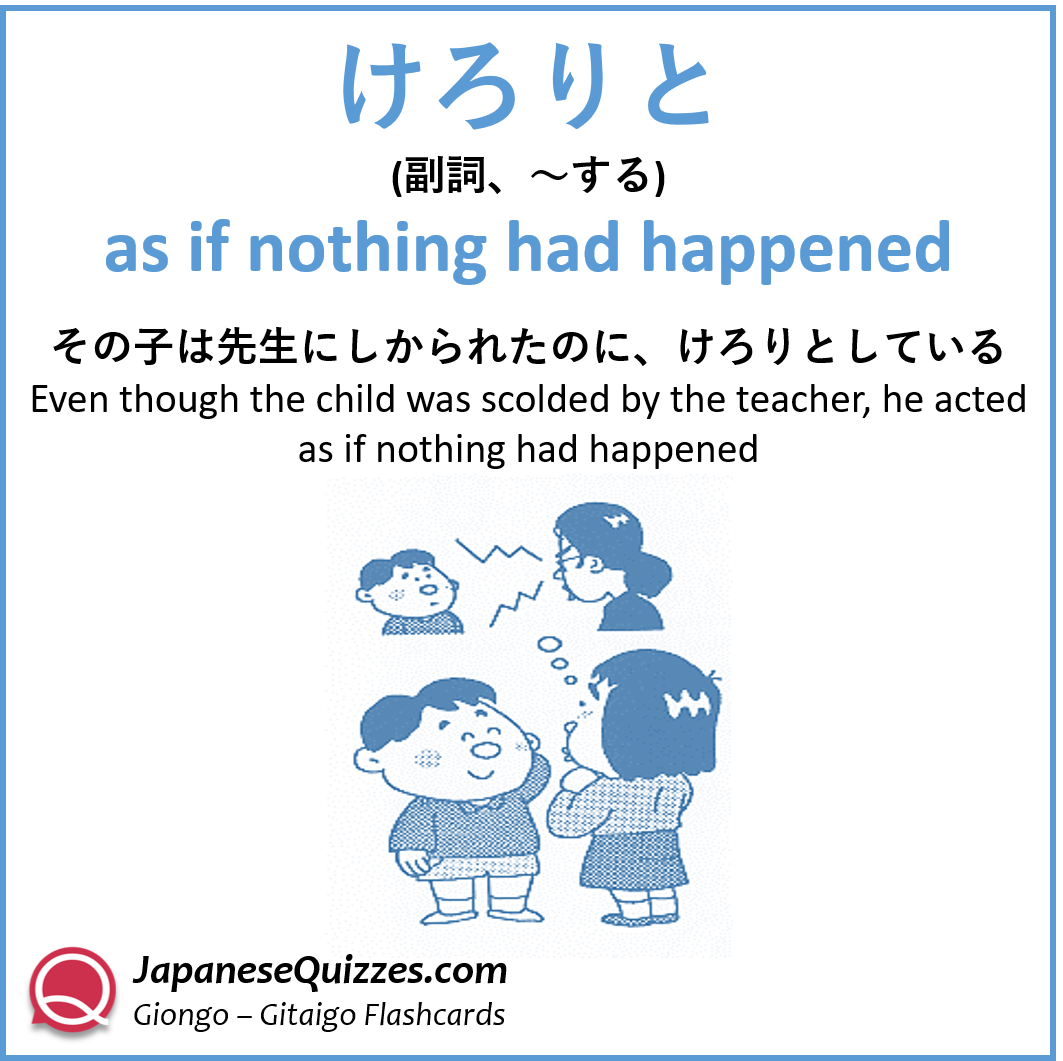
Sample text:
- その子は先生にしかられたのに、けろりとしている。
Even though the child was scolded by the teacher, he acted as if nothing had happened.
- 松本さんは大学に落ちたのに、けろりとしている。
Even though Matsumoto failed college, he acted as if nothing had happened.
(Source: E de wakaru Giongo Gitaigo)
Japanese Giongo Gitaigo
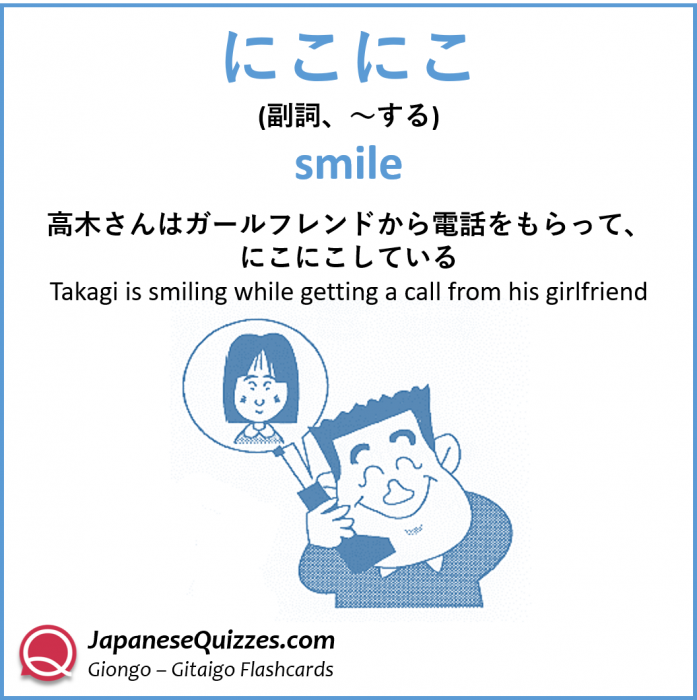
にこにこ
(副詞、~する)
“Happiness accompanied by a broad grin.”

Sample text:
- 高木さんはガールフレンドから電話をもらって、にこにこしている。
Takagi is smiling while getting a call from his girlfriend.
- あの人はいつもにこにこしていて、楽しそうだ。
That guy is always smiling and looks happy.
(Source: E de wakaru Giongo Gitaigo)
Japanese Giongo Gitaigo
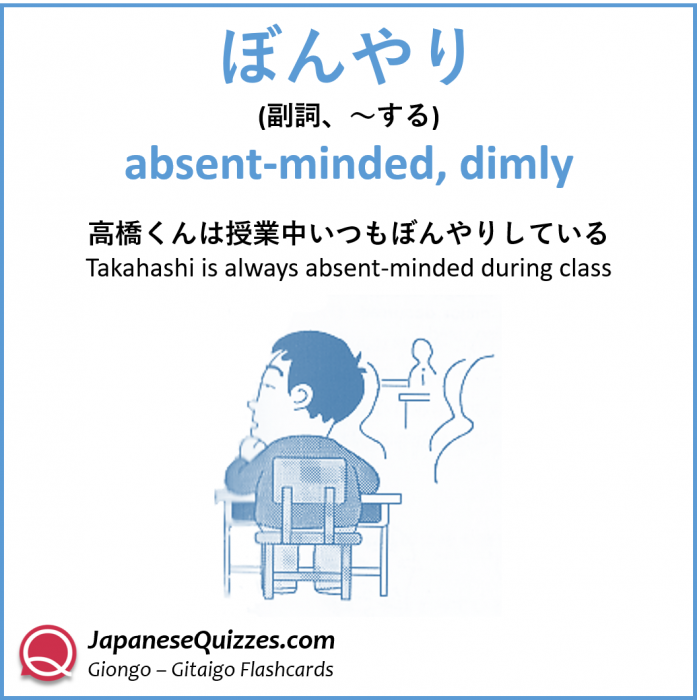
ぼんやり
(副詞、~する)
“A loss of concentration. A state in which the mind is blank. Also used when colors or shapes are blurred.”

Sample text:
- 高橋くんは授業中いつもぼんやりしている。
Takahashi is always absent-minded during class.
- 海の向こうに島がぼんやり見える。
The island to the other side of the sea can be seen dimly.
(Source: E de wakaru Giongo Gitaigo)
Japanese Giongo Gitaigo
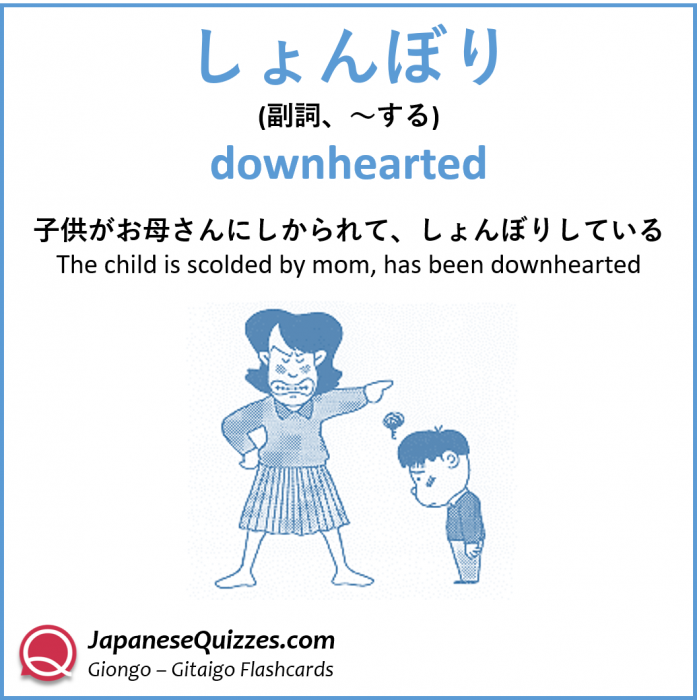
しょんぼり
(副詞、~する)
“Dispiritedness due to an unpleasant happening.”

Sample text:
- 子供がお母さんにしかられて、しょんぼりしている。
The child is scolded by mom, has been downhearted.
- 弟はお金をなくして、しょんぼりしている。
My elder brother is downhearted because he lost money.
(Source: E de wakaru Giongo Gitaigo)
Japanese Giongo Gitaigo