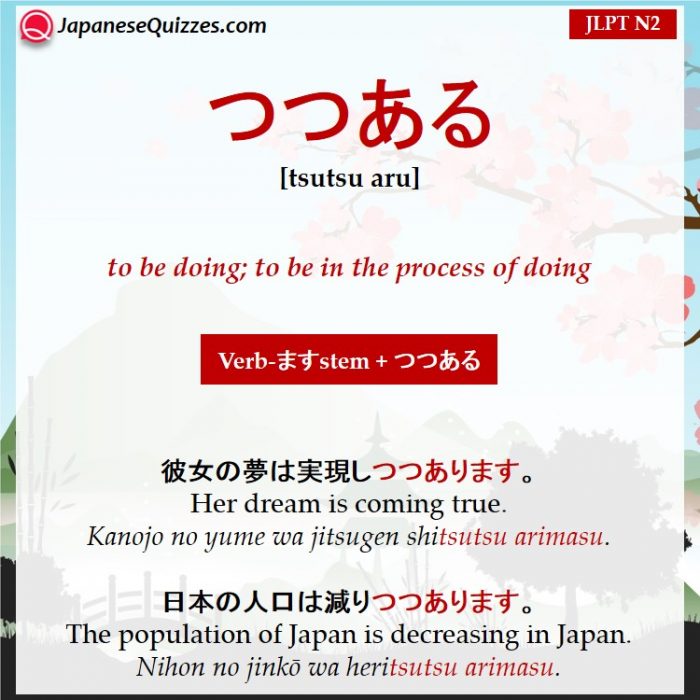
to be doing; to be in the process of doing

Formations
Verb-ますstem + つつある
Examples
彼女の夢は実現しつつある / 実現しつつあります。
Kanojo no yume wa jitsugen shitsutsu aru/ jitsugen shitsutsu arimasu.
Her dream is coming true.
私たちの計画は具体化しつつある / 具体化しつつあります。
Watashitachi no keikaku wa gutai-ka shitsutsu aru/ gutai-ka shitsutsu arimasu.
Our plan is taking shape.
日本の人口は減りつつある / 減りつつあります。
Nihon’nojinkō wa heritsutsu aru/ heritsutsu arimasu.
The population of Japan is decreasing in Japan.
私は日本語を流暢に話せるようになりつつある / なりつつあります。
Watashi wa nihongo o ryūchō ni hanaseru yō ni naritsutsu aru/ naritsutsu arimasu.
I am becoming able to speak Japanese fluently.
最近は日本でも転職する人が増加しつつある / 増加しつつあります。
Saikin wa Nihon demo tenshoku suru hito ga zōka shitsutsu aru/ zōka shitsutsu arimasu.
The number of people who change jobs has been increasing in Japan too recently.
最近のある調査によると喫煙者の数は減少しつつある / 減少しつつあります。
Saikin no aru chōsa ni yoru to kitsuen-sha no kazu wa genshō shitsutsu aru/ genshō shitsutsu arimasu.
A recent survey shows that the number of smokers is decreasing.
See also
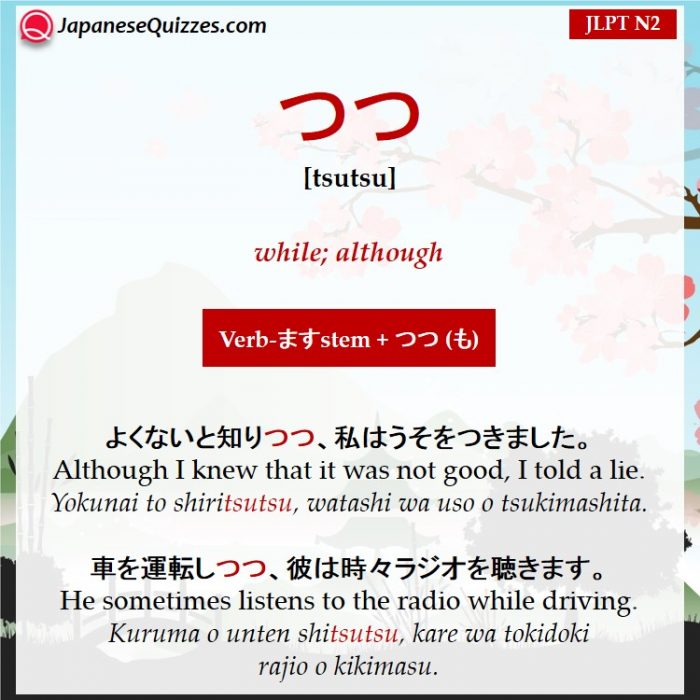

Formations
Verb-ますstem + つつ (も)
Examples
よくないと知りつつ、私はうそをついた / つきました。
Yokunai to shiritsutsu, watashi wa uso o tsuita/ tsukimashita.
Although I knew that it was not good, I told a lie.
車を運転しつつ、彼は時々ラジオを聴く / 聴きます。
Kuruma o unten shitsutsu, kare wa tokidoki rajio o kiku/ kikimasu.
He sometimes listens to the radio while driving.
平日は毎日、電車に乗りつつ、私は歴史小説を読む / 読みます。
Heijitsu wa mainichi, densha ni noritsutsu, watashi wa rekishi shōsetsu o yomu/ yomimasu.
Everyday on weekdays I read a historical novel while taking a train.
運動不足は体に悪いと知りつつ、私は運動をしていない / 運動をしていません。
Undō busoku wa karadaniwarui to shiritsutsu, watashi wa undō o shite inai/ undō o shite imasen.
Even while knowing that a lack of physical activity is bad for my body, I don’t exercise.
夕食後、漢字を勉強しようと思いつつ、テレビゲームをしてしまった / テレビゲームをしてしまいました。
Yūshoku-go, kanji o benkyō shiyou to omoitsutsu, terebigēmu o shite shimatta/ terebigēmu o shite shimaimashita.
Thinking I’d study kanji after dinner, I ended up playing video games.
コンサルティングの仕事をしつつ、週末スペイン語を教えた / 教えました。
Konsarutingu no shigoto o shitsutsu, shūmatsu Supeingo o oshieta/ oshiemashita.
While continuing with the consulting work, I also taught Spanish on weekends.
See also
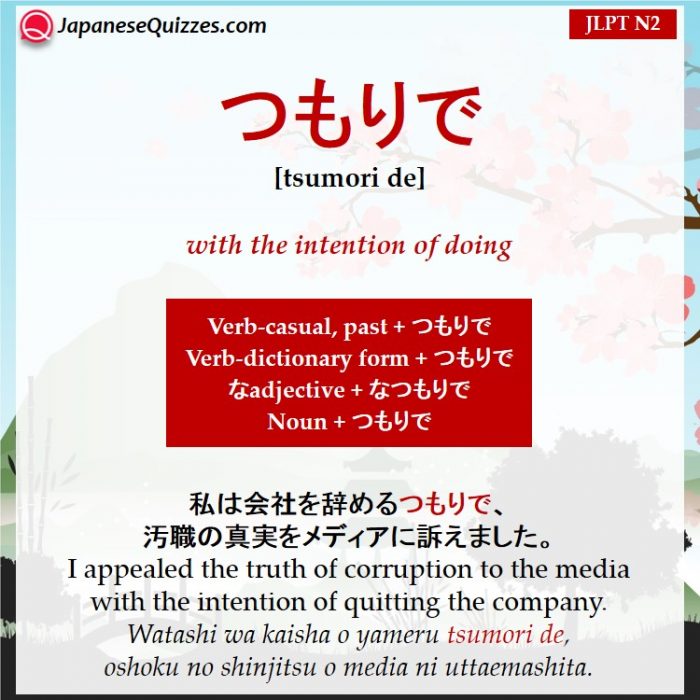
with the intention of doing

Formations
Verb-casual, past + つもりで
Verb-dictionary form + つもりで
なadjective + なつもりで
Noun + つもりで
Examples
姪は一日で読み切るつもりでその本を読み始めた / 読み始めました。
Mei wa ichinichi de yomikiru tsumori de sono-pon o yomi hajimeta/ yomi hajimemashita.
My niece sets out to read the book through in a day.
姪は、試験に合格するつもりで一生懸命勉強した / 勉強しました。
Mei wa, shiken ni gōkaku suru tsumori de isshōkenmei benkyō shita/ benkyō shimashita.
My niece studied hard with the intention of passing the examination.
私はあなたにさよならを言うつもりでここに来た / 来ました。
Watashi wa anata ni sayonara o iu tsumori de koko ni kita/ kimashita.
I came here with the intention of saying goodbye to you.
甥は英語を勉強するつもりでサンフランシスコに三か月間滞在した / 滞在しました。
Oi wa eigo o benkyō suru tsumori de Sanfuranshisuko ni san-kagetsu-kan taizai shita/ taizai shimashita.
My nephew stayed in San Francisco for three months with the intention of studying English.
私は会社を辞めるつもりで、汚職の真実をメディアに訴えた / 訴えました。
Watashi wa kaisha o yameru tsumori de, oshoku no shinjitsu o media ni uttaeta/ uttaemashita.
I appealed the truth of corruption to the media with the intention of quitting the company.
日本人しかいない会社で働くつもりで、私はこれから日本語を勉強する / 勉強します。
Nihonjin shika inai kaisha de hataraku tsumori de, watashi wa korekara nihongo o benkyō suru/ benkyō shimasu.
I will study Japanese from now on with the intention of working in a company where there are only Japanese people.
See also
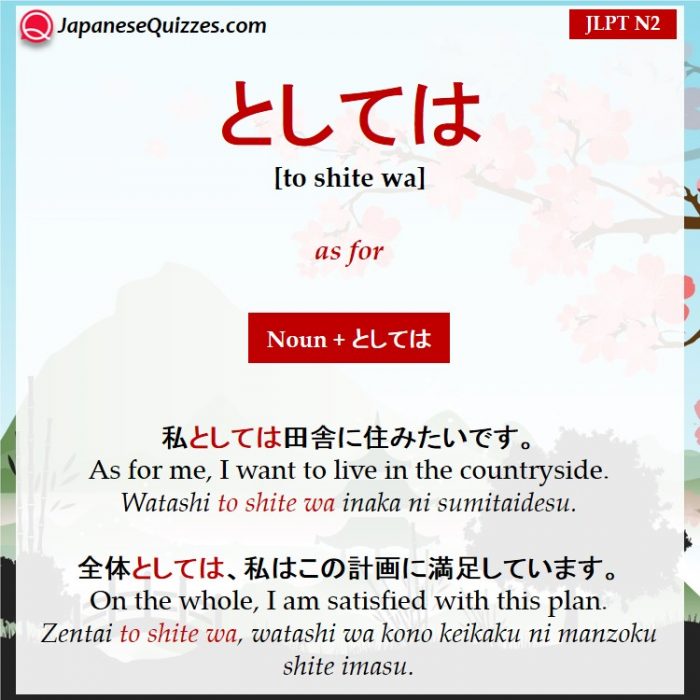

Formations
Noun + としては
Examples
私としては田舎に住みたい / 住みたいです。
Watashi to shite wa inaka ni sumitai/ sumitaidesu.
As for me, I want to live in the countryside.
私自身としては薬を飲みたくない / 飲みたくないです。
Watakushijishin to shite wa kusuri o nomitakunai/ nomitakunaidesu.
As for myself, I don’t want to take medicine.
夕食としては、私は前もって寿司料理屋を予約した / 予約しました。
Yūshoku to shite wa, watashi wa maemotte sushi ryōri-ya o yoyaku shita/ yoyaku shimashita.
As for dinner, I reserved a sushi restaurant in advance.
価格としては、その中古バイクは高すぎる / 高すぎます。
Kakaku to shite wa, sono chūko baiku wa taka sugiru/ taka sugimasu.
As for price, the second-hand bike too expensive.
全体としては、私はこの計画に満足している / 満足しています。
Zentai to shite wa, watashi wa kono keikaku ni manzoku shite iru/ manzoku shite imasu.
On the whole, I am satisfied with this plan.
日本語コースの一年生としてはリチャードさんは日本語が上手だ / 上手です。
Nihongo kōsu no ichinensei to shite wa richādo-san wa nihongo ga jōzuda/ jōzudesu.
For a first-year student of Japanese course, Richard is good in Japanese.
See also
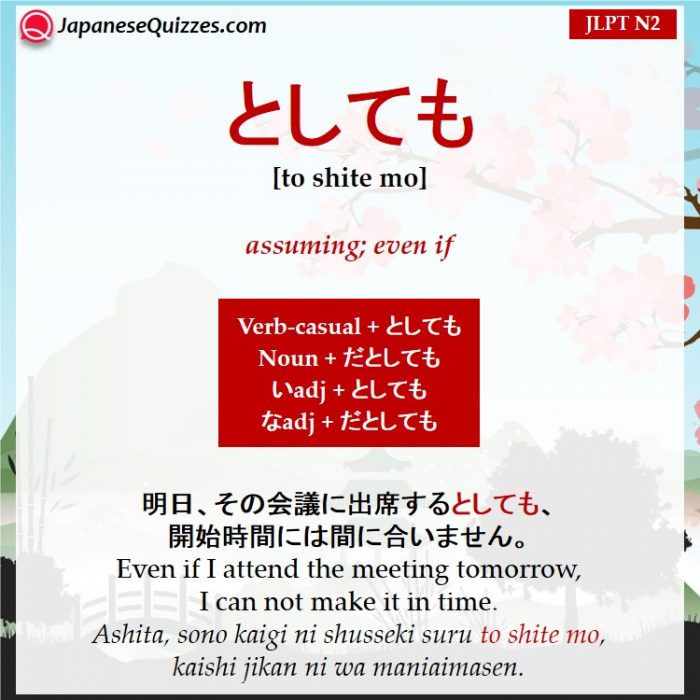

Formations
Verb-casual + としても
Noun + だとしても
いadj + としても
なadj + だとしても
Examples
それを認めるとしても、私はあなたに同意できない / 同意できません。
Sore o shitatameru to shite mo, watashi wa anata ni dōi dekinai/ dōi dekimasen.
Even if I admit that, I cannot agree with you.
明日、その会議に出席するとしても、開始時間には間に合わない / 間に合いません。
Ashita, sono kaigi ni shusseki suru to shite mo, kaishi jikan ni wa maniawanai/ maniaimasen.
Even if I attend the meeting tomorrow, I can not make it in time.
たくさん間違えるとしても、日本語であなたが彼女と話してみることは大切だ / 大切です。
Takusan machigaeru to shite mo, nihongo de anata ga kanojo to hanashite miru koto wa taisetsuda/ taisetsudesu.
Even if you make a lot of mistakes, it is important for you to try to talk to her in Japanese.
手がかりを持っていたとしても、甥はあなたにそれを教えないだろう / 教えないでしょう。
Tegakari o motte ita to shite mo, oi wa anata ni sore o oshienaidarou/ oshienaideshou.
Even if my nephew has a clue, he won’t let you know it.
彼はとてもいい人だとしても、私は彼を本当は信頼していない / 信頼していません。
Kare wa totemo ī-jinda to shite mo, watashi wa kare o hontōha shinrai shite inai/ shinrai shite imasen.
Even if he’s very nice, I don’t really trust him.
甥が彼の役割をまだ把握していないとしても、すぐに理解するだろう / 理解するでしょう。
Oi ga kare no yakuwari o mada haaku shite inai to shite mo, sugu ni rikai surudarou/ rikai surudeshou.
Even If my nephew has not yet grasped his role, soon he will understand it.
See also
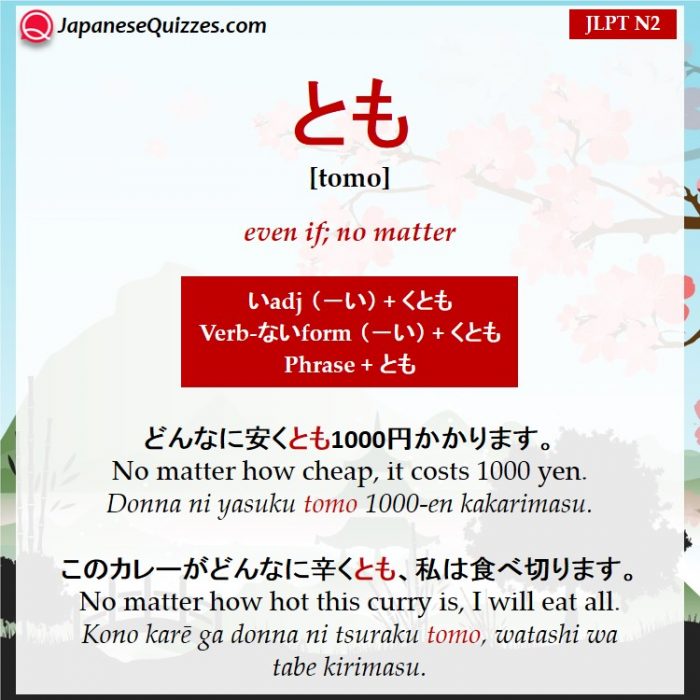

Formations
いadj (-い) + くとも
Verb-ないform (-い) + くとも
Phrase + とも
Examples
どんなに安くとも1000円かかる / かかります。
Don’nani yasuku tomo sen-en kakaru/ kakarimasu.
No matter how cheap, it costs 1000 yen.
このカレーがどんなに辛くとも、私は食べ切る / 食べ切ります。
Kono karē ga don’nani tsuraku tomo, watashi wa tabe kiru/ tabe kirimasu.
No matter how hot this curry is, I will eat all.
時間がどんなに長くかかろうとも、将来、私は日本語を流暢に話せるようになる / 話せるようになります。
Jikan ga don’nani nagaku kakarou tomo, shōrai, watashi wa nihongo o ryūchō ni hanaseru yō ni naru/ hanaseru yō ni narimasu.
No matter how long it will take, I will be able to speak Japanese fluently in the future.
あなたが何を言おうとも、私は自分が正しいと確信している / 確信しています。
Anata ga nani o iou tomo, watashi wa jibun ga tadashī to kakushin shite iru/ kakushin shite imasu.
No matter what you say, I am convinced that I am right.
あなたが健康であろうとも、一年に一回健康診断を受けるべきだ / 受けるべきです。
Anata ga kenkōdearou tomo, ichinen ni ikkai kenkōshinda o ukerubekida/ ukerubekidesu.
Even if you are healthy, you should have a health check once a year.
そんなに急いで走らなくとも、私たちは会議に間に合うだろう / 間に合うでしょう。
Son’nani isoide hashiranaku tomo, watashitachiha kaigi ni maniaudarou/ maniaudeshou.
Even if we do not run in such a hurry, we will make the meeting.
See also