
Formations
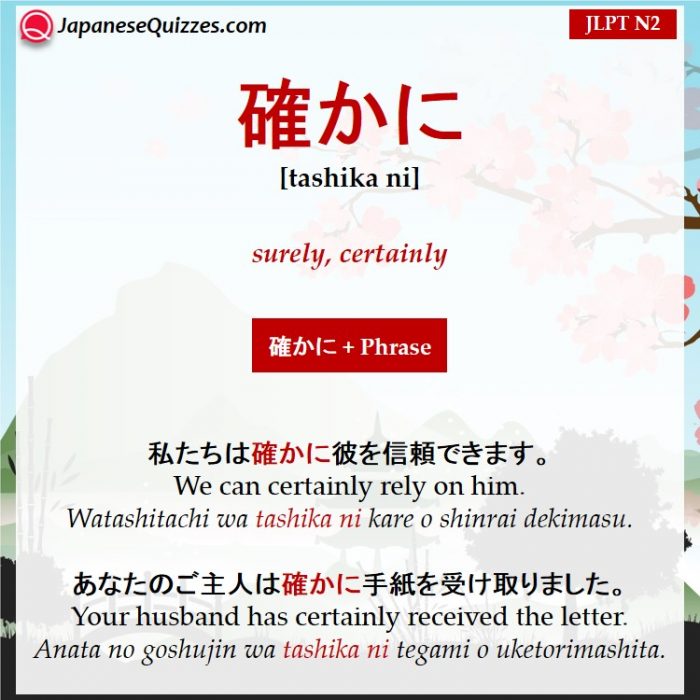
確かに + phrase
Examples
私たちは確かに彼を信頼できる / 信頼できます。
Watashitachi wa tashika ni kare o shinraidekiru/ shinrai dekimasu.
We can certainly rely on him.
彼女は確かに働き者だ / 働き者です。
Kanojo wa tashika ni hataraki monoda/ hataraki monodesu.
She certainly is a hard worker.
私は確かにそれを予約した / 予約しました。
Watashi wa tashika ni sore o yoyaku shita/ yoyaku shimashita.
I certainly reserved that.
祖父は確かにこれを箱に詰めた / 詰めました。
Sofu wa tashika ni kore o hako ni tsumeta/ tsumemashita.
My grandfather is sure that I packed this into the box.
あなたのご主人は確かに手紙を受け取った / 受け取りました。
Anata no goshujin wa tashika ni tegami o uketotta/ uketorimashita.
Your husband has certainly received the letter.
それらは確かに出荷された / 出荷されました。
Sorera wa tashika ni shukka sa reta/ shukka sa remashita.
Those were certainly shipped out.
See also

Formations
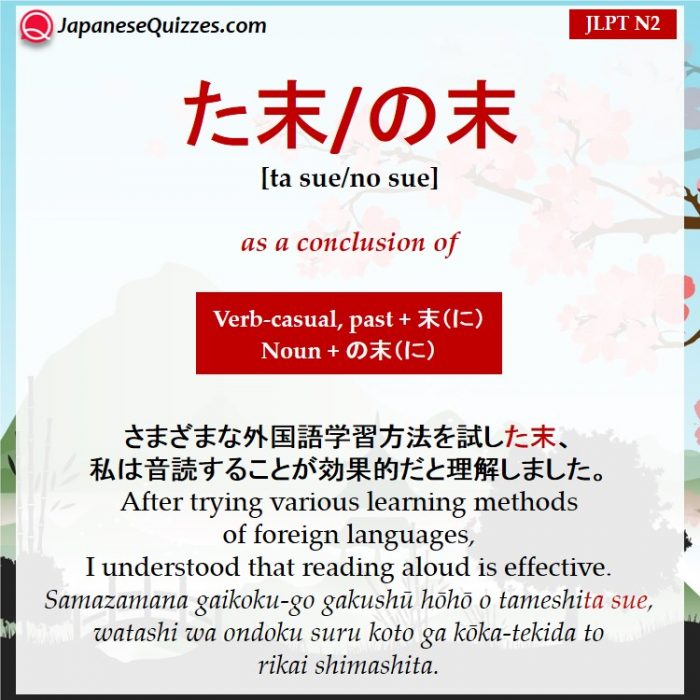
Verb-casual, past + 末(に)
Noun + の末(に)
Examples
いろいろ考えた末に、私は会社を辞めることにした / 辞めることにしました。
Iroiro kangaeta sue ni, watashi wa kaisha o yameru koto ni shita/ yameru koto ni shimashita.
As a conclusion of thinking about various things for a long time, I decided to leave the company.
いろいろ検討した末、私たちは凶暴なコアラを檻の中に入れた / 入れました。
Iroiro kentō shita sue, watashitachiha kyōbōna koara o ori no naka ni ireta/ iremashita.
As a conclusion of considering various things, we put a ferocious koala in the cage.
さまざまな外国語学習方法を試した末、私は音読することが効果的だと理解した / 理解しました。
Samazamana gaikoku-go gakushū hōhō o tameshita sue, watashi wa ondoku suru koto ga kōka-tekida to rikai shita/ rikai shimashita.
After trying various learning methods of foreign languages, I understood that reading aloud is effective.
長期間にわたる交渉の末、彼は同意した / 同意しました。
Chōkikan ni wataru kōshō no sue, kare wa dōi shita/ dōi shimashita.
As a conclusion of a long-running negotiation, he agreed.
激しい議論の末、私たちはようやく結論にたどり着いた / たどり着きました。
Hageshī giron no sue, watashitachi wa yōyaku ketsuron ni tadoritsuita/ tadoritsukimashita.
As a conclusion of an intense debate, we finally reached a conclusion.
試行錯誤の末、彼はふと正しい答えを思いついた / 思いつきました。
Shikōsakugo no sue, kare wa futo tadashī kotae o omoitsuita/ omoitsukimashita.
Through trial and error, he found the right answer by chance.
See also
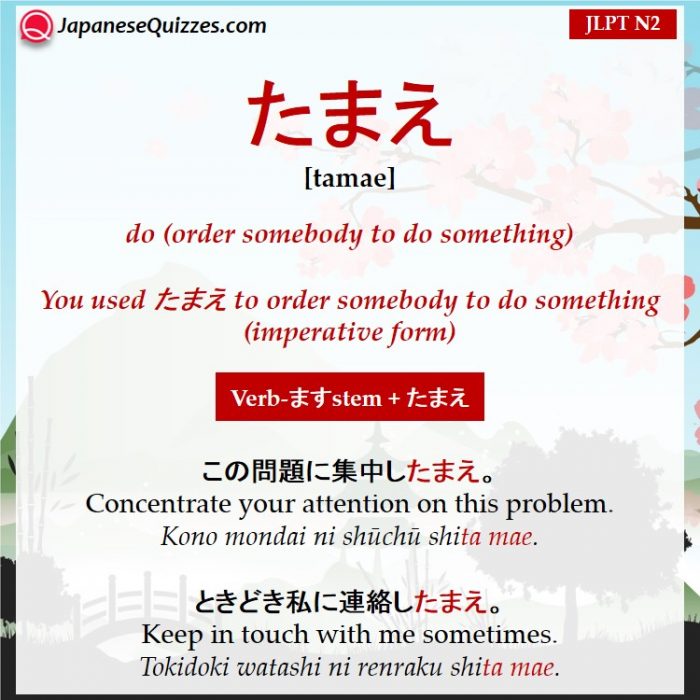
do (order somebody to do something)
You used たまえ to order somebody to do something (imperative form)

Formations
Verb-ますstem + たまえ
Examples
この問題に集中したまえ。
Kono mondai ni shūchū shita mae.
Concentrate your attention on this problem.
ときどき私に連絡したまえ。
Tokidoki watashi ni renraku shita mae.
Keep in touch with me sometimes.
君の作文を手本と比べたまえ。
Kun no sakubun o tehon to kurabe tamae.
Compare your composition with the example.
もし町にくることがあれば、私に会いに来たまえ。
Moshi machi ni kuru koto ga areba, watashi ni ai ni ki tamae.
If you ever come to town, come to see me.
困ったら私のところへきたまえ。
Komattara watashi no tokoro e ki tamae.
Come to me if you are in difficulties.
一本の木が枯れたら、その場所に、もう1本植えたまえ。
Ippon no ki ga karetara, sono basho ni, mō ippon ue tamae.
If a tree dies down, plant another in its place.
See also
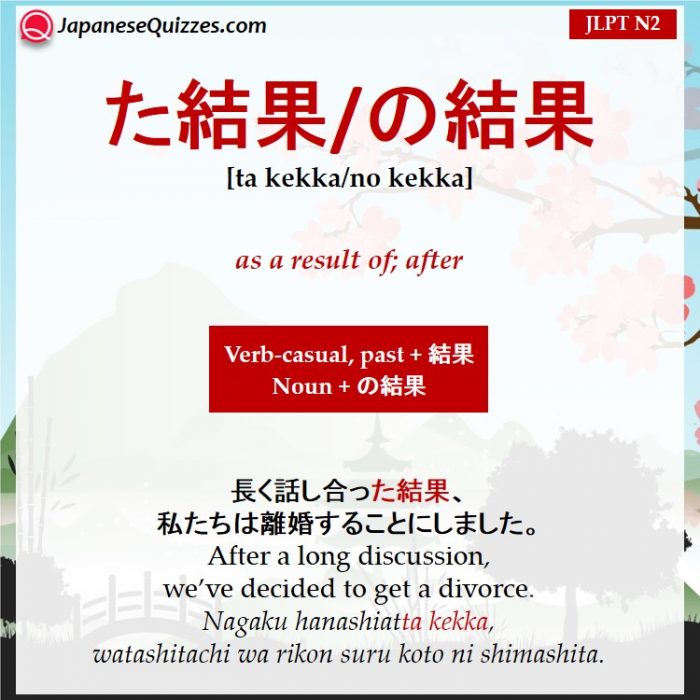

Formations
Verb-casual, past + 結果
Noun + の結果
Examples
取材した結果、記者は新しい事実を発見した / 発見しました。
Shuzai shita kekka, kisha wa atarashī jijitsu o hakken shita/ hakken shimashita.
After collecting information, the reporter found new facts.
妻と相談した結果、スウェーデンへの移住を決めた / 決めました。
Tsuma to sōdan shita kekka, suu~ēden e no ijū o kimeta/ kimemashita.
As a result of consulting with my wife, I decided to move to Sweden.
長く話し合った結果、私たちは離婚することにした / 離婚することにしました。
Nagaku hanashiatta kekka, watashitachiha rikon suru koto ni shita/ rikon suru koto ni shimashita.
After a long discussion, we’ve decided to get a divorce.
一生懸命に勉強した結果、クラスで一番になった / 一番になりました。
Isshōkenmei ni benkyō shita kekka, kurasu de ichiban ni natta/ ichiban ni narimashita.
I worked hard and consequently gained the top-seat in the class.
実験の結果は予想とは違った / 違いました。
Jikken no kekka wa yosō to wa chigatta/ chigaimashita.
The result of the experiment was different from the expectation.
この政策の結果、物価が大幅に上昇した / 上昇しました。
Kono seisaku no kekka, bukka ga ōhaba ni jōshō shita/ jōshō shimashita.
A price rose drastically as a result of this policy.
See also
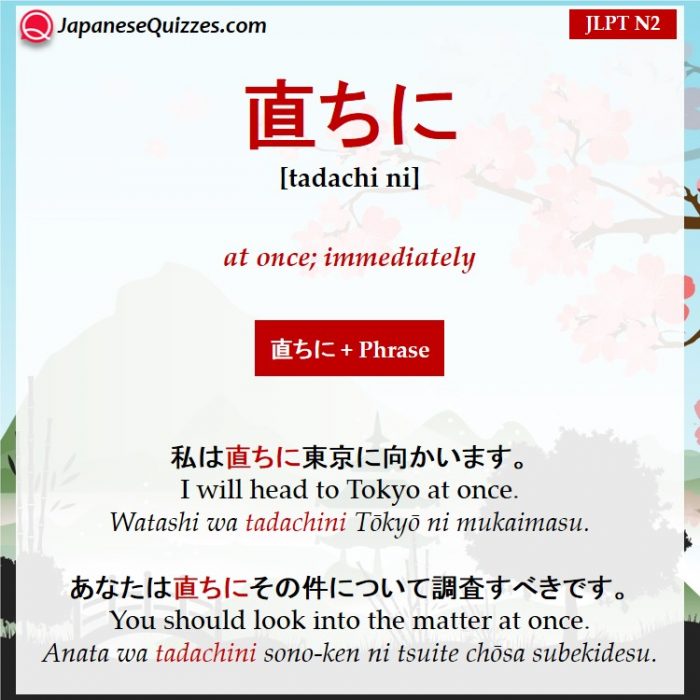

Formations
直ちに + phrase
Examples
私は直ちに東京に向かう / 向かいます。
Watashi wa tadachini Tōkyō ni mukau/ mukaimasu.
I will head to Tokyo at once.
私は直ちにこの仕事をしなければならない / しなければなりません。
Watashi wa tadachini kono shigoto o shinakereba naranai/ shinakereba narimasen.
I must do this work immediately.
私たちはを直ちにそれをあなたへ知らせる / 知らせます。
Watashitachiha o tadachini sore o anata e shiraseru/ shirasemasu.
We will inform you of that immediately.
上司は直ちに彼が解雇されるよう要求した / 要求しました。
Jōshi wa tadachini kare ga kaiko sa reru yō yōkyū shita/ yōkyū shimashita.
The boss demanded that he be fired immediately.
上司は直ちに彼女が採用されるよう要求した / 要求しました。
Jōshi wa tadachini kanojo ga saiyō sa reru yō yōkyū shita/ yōkyū shimashita.
The boss demanded that she be hired immediately.
あなたは直ちにその件について調査すべきだ / 調査すべきです。
Anata wa tadachini sono-ken ni tsuite chōsa subekida/ chōsa subekidesu.
You should look into the matter at once.
See also
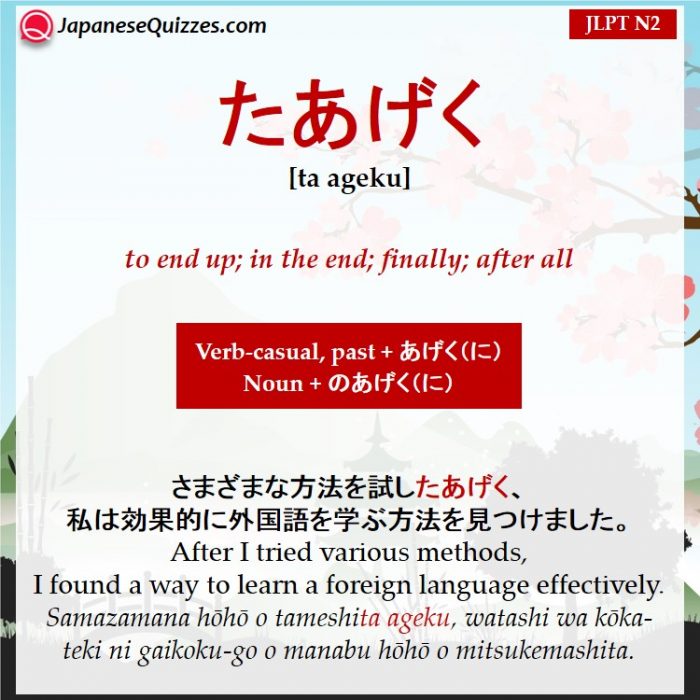
to end up; in the end; finally; after all

Formations
Verb-casual, past + あげく(に)
Noun + のあげく(に)
Examples
5カ月近くかかったあげく、私はその絵をついに見つけた / 見つけました。
Go-Kagetsu chikaku kakatta ageku, watashi wa sono e o tsuini mitsuketa/ mitsukemashita.
After it took me 5 months or so, I finally found the picture.
3時間列に並んだあげく、伯母はやっとチケットを手にいれた / 手に入れました。
San-Jikan retsu ni naranda ageku, oba wa yatto chiketto o te ni ireta/ te ni iremashita.
After lining for 3 hours, my aunt finally got this ticket.
さんざん迷ったあげく卒業後は帰国することにした / 帰国することにしました。
Sanzan mayotta ageku sotsugyō-go wa kikoku suru koto ni shita/ kikoku suru koto ni shimashita.
After a lot of hesitation, I decided to return to my country after I graduate.
何度も手術したあげく、治らないと言われた / 言われました。
Nando mo shujutsu shita ageku, naoranai to iwa reta/ iwa remashita.
After I had surgery many times, I was told I couldn’t be cured.
両親と話し合ったあげく、私はキリンをペットとして飼うことにした / 飼うことにしました。
Ryōshin to hanashiatta ageku, watashi wa kirin o petto to shite kau koto ni shita/ kau koto ni shimashita.
After consulting with my parents, I decided to have a giraffe as a pet.
さまざまな方法を試したあげく、私は効果的に外国語を学ぶ方法を見つけた / 見つけました。
Samazamana hōhō o tameshita ageku, watashi wa kōka-teki ni gaikoku-go o manabu hōhō o mitsuketa/ mitsukemashita.
After I tried various methods, I found a way to learn a foreign language effectively.
See also