Formations
すなわち + phrase
Examples
歓迎会は来週の土曜日、すなわち4月15日に行われる / 行われます。
Kangei-kai wa raishū no doyōbi, sunawachi shi gatsu juugo-nichi ni okonawa reru/ okonawa remasu.
A welcome party will be held next Saturday, that is to say, on April 15th.
私は15年前、すなわち、19歳の時に東京へ来た / 来ました。
Watashi wa jyuugo-nen mae, sunawachi, jyuukyu-sai no toki ni Tōkyō e kita/ kimashita.
He came to Tokyo fifteen years ago, that is to say, when he was nineteen years old.
私は6年間、すなわち、36歳になるまで、大学で働いた / 働きました。
Watashi wa roku-nenkan, sunawachi, sannjyu oku-sai ni naru made, daigaku de hataraita/ hatarakimashita.
I worked at the university for 6 years, that is, until I was 36 years old.
母の兄、すなわち、ぼくの伯父は病院で働いている / 働いています。
Haha no ani, sunawachi, boku no oji wa byōin de hataraite iru/ hataraite imasu.
My mom’s elder brother, in other words my uncle, is working at a hospital.
母の妹、すなわち、私の叔母はフクロウをペットとして飼っている / 飼っています。
Haha no imōto, sunawachi, watashi no oba wa fukurō o petto to shite katte iru/ katte imasu.
My mother’s younger sister, in other words my aunt, has an owl for a pet.
叔母は天文学、すなわち星の科学を研究している / 研究をしています。
Oba wa tenmongaku, sunawachi hoshi no kagaku o kenkyū shite iru/ kenkyū o shite imasu.
My aunt studies astronomy, or the science of stars.
See also
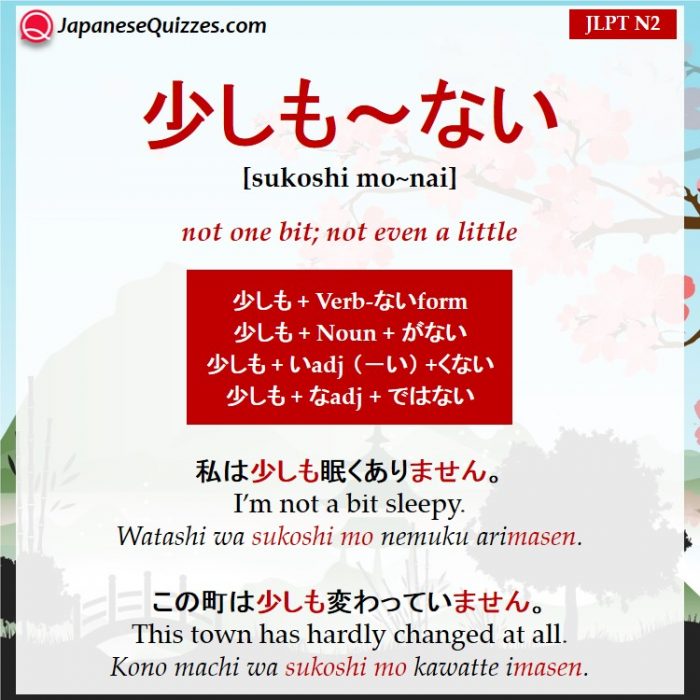
not one bit; not even a little

Formations
少しも + Verb-ないform
少しも + Noun + がない
少しも + いadj (-い) +くない
少しも + なadj + ではない
Examples
私は少しも眠くない / 眠くありません。
Watashi wa sukoshi mo nemukunai/ nemuku arimasen.
I’m not a bit sleepy.
私は少しも楽しめなかった / 楽しめませんでした。
Watashi wa sukoshi mo tanoshimenakatta/ tanoshimemasendeshita.
I couldn’t enjoy myself not one bit.
わたしはあなたを少しも責めていない / 責めていません。
Watashi wa anata o sukoshi mo semete inai/ semete imasen.
I don’t blame you in the slightest.
この町は少しも変わっていない / 変わっていません。
Kono machi wa sukoshi mo kawatte inai/ kawatte imasen.
This town has hardly changed at all.
グラスの中に少しも牛乳がなかった / 牛乳がありませんでした。
Gurasu no naka ni sukoshi mo gyūnyū ga nakatta/ gyūnyū ga arimasendeshita.
There isn’t any milk in the glass.
この事業には少しも危険がない / 危険がありません。
Kono jigyō ni wa sukoshi mo kiken ga nai/ kiken ga arimasen.
There is no risk in this enterprise.
このソファーは少しも座り心地がよくない / よくありません。
Kono sofā wa sukoshi mo suwari-gokochi ga yokunai/ yoku arimasen.
This sofa is in no way comfortable to sit in.
See also
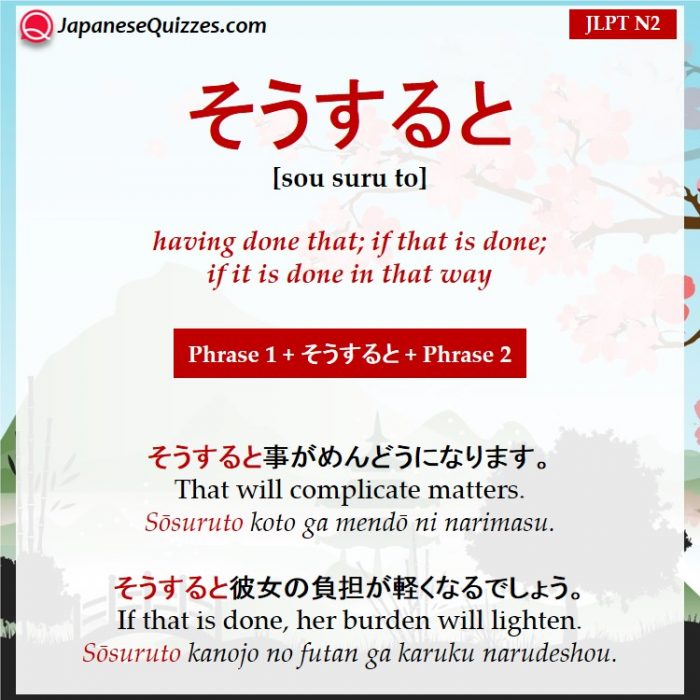
having done that; if that is done; if it is done in that way

Formations
Phrase 1 + そうすると + phrase 2
Examples
そうすると事がめんどうになる / めんどうになります。
Sōsuruto koto ga mendō ni naru/ mendō ni narimasu.
That will complicate matters.
そうすると事がたやすくなる / たやすくなります。
Sōsuruto koto ga tayasuku naru/ tayasuku narimasu.
That will simplify matters.
そうすると私は立場がなくなる / 立場がなくなります。
Sōsuruto watashi wa tachiba ga nakunaru/ tachiba ga nakunarimasu.
That will lose my footing.
そうすると私の顔が立つ / 立ちます。
Sōsuruto watashi no kao ga tatsu/ tachimasu.
That would save my face.
そうすると彼女の負担が軽くなるだろう / 軽くなるでしょう。
Sōsuruto kanojo no futan ga karuku narudarou/ karuku narudeshou.
If that is done, her burden will lighten.
そうするとドアの向こうにいる人の姿が見えるようになる / 見えるようになります。
Sōsuruto doa no mukō ni iru hito no sugata ga mieru yō ni naru/ mieru yō ni narimasu.
If that is done, you will become able to see the person behind the door.
See also
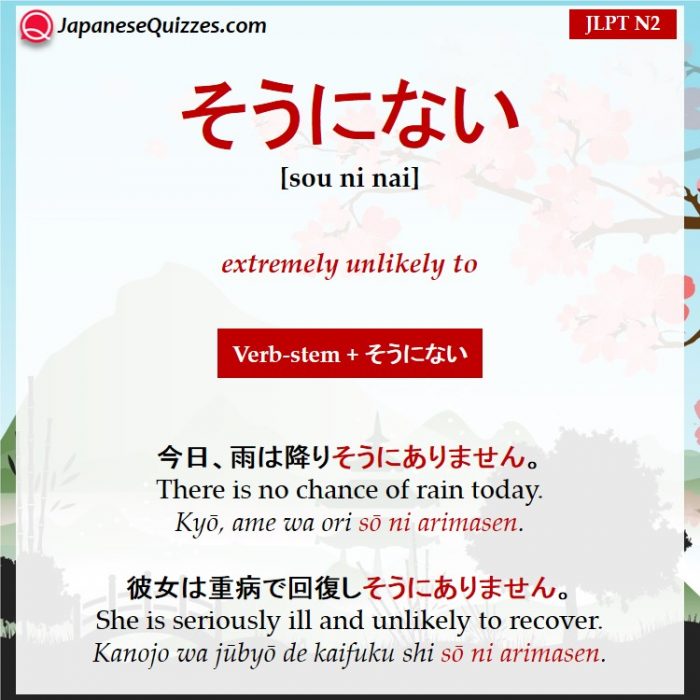

Formations
Verb-stem + そうにない
Examples
今日、雨は降りそうにない / 降りそうにありません。
Kyō, ame wa ori-sō ninai/ ori-sō ni arimasen.
There is no chance of rain today.
彼女は重病で回復しそうにない / 回復しそうにありません。
Kanojo wa jūbyō de kaifuku shi-sō ninai/ kaifuku shi-sō ni arimasen.
She is seriously ill and unlikely to recover.
私はひどく疲れてもう歩けそうにない / 歩けそうにありません。
Watashi wa hidoku tsukarete mō aruke-sō ninai/ aruke-sō ni arimasen.
I am so tired that I can hardly walk.
その問題はかなり複雑で解決しそうにない / 解決しそうにありません。
Sono mondai wa kanari fukuzatsude kaiketsu shi-sō ninai/ kaiketsu shi-sō ni arimasen.
The problem is quite complicated and is unlikely to be solved.
彼はビジネスで決して成功しそうにない人物だ / 人物です。
Kare wa bijinesu de kesshite seikō shi-sō ninai jinbutsuda/ jinbutsudesu.
He is the last person to succeed in business.
その友達は他人の悪口を決して言いそうにない人物だ / 人物です。
Sono tomodachi wa tanin no waruguchi o kesshite ii-sō ninai jinbutsuda/ jinbutsudesu.
The friend is the last person to speak ill of others.
See also
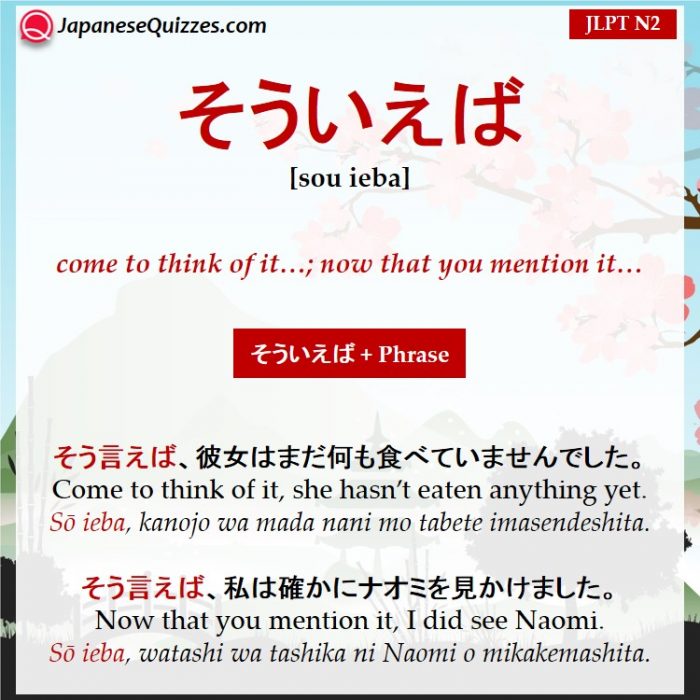
come to think of it…; now that you mention it…

Formations
そういえば + phrase
Examples
そう言えば、私は確かにナオミを見かけた / 見かけました。
Sō ieba, watashi wa tashika ni Naomi o mikaketa/ mikakemashita.
Now that you mention it, I did see Naomi.
そう言えば、私は彼女がどこに住んでいるのか聞いたことがない / 聞いたことがありません。
Sō ieba, watashi wa kanojo ga doko ni sunde iru no ka kiita koto ga nai/ kiita koto ga arimasen.
Now that you mention it, I’ve never asked where she lives.
そう言えば、私は彼女と5時に会う約束があった / 約束がありました。
Sō ieba, watashi wa kanojo to go-ji ni auyakusoku ga atta/ yakusoku ga arimashita.
Now that you mention it, I promised to see her at five.
そう言えば、彼女はまだ何も食べていなかった / 食べていませんでした。
Sō ieba, kanojo wa mada nani mo tabete inakatta/ tabete imasen deshita.
Come to think of it, she hasn’t eaten anything yet.
そう言えば、あなたの誕生日はいつか / いつですか。
Sō ieba, anata no tanjōbi wa itsu ka/ itsudesu ka.
Come to think of it, when is your birthday?
いい家ですね。そう言えば、あなたのお兄さんは建築士ですか。
Īi ie desu ne. Sō ieba, anata no onīsan wa kenchikushi desu ka.
It’s a very nice house. Come to think of it, isn’t your big brother an architect?
See also


Formations
それとも + phrase
Examples
あれはバスですか、それとも車ですか。
Are wa basudesu ka, soretomo kurumadesu ka.
Is that a bus or car?
あなたはここの先生ですか、それとも学生ですか。
Anata wa koko no senseidesu ka, soretomo gakuseidesu ka.
Are you a teacher here or a student?
お茶はいかがですか、それともコーヒーにしますか。
Ocha wa ikagadesu ka, soretomo kōhī ni shimasu ka.
Would you like tea or coffee?
彼の考えに賛成ですかそれとも反対ですか。
Kare no kangae ni sanseidesu ka soretomo hantaidesu ka.
Are you for or against his idea?
先月、あなたは暇でしたか、それとも忙しかったですか。
Sengetsu, anata wa himadeshita ka, soretomo isogashikattadesu ka.
Did you have free time last month, or were you busy?
科学の進歩は人類に幸福をもたらすのか、それとも不幸をもたらすのか?
Kagaku no shinpo wa jinrui ni kōfuku o motarasu no ka, soretomo fukō o motarasu no ka?
Does scientific progress bring happiness to mankind, or brings unhappiness?
See also