
Formations
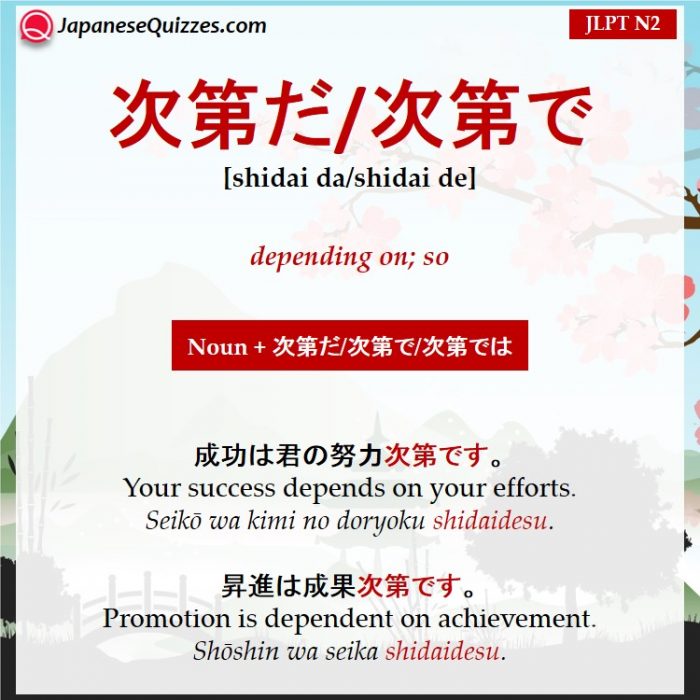
Noun + 次第だ/次第で/次第では
Examples
成功は君の努力次第だ / 次第です。
Seikō wa kimi no doryoku shidaida/ shidaidesu.
Your success depends on your efforts.
昇進は成果次第だ / 次第です。
Shōshin wa seika shidaida/ shidaidesu.
Promotion is dependent on achievement.
私たちが旅行に行くかどうかは天候次第だ / 次第です。
Watashitachi ga ryokōniiku ka dō ka wa tenkō shidaida/ shidaidesu.
Whether we will go on the trip depends on the weather.
天気次第で行くかどうか決める / 決めます。
Tenki shidai de iku ka dō ka kimeru/ kimemasu.
Depending on the weather, I will decide whether to go or not.
旅行の目的次第で、私たちは目的地を変える必要がある / 必要があります。
Ryokō no mokuteki shidai de, watashitachiha mokutekichi o kaeru hitsuyō ga aru/ hitsuyō ga arimasu.
Depending on the purpose of the trip, we need to change our destination.
選択次第であなたの人生は意外な方向に進むかもしれない / 進むかもしれません。
Sentaku shidai de anata no jinsei wa igaina hōkō ni susumu kamo shirenai/ susumu kamo shiremasen.
Depending on your choice, your life may proceed in an unexpected direction.
See also

Formations
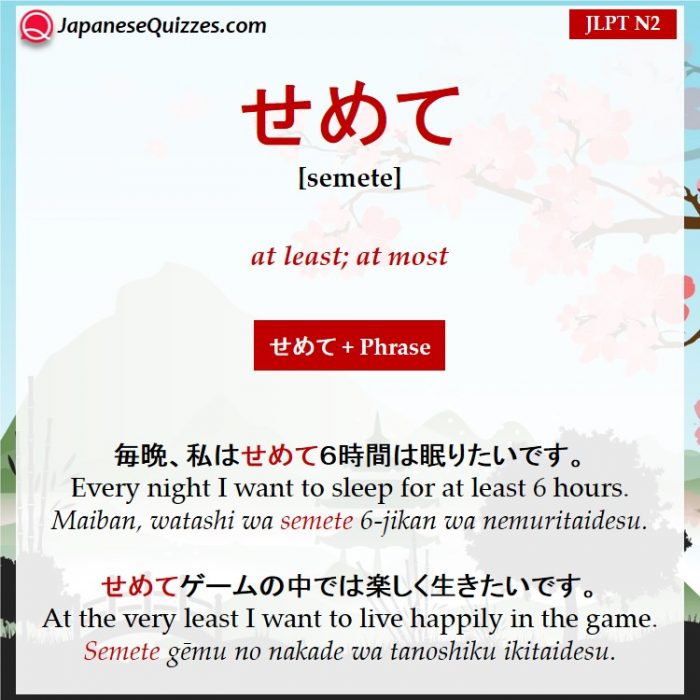
せめて + phrase
Examples
毎晩、私はせめて6時間は眠りたい / 眠りたいです。
Maiban, watashi wa semete roku-jikan wa nemuritai/ nemuritaidesu.
Every night I want to sleep for at least 6 hours.
次の試験で、せめて90点は取りたい / 取りたいです。
Tsugi no shiken de, semete kyuujutten wa toritai/ toritaidesu.
I want to at least get 90 points in the next exam.
せめてゲームの中では楽しく生きたい / 生きたいです。
Semete gēmu no nakade wa tanoshiku ikitai/ ikitaidesu.
At the very least I want to live happily in the game.
せめて日常会話が日本語でできるくらいになりたい / なりたいです。
Semete nichijō kaiwa ga nihongode dekiru kurai ni naritai/ naritaidesu.
At the very least, I’d like to be able to have everyday conversations in Japanese.
せめて僕の名前くらいは彼女に覚えてほしい / 覚えてほしいです。
Semete boku no namae kurai wa kanojo ni oboete hoshī/ oboete hoshīdesu.
I want her to remember at least my name.
せめて私にテーブルの準備をさせて / 準備をさせてください。
Semete watashi ni tēburu no junbi o sa sete/ junbi o sa sete kudasai.
At least let me set up the table.
See also
at the most; at best; to the utmost

Formations
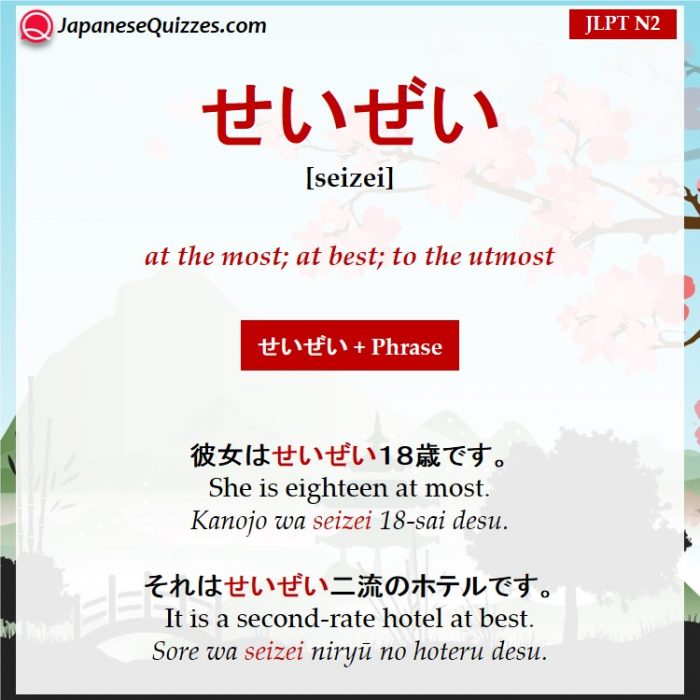
せいぜい + Phrase
Examples
彼女はせいぜい18歳だ / 18歳です。
Kanojo wa seizei jyu hassaida/ jyu hassai desu.
She is eighteen at most.
彼女はせいぜい二流の歌手だ / 歌手です。
Kanojo wa seizei niryū no kashuda/ kashudesu.
She is a second-rate singer at best.
それはせいぜい二流のホテルだ / ホテルです。
Sore wa seizei niryū no hoteruda/ hoterudesu.
It is a second-rate hotel at best.
旅費はせいぜい八百ドルだろう / 八百ドルでしょう。
Ryohi wa seizei hachi hyaku-dorudarou/ hachi hyaku-dorudeshou.
The trip will cost $800 at the outside.
妹はせいぜい一週間しか休暇をとれない / 休暇をとれません。
Imōto wa wa seizei isshūkan shika kyūka o torenai/ kyūka o toremasen.
My younger sister can only take one week off work.
妹はせいぜい平均点しか取れないだろう / 取れないでしょう。
Imōto wa seizei heikinten shika torenaidarou/ torenaideshou.
My younger sister will get an average mark at best.
See also
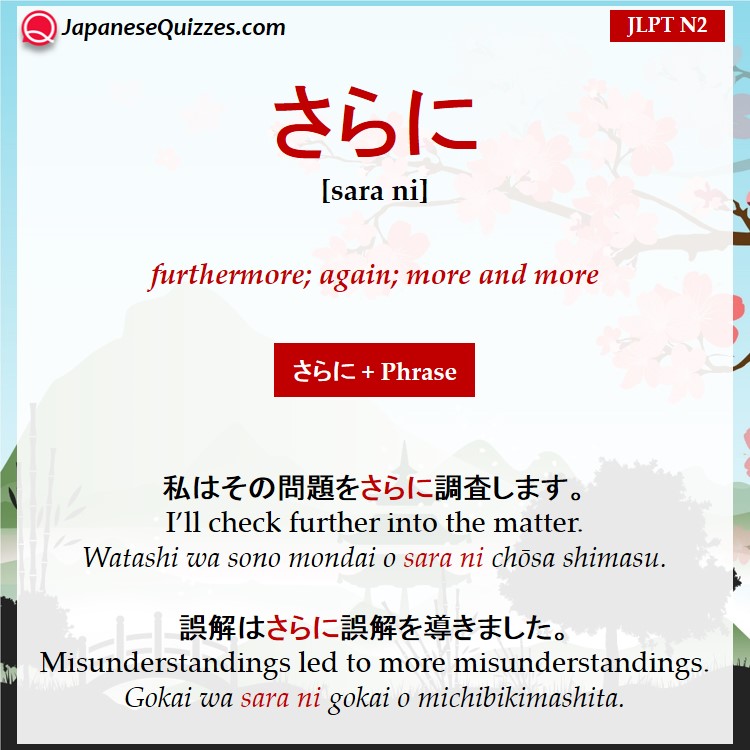
furthermore; again; more and more

Formations
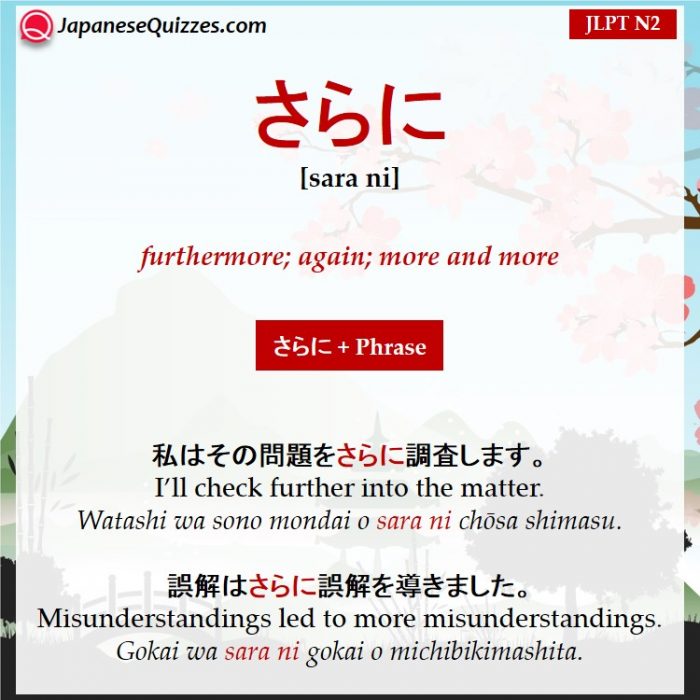
さらに + phrase
Examples
私はその問題をさらに調査する / 調査します。
Watashi wa sono mondai o sarani chōsa suru/ chōsa shimasu.
I’ll check further into the matter.
私たちはさらに交渉が必要だ / 必要です。
Watashitachi wa sarani kōshō ga hitsuyōda/ hitsuyōdesu.
We need more negotiation.
誤解はさらに誤解を導いた / 導きました。
Gokai wa sarani gokai o michibiita/ michibikimashita.
Misunderstandings led to more misunderstandings.
悪天候はさらに1週間続いた / 続きました。
Akutenkō wa sarani isshūkan tsudzuita/ tsudzukimashita.
The bad weather continued for another week.
さらに議論することはやめよう / やめましょう。
Sarani giron suru koto wa yameyou/ yamemashou.
Let’s not discuss it further.
寿司にわさびをつけると、さらに美味しくなる / 美味しくなります。
Sushi ni wasabi o tsukeru to, sarani oishiku naru/ oishiku narimasu.
If you put wasabi on sushi it will be more delicious.
See also

Formations
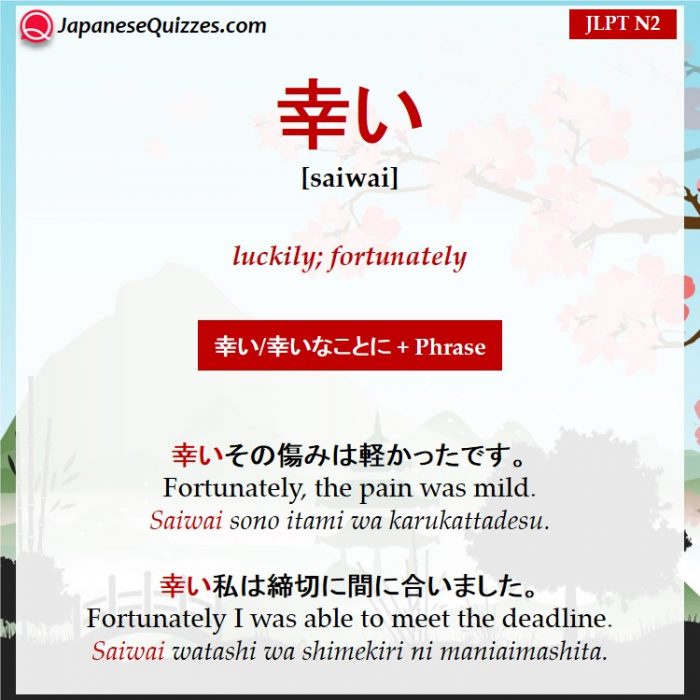
幸い/幸いなことに + phrase
Examples
幸いその傷みは軽かった / 軽かったです。
Saiwai sono itami wa karukatta/ karukattadesu.
Fortunately, the pain was mild.
幸い私は締切に間に合った / 間に合いました。
Saiwai watashi wa shimekiri ni maniatta/ maniaimashita.
Fortunately I was able to meet the deadline.
幸い死傷者は一人もなかった / 一人もいませんでした。
Saiwai shishō-sha wa hitori mo nakatta/ hitori mo imasendeshita.
Fortunately there were no casualties.
幸いなことに姉は奨学金を獲得した / 獲得しました。
Saiwai na koto ni ane wa shōgakkin o kakutoku shita/ kakutoku shimashita.
Luckily my elder sister won a scholarship.
幸いなことに私たちは事故を避けることができた / できました。
Saiwai na koto ni watashitachiha jiko o yokeru koto ga dekita/ dekimashita.
Fortunately, we were able to avoid an accident.
幸いなことに姉は友人からの推薦で就職が決まった / 決まりました。
Saiwai na koto ni ane wa yūjin kara no suisen de shūshoku ga kimatta/ kimarimashita.
Fortunately, my elder sister has gotten a job by a recommendation from her friend.
See also
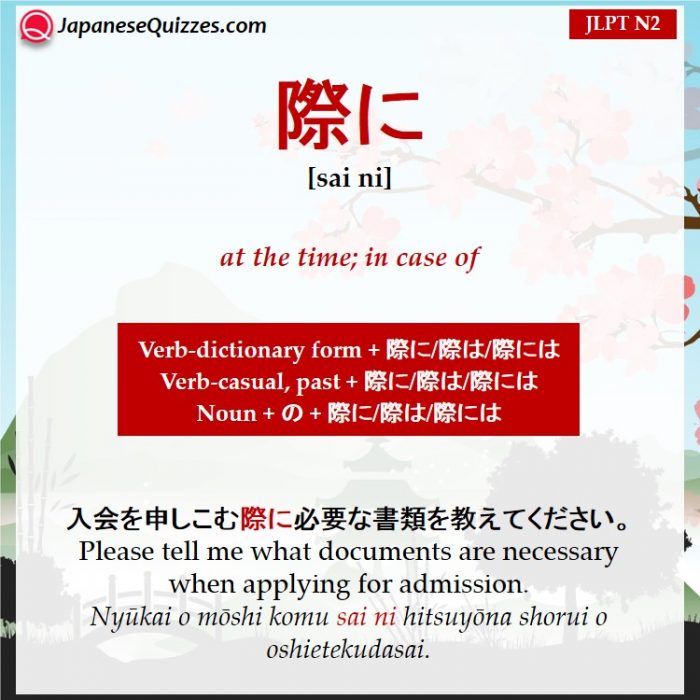

Formations
Verb-dictionary form + 際に/際は/際には
Verb-casual, past + 際に/際は/際には
Noun + の + 際に/際は/際には
Examples
車を運転する際に免許証が必要だ / 必要です。
Kuruma o unten suru sai ni menkyoshō ga hitsuyōda/ hitsuyōdesu.
You need a driver license when you drive a car.
入院した際に、いろいろお世話になりました。
Nyūin shita sai ni, iroiro o sewaninarimashita.
Thank you very much for everything when I was in a hospital.
お帰りの際に忘れ物のないようにしてください。
O kaeri no sai ni wasuremono no nai yō ni shite kudasai.
Please don’t leave anything behind when you go home.
入会を申しこむ際に必要な書類を教えてください。
Nyūkai o mōshi komu sai ni hitsuyōna shorui o oshietekudasai.
Please tell me what documents are necessary when applying for admission.
パスポートを申請する際に必要な書類を教えてください。
Pasupōto o shinsei suru sai ni hitsuyōna shorui o oshietekudasai.
Please tell me what documents are necessary when I apply for a passport.
こちらにおいでの際には、ぜひお立ち寄りください。
Kochira ni oide no sai ni wa, zehi o tachiyori kudasai.
Be sure to drop in on us when you come this way.
See also