
Formations
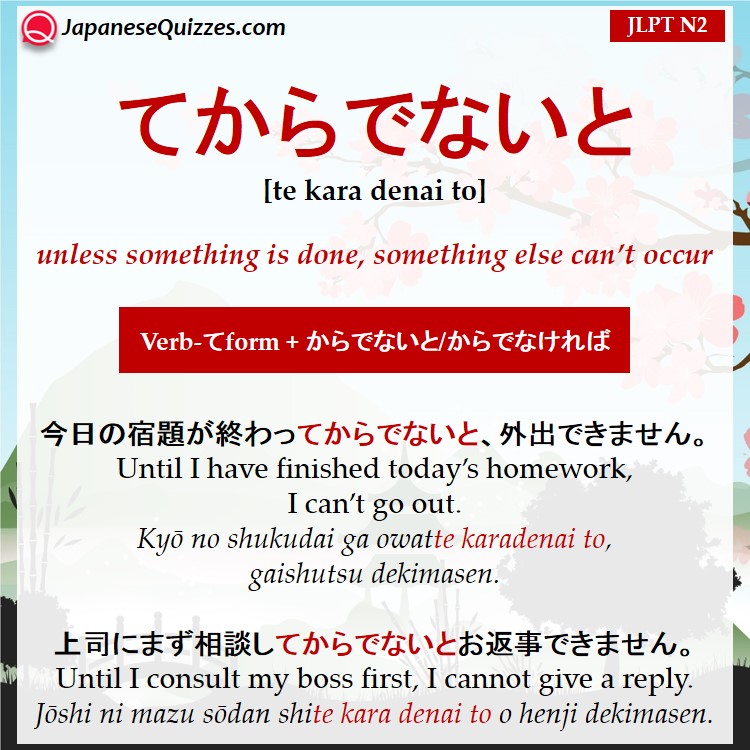
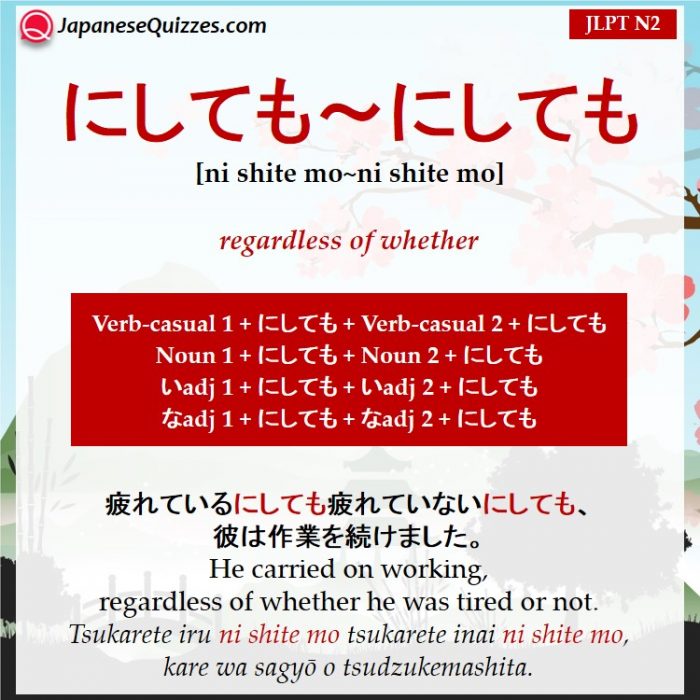
Verb-casual 1 + にしても + Verb-casual 2 + にしても
Noun 1 + にしても + Noun 2 + にしても
いadj 1 + にしても + いadj 2 + にしても
なadj 1 + にしても + なadj 2 + にしても
Examples
借りるにしても買うにしても、この部屋は十分大きい / 大きいです。
Kariru nishitemo kau ni shitemo, kono heya wa jūbun ookī/ ookiidesu.
This room is big enough for rent or purchase.
疲れているにしても疲れていないにしても、彼は作業を続けた / 続けました。
Tsukarete iru ni shitemo tsukarete inai ni shitemo, kare wa sagyō o tsuzuketa/ tsuzukemashita.
He carried on working, regardless of whether he was tired or not.
タイに行くにしても行かないにしても、早く決断しなさい / 決断してください。
Tai ni iku ni shitemo ikanai ni shitemo, hayaku ketsudan shinasai/ ketsudan shite kudasai.
Whether you’re going to Thailand or not, please make up your mind quickly.
資格を持っているにしても持っていないにしても、あなたはこの仕事に従事できる / 従事できます。
Shikaku o motte iru ni shitemo motteinai ni shitemo, anata wa kono shigoto ni jūji dekiru/ jūji dekimasu.
You can do this job regardless of whether you have qualifications or not.
フクロウにしてもハリネズミにしても、私は彼らをペットとして歓迎する / 歓迎します。
Fukurō ni shite mo harinezumi ni shite mo, watashi wa karera o petto to shite kangei suru/ kangei shimasu.
Regardless of whether they are owls or hedgehogs, I welcome them as pets.
高いにしても安いにしても、必要なものは買わなければならない / 買わなければなりません。
Takai ni shite mo yasui ni shite mo, hitsuyōnamono wa kawanakereba naranai/ kawanakereba nari masen.
You must buy what you need whether it’s expensive or not.
See also
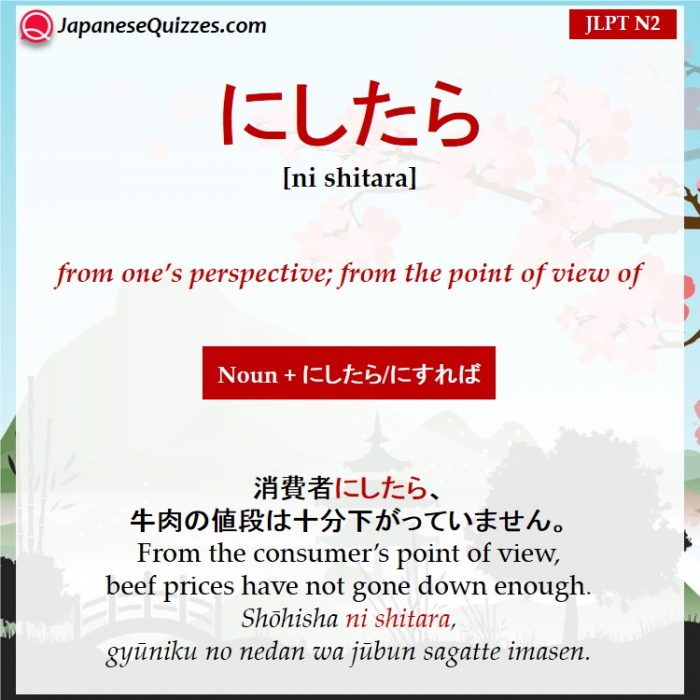
from one’s perspective; from the point of view of

Formations
Noun + にしたら/にすれば
Examples
猫にしたら、今日の夕飯は不満かもしれない / 不満かもしれません。
Neko ni shitara, kyō no yūhan wa fuman kamo shirenai/ fuman kamo shiremasen.
From my cat’s point of view, he may be dissatisfied with dinner of the day.
子供にしたら、歴史博物館めぐりはつまらないだろう / つまらないでしょう。
Kodomo ni shitara, rekishi hakubutsukan meguri wa tsumaranaidarou/ tsumaranaideshou.
From a child’s perspective, the tour of the history museums will be boring.
彼女にしたら、わたしたちの親切はかえって迷惑かもしれない / 迷惑かもしれません。
Kanojo ni shitara, watashi-tachi no shinsetsu wa kaette meiwaku kamo shirenai/ meiwaku kamo shiremasen.
From her point of view, our kindness might be a nuisance instead.
消費者にしたら、牛肉の値段は十分下がっていない / 下がっていません。
Shōhisha ni shitara, gyūniku no nedan wa jūbun sagatte inai/ sagatte imasen.
From the consumer’s point of view, beef prices have not gone down enough.
買い手にすれば、これらの食洗機の値段は高すぎる / 高すぎます。
Kaite ni sureba, korera no shokusenki no nedan wa taka sugiru/ taka sugimasu.
From the buyer’s point of view, the prices of these Dishwashers are too high.
経営者にすればボーナスは低いほうがいいが、社員にすれば10ドルでも高いほうがいい / 高い方がいいです。
Keiei-sha ni sureba bōnasu wa hikui hō ga īga, shain ni sureba jyuu-doru demo takai hō ga ii/ takai hou ga iidesu.
From the manager’s point of view, a smaller bonus would be better, but from the employee’s point of view, even 10 more dollars would be better.
See also
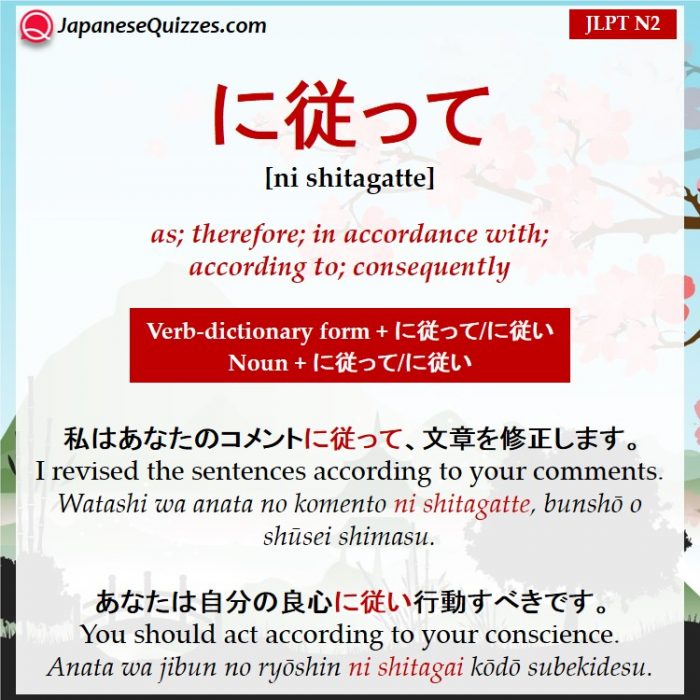
as; therefore; in accordance with; according to; consequently

Formations
Verb-dictionary form + に従って/に従い
Noun + に従って/に従い
Examples
これから私はこのアジェンダに従って説明していく / 説明していきます。
Korekara watashi wa kono ajenda ni shitagatte setsumei shite iku/ setsumei shite ikimasu.
From now on I will explain following this agenda.
私はあなたのコメントに従って、文章を修正する / 修正します。
Watashi wa anata no komento ni shitagatte, bunshō o shūsei suru/ shūsei shimasu.
I revised the sentences according to your comments.
一般的に言って、収入が増えるに従って、支出も増える / 増えます。
Ippantekini itte, shūnyū ga fueru ni shitagatte, shishutsu mo fueru/ fuemasu.
Generally speaking, as our income increases, our expenditure increases accordingly.
ご要望に従って私の写真を同封する / 同封します。
Go yōbō ni shitagatte watashi no shashin o dōfū suru/ dōfū shimasu.
In accordance with your request, I enclose a picture of myself.
あなたは自分の良心に従い行動すべきだ / 行動すべきです。
Anata wa jibun no ryōshin ni shitagai kōdō subekida/ kōdō subekidesu.
You should act according to your conscience.
こうした2国間の紛争は、国際法に従い解決されるべきだ / 解決されるべきです。
Kōshita ni koku-kan no funsō wa, kokusai-hō ni shitagai kaiketsu sa rerubekida/ kaiketsu sa rerubekidesu.
These disputes between the two nations should be solved in accordance with international law.
See also
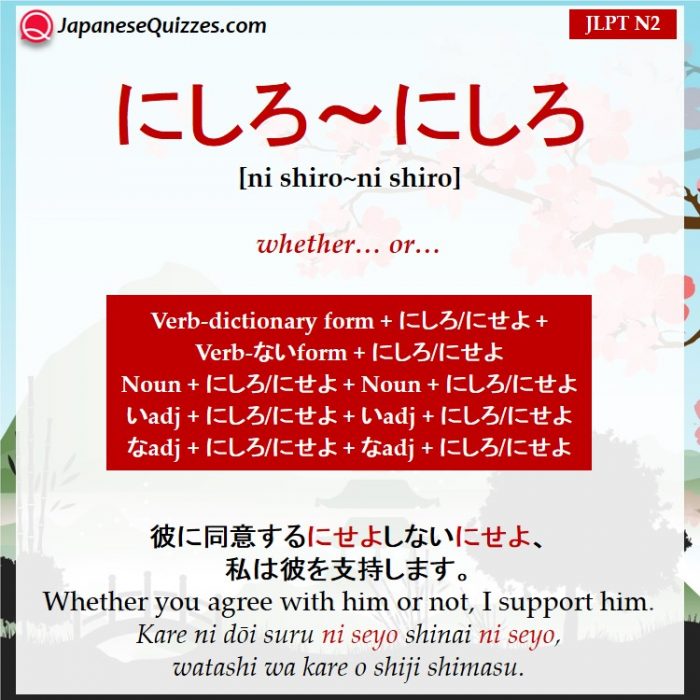

Formations
Verb-dictionary form + にしろ/にせよ + Verb-ないform + にしろ/にせよ
Noun + にしろ/にせよ + Noun + にしろ/にせよ
いadj + にしろ/にせよ + いadj + にしろ/にせよ
なadj + にしろ/にせよ + なadj + にしろ/にせよ
Examples
彼に同意するにせよしないにせよ、私は彼を支持する / 支持します。
Kare ni dōi suru ni seyo shinai ni seyo, watashi wa kare o shiji suru/ shiji shimasu.
Whether you agree with him or not, I support him.
旅行に行くにせよ、行かないにせよ、早く決めたほうがいい / 決めた方がいいです。
Ryokō ni iku ni seyo, ikanai niseyo, hayaku kimeta hou ga ī/ kimeta hou ga iidesu.
You should decide soon whether or not you’re going to take a trip.
その仕事を引き受けるにせよ引き受けないにせよ、なるべく早く決めたほうがいい / 決めた方がいいです。
Sono shigoto o hikiukeru ni seyo hikiukenai niseyo, narubeku hayaku kimeta hō ga ī/ kimeta hou ga īdesu.
Whether you’re accepting the job or not, you should decide quickly.
就職するにしろ進学するにしろ、あなた自身でよく考えるべきだ / 考えるべきです。
Shūshoku suru ni shiro shingaku suru ni shiro, anata jishin de yoku kangaeru bekida/ kangaeru beki desu.
Whether you’ll work or study higher, you should think carefully by yourself.
勝つにしろ負けるにしろ、私たちは全力を尽くして戦いたい / 戦いたいです。
Katsu ni shiro makeru ni shiro, watashitachi wa zenryoku o tsukushite tatakaitai/ tatakaitaidesu.
Whether we’re gonna win or lose, we want to fight to the last breath.
少年にしろ、成人にしろ、悪いことをしたら、厳しい罰を受けるべきだ / 受けるべきです。
Shōnen ni shiro, seijin ni shiro, waruikoto o shitara, kibishī batsu o ukerubekida/ ukerubekidesu.
Whether a juvenile or an adult, if someone does something bad, he/she should receive strict punishment.
See also
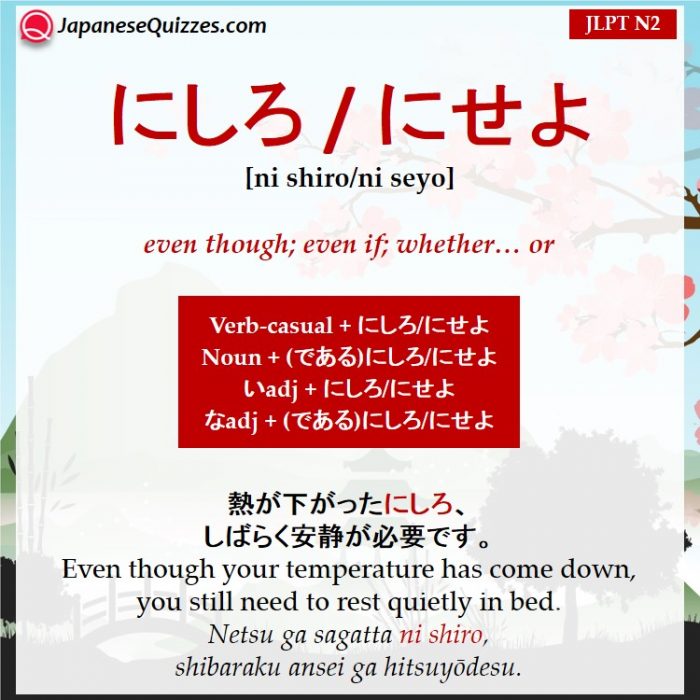
even though; even if; whether… or

Formations
Verb-casual + にしろ/にせよ
Noun + (である)にしろ/にせよ
いadj + にしろ/にせよ
なadj + (である)にしろ/にせよ
Examples
研修に参加しないにせよ、私たちに連絡して / 連絡してください。
Kenshū ni sanka shinai ni seyo, watashitachi ni renraku shite/ renraku shite kudasai.
Even if you’re not participating in training, please contact us.
たった三日の旅行にせよ、私たちは準備が必要だ / 必要です。
Tatta mikka no ryokō ni seyo, watashitachi wa junbi ga hitsuyōda/ hitsuyōdesu.
Even though it’s only a three-day trip, we still need to prepare.
いくら忙しいにせよ、食事をしないのはよくない / よくないです。
Ikura isogashī ni seyo, syokuji o shinai no wa yokunai/ yokunaidesu.
How so ever busy you may be, skipping the meals is not good.
熱が下がったにしろ、しばらく安静が必要だ / 必要です。
Netsu ga sagatta ni shiro, shibaraku ansei ga hitsuyōda/ hitsuyōdesu.
Even though your temperature has come down, you still need to rest quietly in bed.
どういう結果になるにしろ、あなたは試すべきだ / 試すべきです。
Dōiu kekka ni naru nishiro, anata wa tamesubekida/ tamesubekidesu.
No matter the outcome, you at least should try.
たとえ社長になったにしろ質素な生活を送る方がいい / 送る方がいいです。
Tatoe shachō ni natta nishiro shissona seikatsu o okuru hou ga ii/ okuru hou ga iidesu.
Even if you become company President, it’s better to lead a simple life.
See also
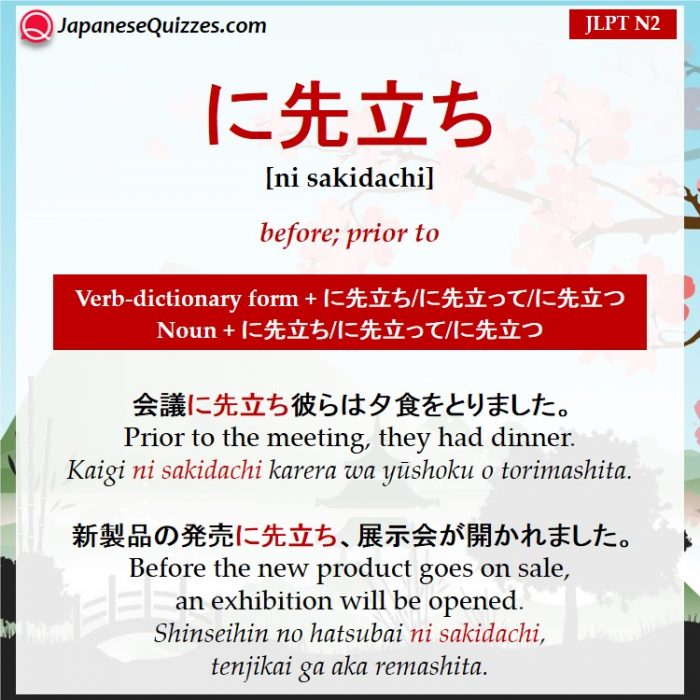

Formations
Verb-dictionary form + に先立ち/に先立って/に先立つ
Noun + に先立ち/に先立って/に先立つ
Examples
会議に先立ち彼らは夕食をとった / 夕食をとりました。
Kaigi ni sakidachi kare wa yūshoku o totta/ yūshoku o shimashita.
Prior to the meeting, they had dinner.
会議の開始に先立ち、新しいメンバーが紹介された / 紹介されました。
Kaigi no kaishi ni sakidachi, atarashī memba- ga shōkai sa reta/ shōkai sa remashita.
Before the meeting began, new members were introduced.
新製品の発売に先立ち、展示会が開かれた / 開かれました。
Shinseihin no hatsubai ni sakidachi, tenjikai ga hirakareta/ hirakaremashita.
Before the new product goes on sale, an exhibition will be opened.
私は転職に先立ち、あの会社の年収査定を受けた / 受けました。
Watashi wa tenshoku ni sakidachi, ano kaisha no nenshū satei uketa/ ukemashita.
I took an annual income assessment of that firm in preparation a job change.
投票に先立って,各候補者がプレゼンテーションを行った / 行いました。
Tōhyō ni sakidatte, kaku kōho-sha ga purezentēshon o okonatta/ ikimashita.
Before the voting, each candidate made a presentation.
来店に先立って、事前に予約すると、当日の案内がスムーズになる / スムーズになります。
Raiten ni sakidatte, jizen ni yoyaku suru to, tōjitsu no an’nai ga sumūzu ni naru/ sumūzu ni narimasu.
By making a reservation before visiting the store, the service procedures on the day that you visit will be smoother.
See also