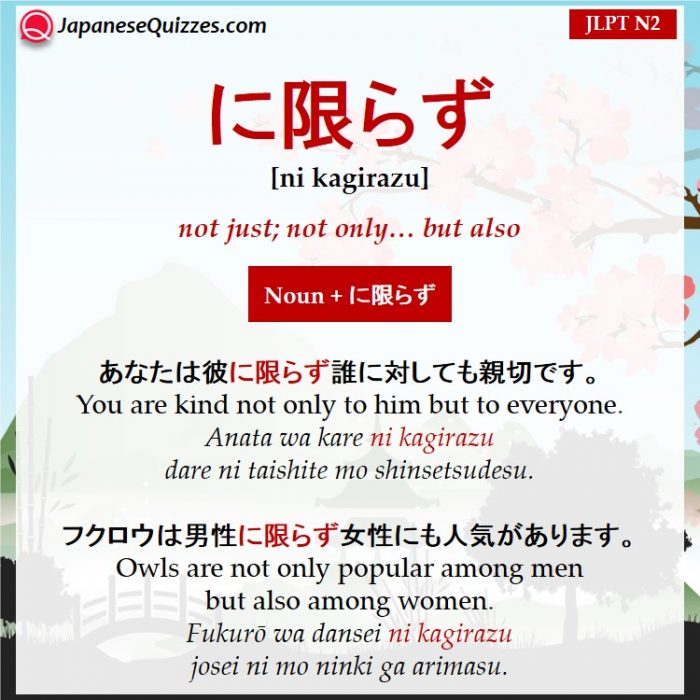
not just; not only… but also

Formations
Noun + に限らず
Examples
あなたは彼に限らず誰に対しても親切だ / 親切です。
Anata wa kare ni kagirazu dare ni taishite mo shinsetsuda/ shinsetsudesu.
You are kind not only to him but to everyone.
来年、私は仕事に限らず、日本語の勉強もがんばる / がんばります。
Rainen, watashi wa shigoto ni kagirazu, nihongo no benkyō mo ganbaru/ ganbarimasu.
I’ll do my best not only at work but also with Japanese study next year.
フクロウは男性に限らず女性にも人気がある / 人気があります。
Fukurō wa dansei ni kagirazu josei ni mo ninki ga aru/ ninki ga arimasu.
Owls are not only popular among men but also among women.
ディズニーランドは子供に限らず大人にも人気がある / 人気があります。
Dizunīrando wa kodomo ni kagirazu otona ni mo ninki ga aru/ ninki ga arimasu.
Disneyland is popular not only with children but also with adults.
この大学は日本に限らず、世界各国からの学生を受け入れている / 受け入れています。
Kono daigaku wa Nihon ni kagirazu, sekaikakkoku kara no gakusei o ukeirete iru/ ukeirete imasu.
This university accepts students from all over the world, not just Japan.
購入料金については、現金に限らず、クレジットカードでの購入を受け付ける / 受け付けます。
Kōnyū ryōkin ni tsuite wa, genkin ni kagirazu, kurejittokādo de no kōnyū o uketsukeru/ uketsukemasu.
For the purchase charge, purchase not only by cash but also by a credit card is received.
See also
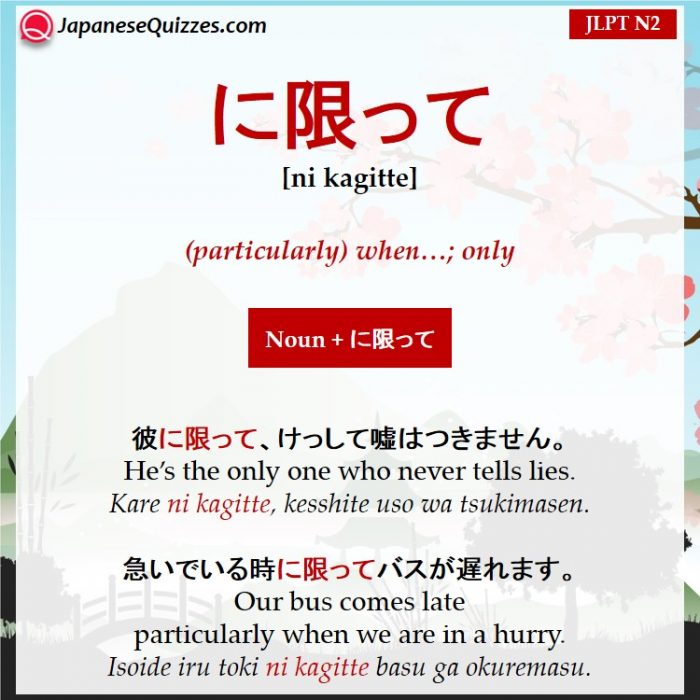
(particularly) when…; only

Formations
Noun + に限って
Examples
彼に限って、けっして嘘はつかない / 嘘はつきません。
Kare ni kagitte, kesshite uso wa tsukanai/ uso wa tsukimasen.
He’s the only one who never tells lies.
その問題に限って、私は分からない / 分かりません。
Sono mondai ni kagitte, watashi wa wakaranai/ wakarimasen.
That’s the only question I don’t understand.
その日に限って彼は欠席だった / 欠席でした。
Sonohi ni kagitte kare wa kessekidatta/ kessekideshita.
He was absent on that particular day.
その日に限って子供たちは城に入ることを許される / 許されます。
Sonohi ni kagitte kodomo-tachi wa shiro ni hairu koto o yurusareru/ yurusa remasu.
The castle allows children in only on that day.
急いでいる時に限ってバスが遅れる / 遅れます。
Isoide iru toki ni kagitte basu ga okureru/ okuremasu.
Our bus comes late particularly when we are in a hurry.
毎週水曜日に限って、映画のチケットが半額になる / 半額になります。
Maishū suiyōbi ni kagitte, eiga no chiketto ga hangaku ni naru/ hangaku ni narimasu.
We offer half-price movie tickets on Wednesday only.
See also
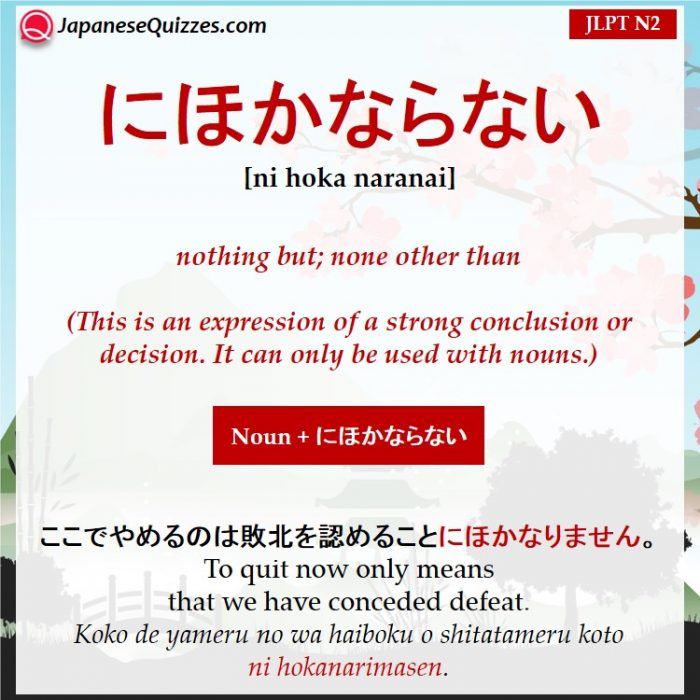
nothing but; none other than
(This is an expression of a strong conclusion or decision. It can only be used with nouns.)

Formations
Noun + にほかならない
Examples
それは誤解にほかならない / ほかなりません。
Sore wa gokai ni hokanaranai/ hokanarimasen.
That’s none other than a misunderstanding.
私たちが今回失敗したのは、準備不足にほかならない / ほかなりません。
Watashitachi ga konkai shippai shita no wa, junbi fusoku ni hokanaranai/ hokanarimasen.
We failed this time precisely because of the lack of preparation.
事故が発生した原因は、運転手の前方不注意にほかならない / ほかなりません。
Jiko ga hassei shita gen’in wa, untenshu no zenpō fuchūi ni hokanaranai/ hokanarimasen.
The only reason why the accident occurred is precisely because the driver did not paying attention ahead.
ここでやめるのは敗北を認めることにほかならない / ほかなりません。
Koko de yameru no wa haiboku o shitatameru koto ni hokanaranai/ hokanarimasen.
To quit now only means that we have conceded defeat.
これこそ私が読みたいと思っていた小説にほかならない / ほかなりません。
Kore koso watashi ga yomitai to omotte ita shōsetsu ni hokanaranai/ hokanarimasen.
This is the very novel that I have been longing to read.
この仕事が成功したのは皆さんのご協力の結果にほかならない / ほかなりません。
Kono shigoto ga seikō shita no wa minasan no go kyōryoku no kekka ni hokanaranai/ hokanarimasen.
Success in this job is the result of everybody’s cooperation.
See also
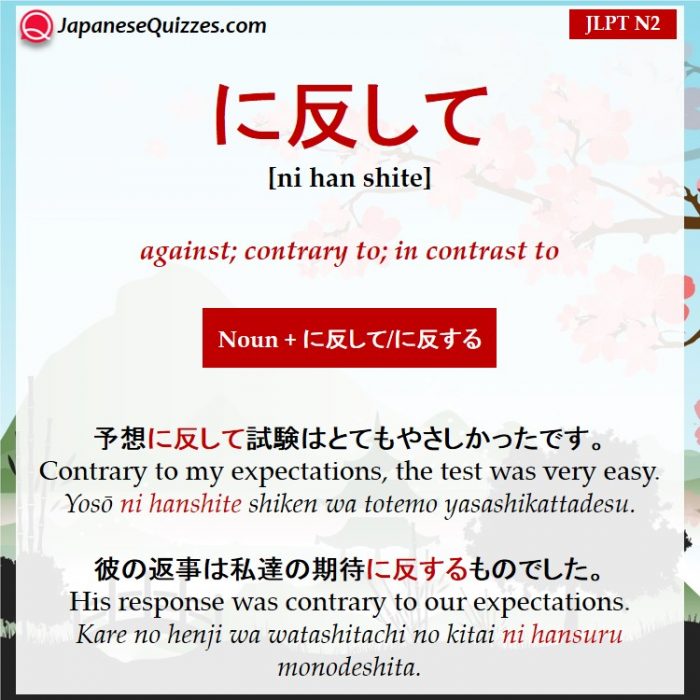
against; contrary to; in contrast to

Formations
Noun + に反して/に反する
Examples
天気予報に反して雨が降り続いている / 降り続いています。
Tenkiyohō ni hanshite ame ga furitsudzuite iru/ furitsudzuite imasu.
It’s been raining nonstop in contrast to the weather forecast.
予想に反して試験はとてもやさしかった / やさしかったです。
Yosō ni hanshite shiken wa totemo yasashikatta/ yasashikattadesu.
Contrary to my expectations, the test was very easy.
息子は、自分の意志に反して契約書に署名させられた / 署名させられました。
Musuko wa, jibun no ishi ni hanshite keiyakusho ni shomei sa se rareta/ shomei sa se raremashita.
My son was made to sign the contract against his will.
彼の返事は私達の期待に反するものだった / 反するものでした。
Kare no henji wa watashitachi no kitai ni hansuru monodatta/ hansuru monodeshita.
His response was contrary to our expectations.
規則に反する行為は重く罰せられる / 罰せられます。
Kisoku ni hansuru kōi wa omoku basse rareru/ basse raremasu.
Conduct which is against the regulations shall be heavily punished.
姉は手先が器用だ。それに反して、私はとても不器用だ。
Ane wa tesaki ga kiyōda. Sore ni hanshite, watashi wa totemo bukiyōda.
My older sister is very clever with her hands. On the other hand, I am clumsy with my hands.
アリシアは料理が全然できない。それに反して、彼女は掃除が得意だ。
Arishia wa ryōri ga zenzen dekinai. Sore ni hanshite, kanojo wa sōji ga tokuida.
Alicia can not cook at all. On the contrary, she is good at cleaning.
See also
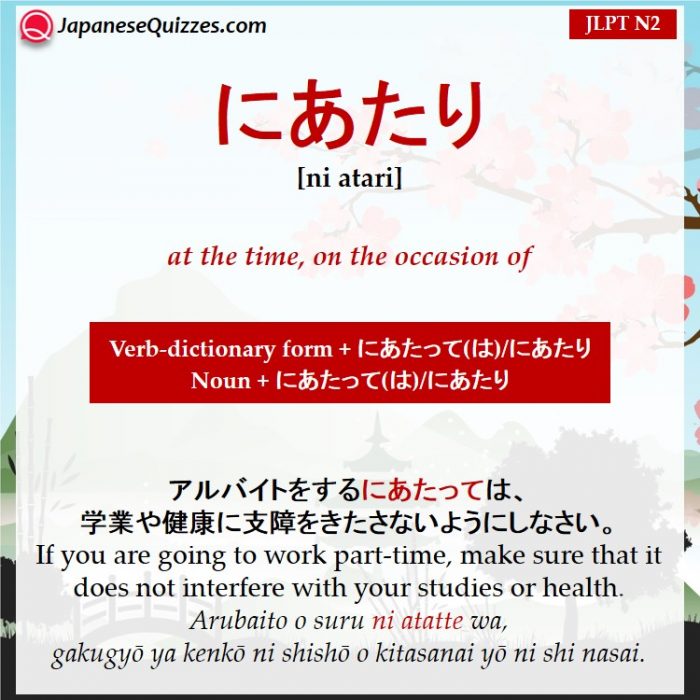
at the time; on the occasion of

Formations
Verb-dictionary form + にあたって(は)/にあたり
Noun + にあたって(は)/にあたり
Examples
友人を選ぶにあたって、いくら注意してもしすぎることはない / しすぎることはありません。
Yūjin o erabu ni atatte, ikura chūi shite mo shi sugiru koto wanai/ shi sugiru koto wa arimasen.
We cannot be too careful in choosing your friends.
私たちは決定にあたって、偏見に左右されるべきではない / 左右されるべきではありません。
Watashitachiha kettei ni atatte, henken ni sayū sa rerubekide wanai/ sayū sa rerubekide wa arimasen.
We should not be influenced in our decisions by our prejudices.
先輩は面接にあたって注意すべきことを教えてくれた / 教えてくれました。
Senpai wa mensetsu ni atatte chūi subeki koto o oshiete kureta/ oshiete kuremashita.
My senior taught me what I should pay attention to during an interview.
アルバイトをするにあたっては、学業や健康に支障をきたさないようにすること / 支障をきたさないようにしなさい。
Arubaito o suru ni atatte wa, gakugyō ya kenkō ni shishō o kitasanai yō ni suru koto/ shishō o kitasanai yō ni shi nasai.
If you are going to work part-time, make sure that it does not interfere with your studies or health.
私の留学にあたり、父は自分の経験を話してくれた / 話してくれました。
Watashi no ryūgaku ni atari, chichi wa jibun no keiken o hanashite kureta/ hanashite kuremashita.
On the occasion of my study abroad, my father told me about his own experience.
弁当を作るにあたり、最も重要な点は、食中毒を避けることだ / 避けることです。
Bentō o tsukuru ni atari, mottomo jūyōna ten wa, shokuchūdoku o yokeru kotoda/ yokeru kotodesu.
When you prepare a lunch box, the most important thing is to prevent food poisoning.
See also
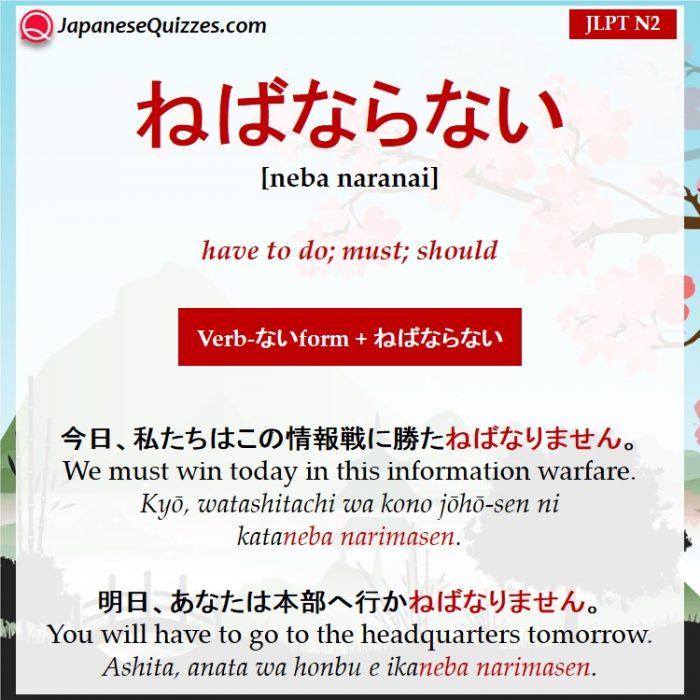

Formations
Verb-ないform + ねばならない
Examples
今日、私たちはこの情報戦に勝たねばならない / 勝たねばなりません。
Kyō, watashi-tachi wa kono jyouhousen ni kataneba naranai/ kataneba narimasen.
We must win today in this information warfare.
明日、あなたは本部へ行かねばならない / 行かねばなりません。
Ashita, anata wa honbu e ikaneba naranai/ ikaneba narimasen.
You will have to go to the headquarters tomorrow.
私は彼女を非難する前に事実を確かめねばならない / 確かめねばなりません。
Watashi wa kanojo wo hinan surumaeni jijitsu o tashikame nebanaranai/ tashikame neba narimasen.
I must make sure of the fact before I blame her.
あなたはもっと敵についての情報を集めねばならない / 集めねばなりません。
Anata wa motto teki ni tsuite nojyouhou wo atsume nebanaranai/ atsume neba narimasen.
You must gather further information about an enemy.
その諜報員は一週間でこの仕事を終えねばならない / 終えねばなりません。
Sono chō hō in wa isshyuukan de kono shigoto o oe nebanaranai/ oe neba narimasen.
The spy must finish this work in a week.
一つの国を知りたければ、その国の歴史を学ばねばならない / 学ばねばなりません。
Hitotsu no kuni o shiritakereba, sono kuni no rekishi o manabaneba naranai/ manabaneba narimasen.
If you want to know a nation, you must learn its history.
See also