
Formations
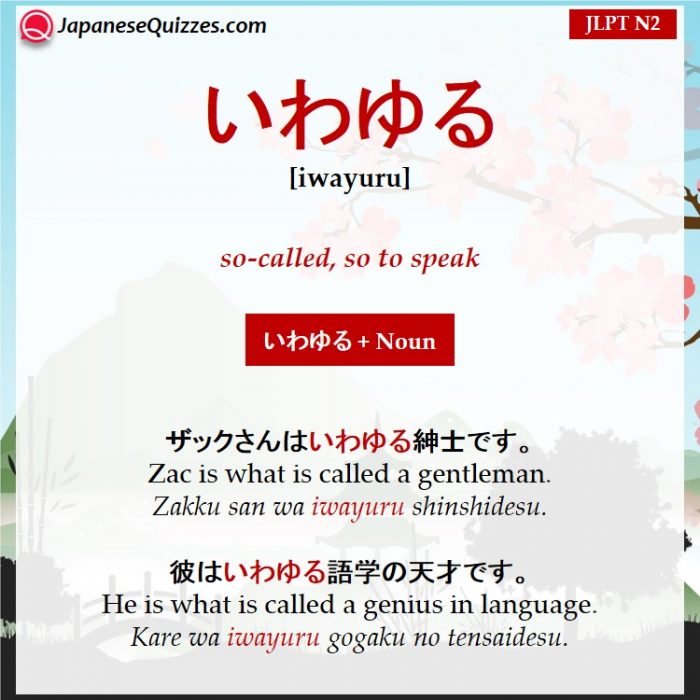
いわゆる + Noun
Examples
ザックさんはいわゆる紳士だ / 紳士です。
Zakku-san wa iwayuru shinshida/ shinshidesu.
Zac is what is called a gentleman.
彼はいわゆる語学の天才だ / 天才です。
Kare wa iwayuru gogaku no tensaida/ tensaidesu.
He is what is called a genius in language.
その経営コンサルタントはいわゆる国際人だ / 国際人です。
Sono keiei konsarutanto wa iwayuru kokusai hitoda/ kokusai hitodesu.
The management consultant is what you call a cosmopolitan.
これがいわゆる「天ぷら」というものだ / 「天ぷら」というものです。
Kore ga iwayuru `tenpura’ to iu monoda/ `tenpura’ to iu monodesu.
This is what we call “tempura”.
これはいわゆる斬新なアイデアだ / アイデアです。
Kore wa iwayuru zanshin’na aideada/ aideadesu.
This is what we call a ‘brand-new idea.’
これはある国ではいわゆる「贈り物」で、他の国では「贈賄」だ / 「贈賄」です。
Kore wa aru kunide wa iwayuru `okurimono’ de, hoka no kunide wa `zōwai’da/ `zōwai’desu.
This is what is called a ‘present’ in some countries and ‘bribery’ in others.
See also
suddenly; all of a sudden

Formations
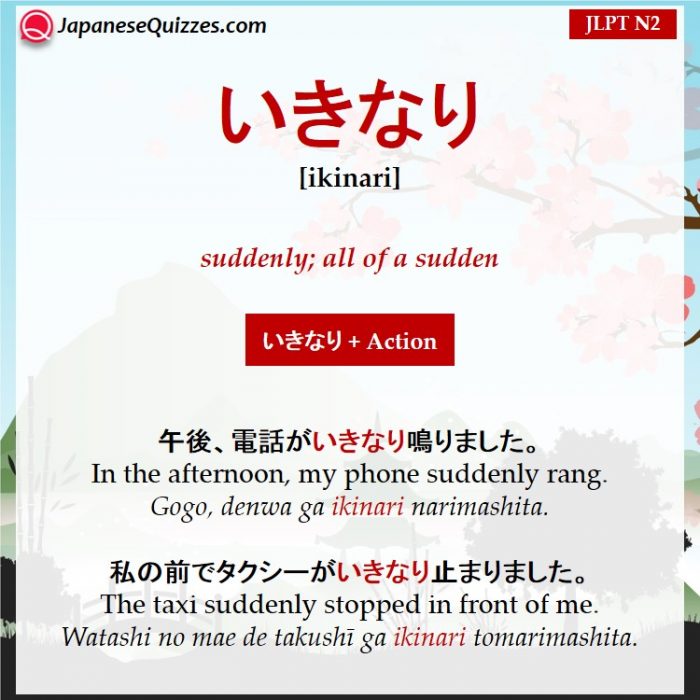
いきなり + action
Examples
午後、電話がいきなり鳴った / 鳴りました。
Gogo, denwa ga ikinari natta/ narimashita.
In the afternoon, my phone suddenly rang.
「会社に来なさい」と社長は私に電話でいきなり言った / 言いました。
‘Kaisha ni ki nasai’ to shachō wa watashi ni denwa de ikinari itta/ iimashita.
“Come to the office”, the president suddenly said to me on the phone.
私の前でタクシーがいきなり止まった / 止まりました。
Watashi no mae de takushī ga ikinari tomatta/ tomarimashita.
The taxi suddenly stopped in front of me.
そのタクシーはいきなり右に曲がった / 曲がりました。
Sono takushī wa ikinari migi ni magatta/ magarimashita.
The taxi abruptly turned right.
会社に着くと、社長がいきなり現れた / 現われました。
Kaisha ni tsuku to, shachō ga ikinari arawareta/ arawaremashita.
When I got to the office, the president suddenly appeared.
私はいきなり解雇された / 解雇されました。
Watashi wa ikinari kaiko sa reta/ kaiko sa remashita.
I was discharged without notice.
社長はいきなり笑い出した / 笑い出しました。
Shachō wa ikinari warai dashita/ warai dashimashita.
The president burst into laughter.
See also

Formations
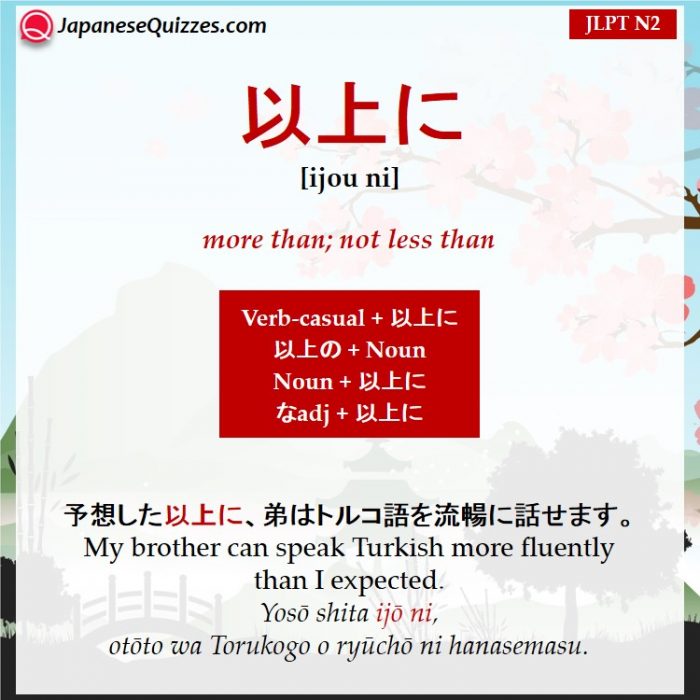
Verb-casual + 以上に
以上の + Noun
Noun + 以上に
なadj + 以上に
Examples
彼は予想以上に有能な弁護士だ / 弁護士です。
Kare wa yosōijō ni yūnōna bengoshida/ bengoshidesu.
He is an abler lawyer than I expected.
予想以上に悪い天候だ / 天候です。
Yosōijō ni warui tenkōda/ tenkōdesu.
This bad weather is more than I bargained for.
私は必要以上にたくさんのお金を使いたくない / 使いたくありません。
Watashi wa hitsuyōijō ni takusan no okane o tsukaitakunai/ tsukaitaku arimasen.
I don’t want to use more money than I need.
姪は想像した以上に多くの秘密を抱えている / 抱えています。
Mei wa sōzō shita ijō ni ōku no himitsu o kakaete iru/ kakaete imasu.
My niece keeps more secrets than I imagined.
予想した以上に、弟はトルコ語を流暢に話せる / 話せます。
Yosō shita ijō ni, otōto wa Toruko-go o ryūchō ni hanaseru/ hanasemasu.
My brother can speak Turkish more fluently than I expected.
企画が採用されたことが判明したとき、想像した以上に同僚は喜んだ / 喜びました。
Kikaku ga saiyō sa reta koto ga hanmei shita toki, sōzō shita ijō ni dōryō wa yorokonda/ yorokobimashita.
When it turned out that the project was adopted, my colleagues were more pleased than I had imagined.
See also
because; now that; since; once; as long as

Formations
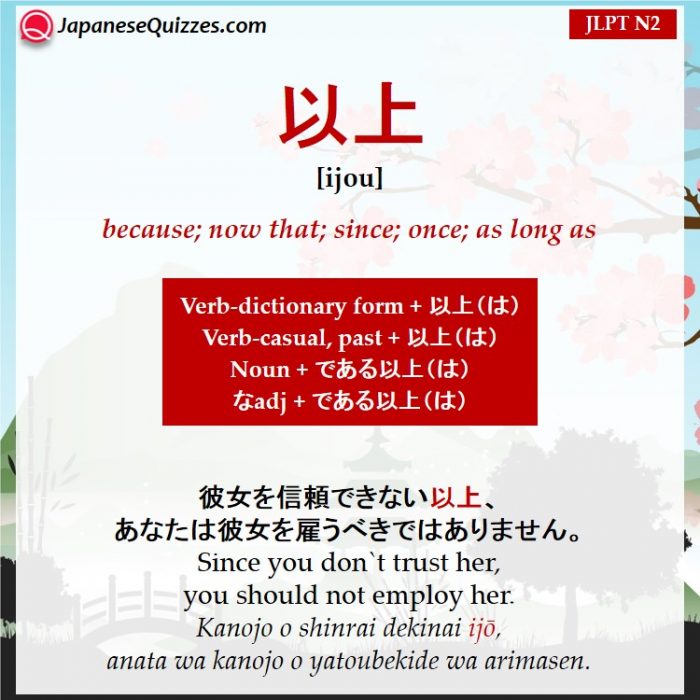
Verb-dictionary form + 以上(は)
Verb-casual, past + 以上(は)
Noun + である以上(は)
なadj + である以上(は)
Examples
学生である以上は勉強すべきだ / 勉強すべきです。
Gakusei dearu ijō wa benkyō subekida/ benkyō subekidesu.
So long as you are a student, you should study.
試験を受ける以上、私は何とかして合格したい / 合格したいです。
Shiken o ukeru ijō, watashi wa nantoka shite gōkaku shitai/ gōkaku shitaidesu.
Now that I’m taking the test, I want to pass it in one way or another.
真相を知った以上、私は何かしなければならない / 何かしなければなりません。
Shinsō o shitta ijō, watashi wa nani ka shinakereba naranai/ nanika shinakereba narimasen.
Now that I’ve known the truth, I have to do something.
彼がマレーシア国民である以上、私には彼を助ける義務がある / 義務があります。
Kare ga marēshia kokumindearu ijō, watashini wa kare o tasukeru gimu ga aru/ gimu ga arimasu.
Because he’s a Malaysian citizen, I have an obligation to help him.
彼女を信頼できない以上、あなたは彼女を雇うべきではない / 雇うべきではありません。
Kanojo o shinrai dekinai ijō, anata wa kanojo o yatoubekide wanai/ yatoubekide wa arimasen.
Since you don`t trust her, you should not employ her.
契約書に書かれている以上、私たちは期日までにこの仕事を完成させなければならない / 完成させなければなりません。
Keiyakusho ni kaka rete iru ijō, watashitachiha kijitsu made ni kono shigoto o kansei sa senakereba naranai/ kansei sa senakereba narimasen.
As is written in the contract, we must complete this job by the appointed date.
See also
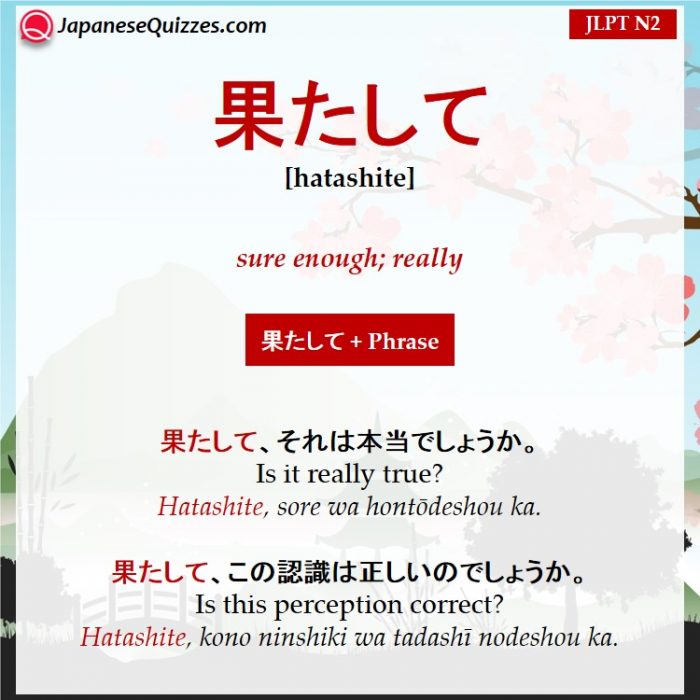

Formations
果たして + phrase
Examples
果たして、それは本当だろうか / 本当でしょうか。
Hatashite, soreha hontōdarou ka/ hontōdeshou ka.
Is it really true?
果たして、この認識は正しいのだろうか / 正しいのでしょうか。
Hatashite, kono ninshiki wa tadashī nodarou ka/ tadashī nodeshou ka.
Is this perception correct?
果たして私たちはまた会うことができるだろうか / できるでしょうか。
Hatashite watashitachiha mata au koto ga dekirudarou ka/ dekirudeshou ka.
Would we ever meet again?
あなたの言う事が果たして事実なのか調べてみる / 調べてみます。
Anata no iu koto ga hatashite jijitsuna no ka shirabete miru/ shirabete mimasu.
We will check to see if what you have said is really the truth.
経営陣は果たして本気で私たちのボーナスについて考えようとしているのだろうか / 考えようとしているのでしょうか。
Keiei-jin wa hatashite honki de watashitachi no bōnasu ni tsuite kangaeyou to shite iru nodarou ka/ kangaeyou to shite iru nodeshou ka.
Is management really going to consider our bonus?
果たして正しいことをしたのかどうか、私はいまだに確信がない / 確信がありません。
Hatashite tadashī koto o shita no ka dō ka, watashi wa imadani kakushin ga nai/ kakushin ga arimasen.
I’m not sure, even now, if I’ve done the right thing.
See also
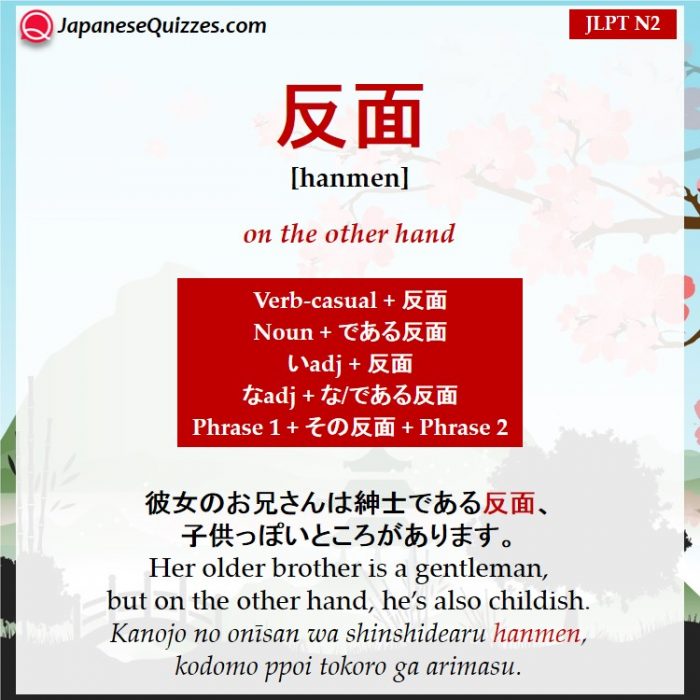

Formations
Verb-casual + 反面
Noun + である反面
いadj + 反面
なadj + な/である反面
Phrase 1 + その反面 + Phrase 2
Examples
この薬はよく効く反面、副作用がある / 副作用があります。
Kono kusuri wa yoku kiku hanmen, fukusayō ga aru/ fukusayō ga arimasu.
This medicine works well, but on the other hand, it has a side effect.
彼の顔は怖そうに見える反面、彼の声は優しくおだやかだった / おだやかでした。
Kare no kao wa kowa-sō ni mieru hanmen, kare no koe wa yasashiku odayakadatta/ odayakadeshita.
In contrast to his frightening looks, his voice was kind and calm.
この布は水に強い反面、熱には弱い / 弱いです。
Kono nuno wa mizu ni tsuyoi hanmen, netsu ni wa yowai/ yowaidesu.
This cloth is strong in water on the other hand, is vulnerable to heat.
彼はスポーツが上手な反面、勉強はまったくだめだ / まったくだめです。
Kare wa supōtsu ga jōzuna hanmen, benkyō wa mattaku dameda/ mattaku damedesu.
He’s good at sports, but on the other hand, he’s hopeless at studying.
フェースブックは便利な反面、トラブルも多い / 多いです。
Fēsubukku wa benrina hanmen, toraburu mo ōi/ ōidesu.
Facebook can be useful, but on the other hand, it also causes many troubles.
彼女のお兄さんは紳士である反面、子供っぽいところがある / 子供っぽいところがあります。
Kanojo no onīsan wa shinshidearu hanmen, kodomo ppoi tokoro ga aru/ kodomo ppoi tokoro ga arimasu.
Her older brother is a gentleman, but on the other hand, he’s also childish.
See also