
Formations
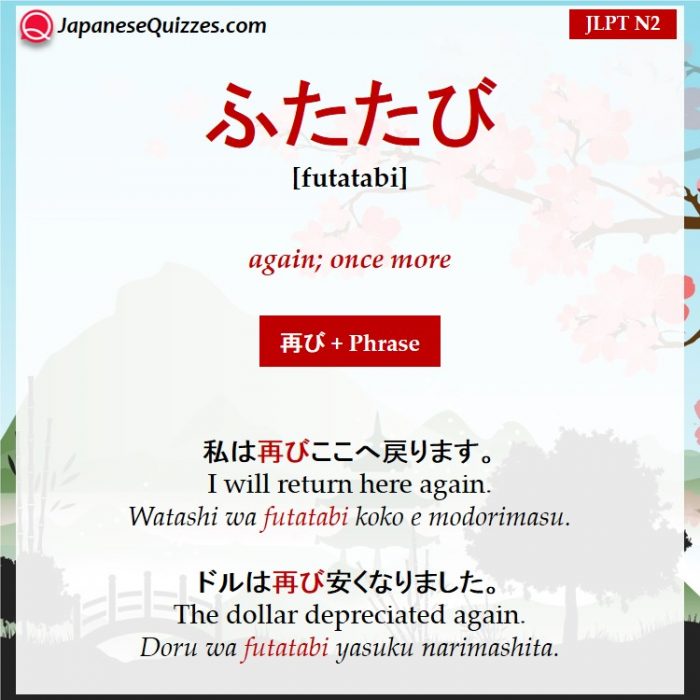
再び(ふたたび) + phrase
Examples
私は再びここへ戻る / 戻ります。
Watashi wa futatabi koko e modoru/ modorimasu.
I will return here again.
ドルは再び安くなった / 安くなりました。
Doru wa futatabi yasuku natta/ yasuku narimashita.
The dollar depreciated again.
火山が再び活動を始めた / 始めました。
Kazan ga futatabi katsudō o hajimeta/ hajimemashita.
The volcano has become active again.
再び料理が私の趣味となった / 趣味となりました。
Futatabi ryōri ga watashi no shumi to natta/ shumi to narimashita.
Cooking became my hobby again.
祖父は再び両親と会うことはなかった / 会うことありませんでした。
Sofu wa futatabi ryōshin to au koto wa nakatta/ au koto arimasendeshita.
My grandfather was never to see his parents again.
しばらくして妹は再びピアノを弾き始めた / 弾き始めました。
Shibaraku shite imōto wa futatabi piano o hiki hajimeta/ hiki hajimemashita.
After a while, my little sister began to play the piano again.
See also

Formations
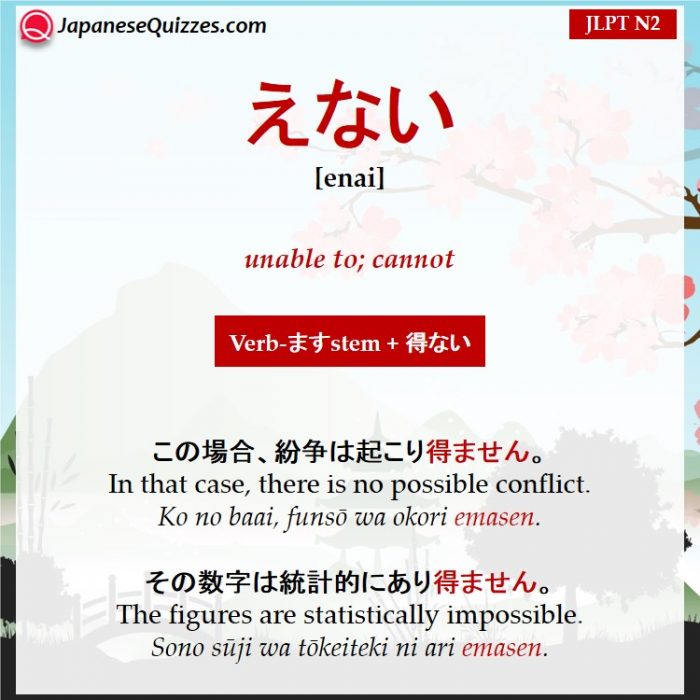
Verb-ますstem + 得ない
Examples
それはまずあり得ない / あり得ません。
Sore wa mazu ari enai/ ari emasen.
That is most unlikely (to happen).
その数字は統計的にあり得ない / あり得ません。
Sono sūji wa tōkei-teki ni ari enai/ ari emasen.
The figures are statistically impossible.
この場合、紛争は起こり得ない / 起こり得ません。
Ko no baai, funsō wa okori enai/ okori emasen.
In that case, there is no possible conflict.
人工知能なしに、この分野に関して研究し得ない / 研究し得ません。
Jinkō chinō nashi ni, kono bun’ya ni kanshite kenkyū shi enai/ kenkyū shi emasen.
We can’t do research about this field without an artificial intelligence.
得点しない限り、この試合に私たちは勝ちえない / 勝ち得ません。
Tokuten shinai kagiri, kono shiai ni watashitachiha kachi enai/ kachiemasen.
We can not win this game unless we score.
きちんとした計画なしに、あなたはこの目標を達成し得ない / 達成しえません。
Kichinto shita keikaku nashi ni, anata wa kono mokuhyō o tassei shi enai/ tassei shi emasen.
You won’t be able to achieve this goal without a decent plan.
See also

Formations
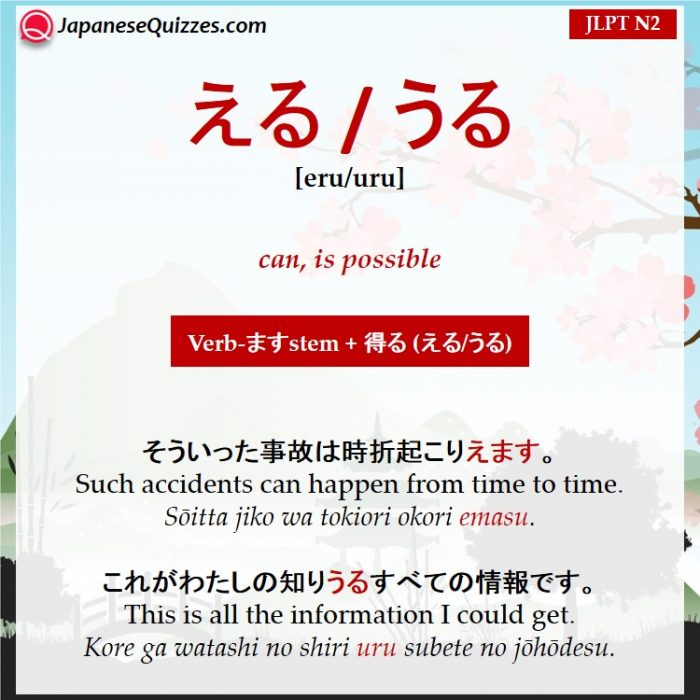
Verb-ますstem + 得る (える/うる)
Examples
そういった事故は時折起こり得る /起こりえます。
Sōitta jiko wa tokiori okori eru/ okori emasu.
Such accidents can happen from time to time.
彼女はオリンピックでメダルを獲得しうる / 獲得しえます。
Kanojo wa orinpikku de medaru o kakutoku shi uru/ kakutoku shi emasu.
She can win a medal in the Olympics.
夢の世界ではどんなことでも起こりうる / 起こりえます。
Yume no sekaide wa don’na kotode mo okori uru/ okori emasu.
Anything can happen in the world of dreams.
これがわたしの知りうるすべての情報だ / 情報です。
Kore ga watashi no shiri uru subete no jōhōda/ jōhōdesu.
This is all the information I could get.
あなたは考え得る最善を尽くした / 尽くしました。
Anata wa kangaeuru saizen o tsukushita/ tsukushimashita.
You did the best that could be expected.
不純な飲料水は病気の媒体となりうる / 媒体となりえます。
Fujun’na inryōsui wa byōki no baitai to nari uru/ baitai to nari emasu.
Impure drinking water can be a carrier of diseases.
See also
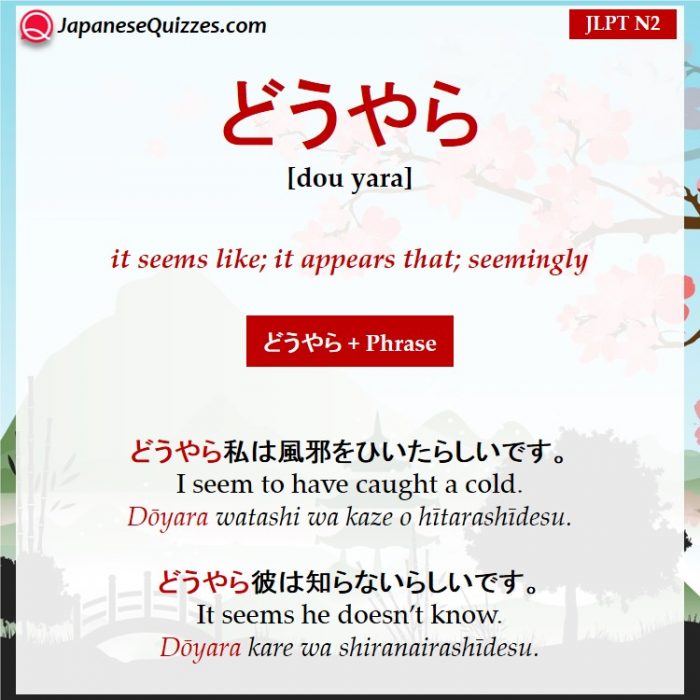
it seems like; it appears that; seemingly

Formations
どうやら + phrase
Examples
どうやら私は風邪を引いたらしい / 風邪をひいたらしいです。
Dōyara watashi wa kaze o hiitarashī/ kaze o hītarashīdesu.
I seem to have caught a cold.
どうやら彼は知らないらしい / 知らないらしいです。
Dōyara kare wa shiranairashī/ shiranairashīdesu.
It seems he doesn’t know.
どうやら兄は辞職するらしい / 辞職するらしいです。
Dōyara ani wa jishoku sururashī/ jishoku sururashīdesu.
It seems probable that my older brother will resign.
どうやら私は傘を置いてきてしまったらしい / 置いてきてしまったらしいです。
Dōyara watashi wa kasa o oite kite shimattarashī/ oite kite shimattarashīdesu.
I seem to have left my umbrella behind.
どうやら妹は昇給するらしい / 昇給するらしいです。
Dōyara imōto wa shōkyū sururashī/ shōkyū sururashīdesu.
It seems like my younger sister is going to get a raise in salary.
どうやら私たちの間には誤解があるようだ / 誤解があるようです。
Dōyara watashitachi no ma ni wa gokai ga aru yōda/ gokai ga aru yōdesu.
There appears to be a misunderstanding between us.
See also
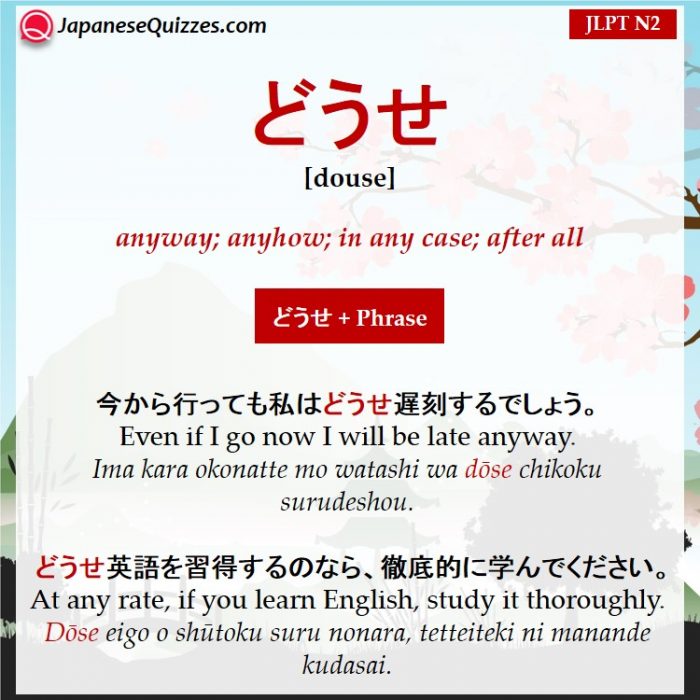
anyway; anyhow; in any case; after all

Formations
どうせ + phrase
Examples
今から行っても私はどうせ遅刻するだろう / 遅刻するでしょう。
Ima kara okonatte mo watashi wa dōse chikoku surudarou/ chikoku surudeshou.
Even if I go now I will be late anyway.
あなたがどうせ私を信じないことははっきりわかっている / わかっています。
Anata ga dōse watashi o shinjinai koto wa hakkiri wakatte iru/ waka tte imasu.
I know perfectly well that you won’t believe me anyway.
どうせ英語を習得するのなら、徹底的に学びなさい / 学んでください。
Dōse eigo o shūtoku suru nonara, tetteiteki ni manabi nasai/ manande kudasai.
At any rate, if you learn English, study it thoroughly.
どうせ行かなければならないのなら早いほうがいい / 早いほうがいいです。
Dōse ikanakereba naranai nonara hayai hō ga ī/ hayai hō ga īdesu.
If you have to go anyway, then you might as well do it quickly.
どうせ海外へ旅行をするなら、若いうちにした方がいい / 若いうちにした方がいいです。
Dōse kaigai e ryokō o surunara, wakai uchi ni shitahōgaī/ wakai uchi ni shitahōgaīdesu.
If you make a trip abroad at all, it’s better to do it when you are young.
どうせ郵便局へ行くのなら、私のために切手を買ってくださいませんか?
Dōse yūbinkyoku e iku nonara, watashi no tame ni kitte o katte kudasaimasen ka?
Since you’re going to the post-office anyway won’t you please buy some stamps for me?
See also
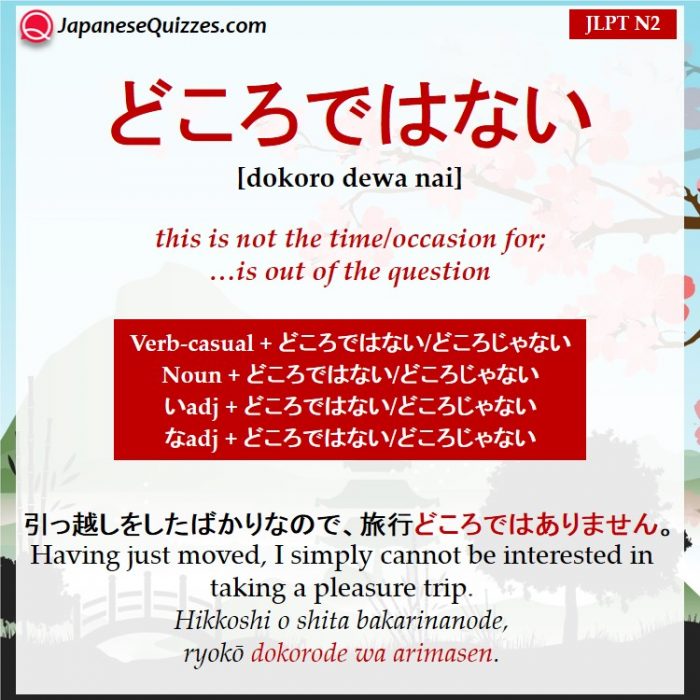
this is not the time/occasion for; …is out of the question

Formations
Verb-casual + どころではない/どころじゃない
Noun + どころではない/どころじゃない
いadj + どころではない/どころじゃない
なadj + どころではない/どころじゃない
Examples
私は忙しくてそれどころではない / それどころではありません。
Watashi wa isogashikute soredokorode wanai/ soredokorode wa arimasen.
I’ve got no time for that now.
風邪がひどくて、私はカラオケに行くどころではない / 行くどころではありません。
Kaze ga hidokute, watashi wa karaoke ni iku dokorode wanai/ iku dokorode wa arimasen.
I have a bad cold so I can’t think about going to karaoke.
お金がなくて、買い物どころではない / 買い物どころではありません。
Okane ga nakute, kaimono dokorode wanai/ kaimono dokorode wa arimasen.
I have no money, so there’s no way I can go shopping…
引っ越しをしたばかりなので、旅行どころじゃない / 旅行どころではありません。
Hikkoshi o shita bakarinanode, ryokō dokoro janai/ ryokō dokorode wa arimasen.
Having just moved, I simply cannot be interested in taking a pleasure trip.
私を外しておいてください。疲れてテニスどころじゃない / テニスどころではありません。
Watashi o hazushite oite kudasai. Tsukarete tenisu dokoro janai/ tenisu dokorode wa arimasen.
Please count me out; I’m too tired to play tennis.
私はあなたの仕事を手伝うどころではない。自分の仕事をする時間さえない。
Watashi wa anata no shigoto o tetsudau dokorode wanai. Jibun no shigoto o suru jikan sae nai.
I can’t help anyone with your jobs. I don’t even have time to do mine.
See also