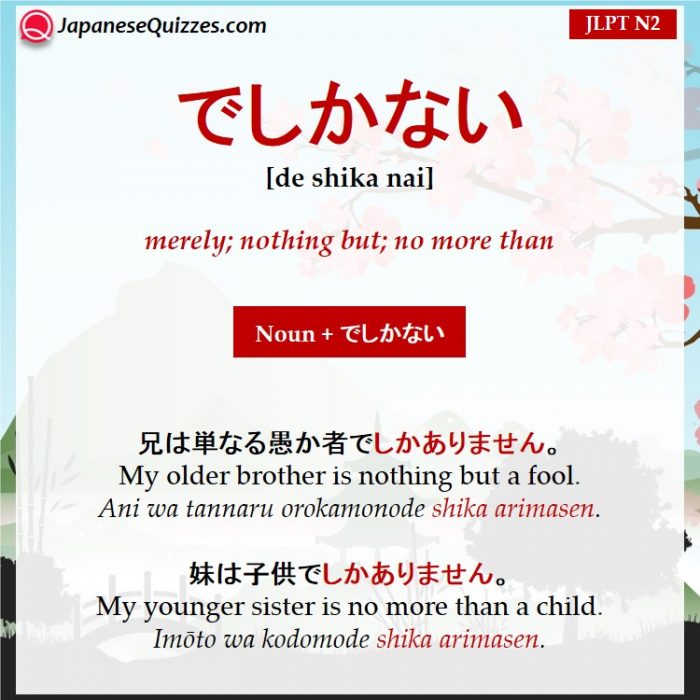
merely; nothing but; no more than

Formations
Noun + でしかない
Examples
兄は単なる愚か者でしかない / 愚か者でしかありません。
Ani wa tan’naru orokamono deshika nai/ orokamono deshika arimasen.
My older brother is nothing but a fool.
妹は子供でしかない / 子供でしかありません。
Imōto wa kodomo deshika nai/ kodomo deshika arimasen.
My younger sister is no more than a child.
海まで、たった1マイルでしかない / 1マイルでしかありません。
Umi made, tatta ichi-mairu deshika nai/ ichi-mairu deshika arimasen.
It is no more than a mile to the sea.
これらの考えは推測でしかない / 推測でしかありません。
Korera no kangae wa suisoku deshika nai/ suisoku deshika arimasen.
This idea is just an estimate.
この取り決めは一時的なものでしかない / 一時的なものでしかありません。
Kono torikime wa ichiji-tekina mono deshika nai/ ichiji-tekina mono deshika arimasen.
This arrangement is only temporary.
彼は気分が悪いと言っているが、それは口実でしかない / 口実でしかありません。
Kare wa kibungawarui to itte iruga, soreha kōjitsu deshika nai/ kōjitsu deshika arimasen.
Though he said that he’s not feeling well, it is nothing but an excuse.
See also
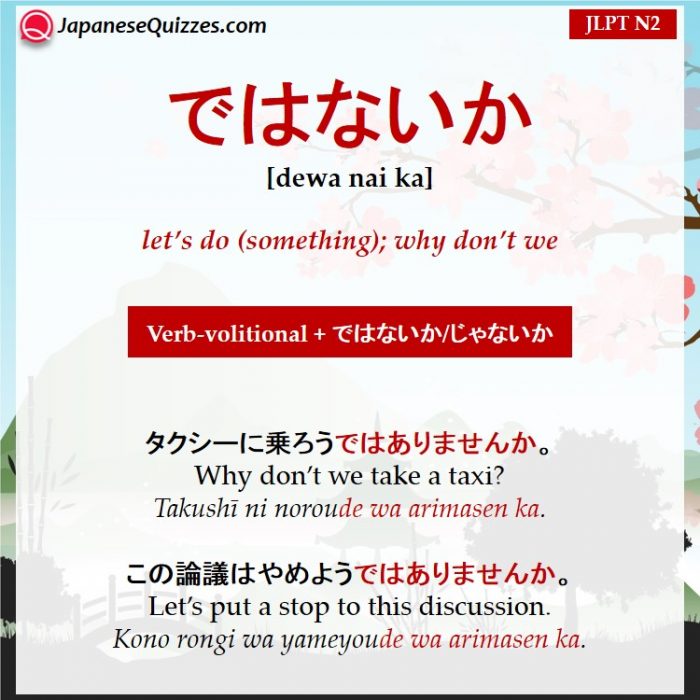
let’s do (something); why don’t we

Formations
Verb-volitional + ではないか/じゃないか
Examples
タクシーに乗ろうではないか / 乗ろうではありませんか。
Takushī ni noroude wanai ka/ noroude wa arimasen ka.
Why don’t we take a taxi?
この論議はやめようではないか / やめようではありませんか。
Kono rongi wa yameyoude wanai ka/ yameyoude wa arimasen ka.
Let’s put a stop to this discussion.
映画でも見に行こうじゃないか / 行こうではありませんか。
Eiga demo mi ni ikou janai ka/ yukōde wa arimasen ka.
Let’s go watch a movie or something.
みんなで遠足に行こうじゃないか / 行こうではありませんか。
Min’na de ensoku ni ikou janai ka/ yukōde wa arimasen ka.
Everyone, let’s go on an excursion.
お互いを理解し合おうではないか / 理解し合おうではありませんか。
Otagai o rikaishiaoude wanai ka/ rikaishiaoude wa arimasen ka.
Let’s try to understand one another.
労働問題について、真剣に考えようではないか / 考えようではありませんか。
Rōdōmondai ni tsuite, shinken ni kangaeyoude wanai ka/ kangaeyoude wa arimasen ka.
Why don’t we think carefully about labor problems?
See also
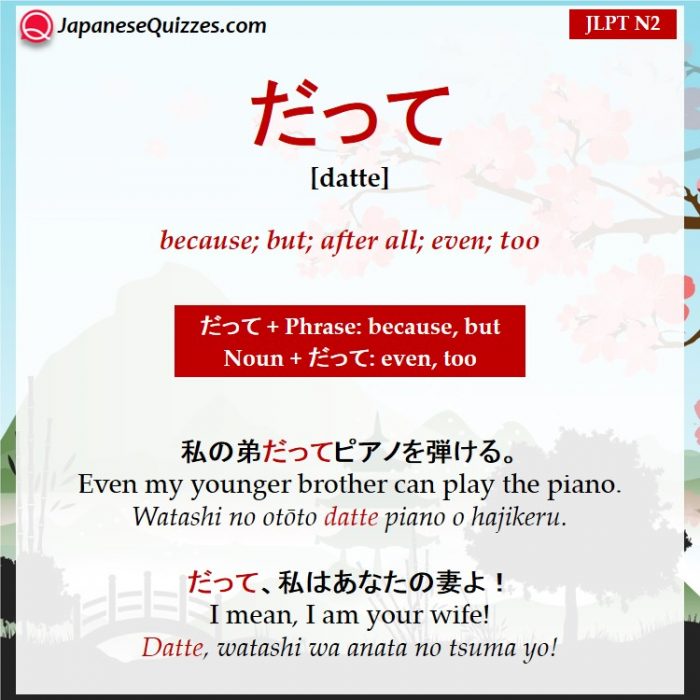
because; but; after all; even; too

Formations
だって + phrase: because, but
Noun + だって: even, too
Examples
「外に食べに行きたくないの?」 「だって疲れているんだもの」
‘Soto ni tabe ni ikitakunai no?’ ‘Datte tsukarete iru nda mono’
“You don’t want to eat out ?” “Because I’m tired.”
「もう寝る時間ですよ。」 「だって眠くないんだもの」
‘mōneru jikandesuyo.’ ‘Datte nemukunai nda mono’
“It’s time you went to bed.” “But I’m not sleepy.”
また、フクロウ・カフェに行ったの?だって、かわいいんだもの。
Mata, fukurō kafe ni itta no? Datte, kawaī nda mono.
“Did you go to the owl cafe again?” “Because they are cute.”
私の弟だってピアノを弾ける。
Watashi no otōto datte piano o hikeru.
Even my younger brother can play the piano.
金持ちだって不幸な時もある。
Kanemochi datte fukōna toki mo aru.
Even rich people are unhappy sometimes.
だって、私はあなたの妻よ!
Datte, watashi wa anata no tsuma yo!
I mean, I am your wife!
See also
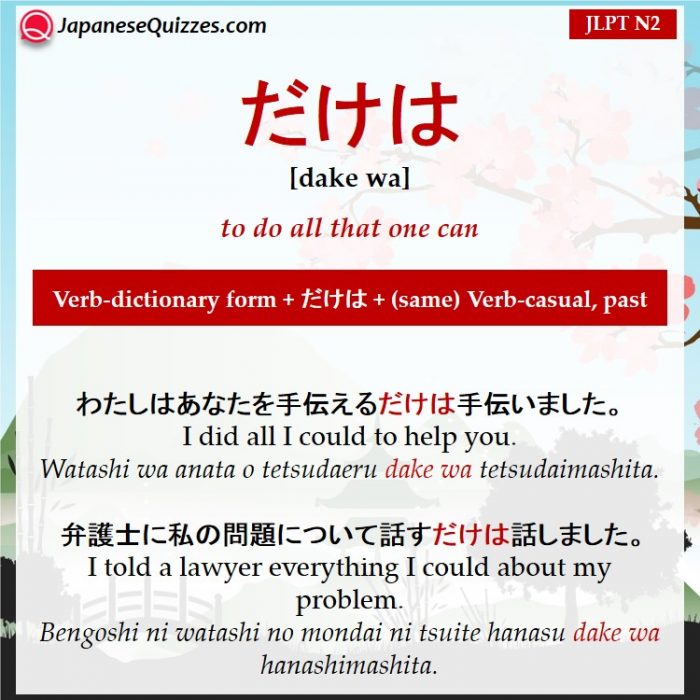

Formations
Verb-dictionary form + だけは + (same) Verb-casual, past
Examples
わたしはあなたを手伝えるだけは手伝った / 手伝いました。
Watashi wa anata o tetsudaeru dake wa tetsudatta/ tetsudaimashita.
I did all I could to help you.
弁護士に私の問題について話すだけは話した / 話しました。
Bengoshi ni watashi no mondai ni tsuite hanasu dake wa hanashita/ hanashimashita.
I told a lawyer everything I could about my problem.
マラソン大会に参加するだけは参加したが、ゴールまで走り切れなかった / 走り切れませんでした。
Marason taikai ni sanka suru dake wa sanka shitaga, gōru made hashiri kirenakatta/ hashiri kiremasendeshita.
Though I participated a marathon, I could not finish it.
会社の状況を説明するだけは説明したが、社員が本当に理解したかどうかはわからない / わかりません。
Kaisha no jōkyō o setsumei suru dake wa setsumei shitaga, shain ga hontōni rikai shita ka dō ka wa wakaranai/ wakarimasen.
Though I explained the situation of the company and did all that I could, I do not know whether the employee really understood it or not.
私は効果的な学習方法を共有するだけは共有したので、それを実践するかどうかはあなた次第だ / あなた次第です。
Watashi wa kōkatekina gakushū hōhō o kyōyū suru dake wa kyōyū shitanode, sore o jissen suru ka dō ka wa anata shidaida/ anata shidaidesu.
Since I shared an effective learning method and did all that I could, it’s up to you whether you will put it into practice or not.
See also
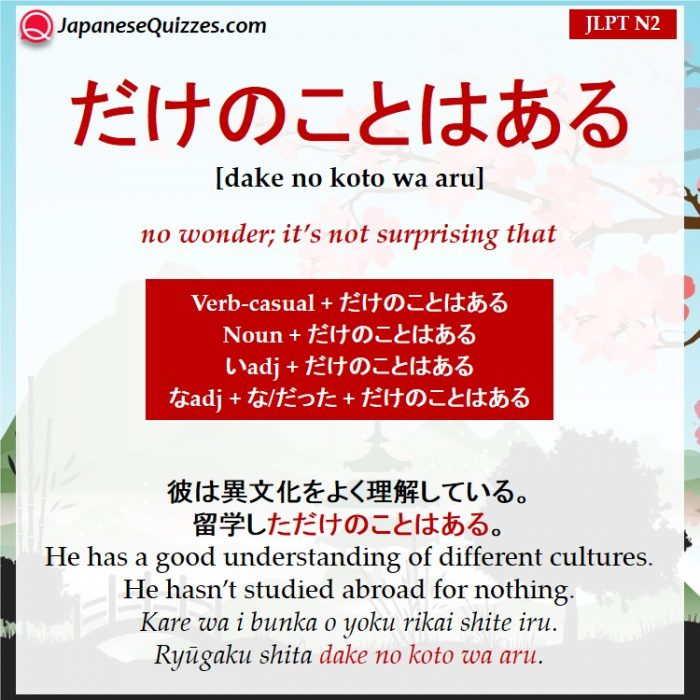
no wonder; it’s not surprising that

Formations
Verb-casual + だけのことはある
Noun + だけのことはある
いadj + だけのことはある
なadj + な/だった + だけのことはある
Examples
彼は異文化をよく理解している。留学しただけのことはある。
Kare wa i bunka o yoku rikai shite iru. Ryūgaku shita dake no koto wa aru.
He has a good understanding of different cultures. He hasn’t studied abroad for nothing.
私の友達は彼女の学校のテストに全部合格した。毎晩勉強しただけのことはある。
Watashinotomodachi wa kanojo no gakkō no tesuto ni zenbu gōkaku shita. Maiban benkyō shita dake no koto wa aru.
My friend passed all her school exams. It’s not for nothing she studies every night!
この靴ははき心地がいい。名作と呼ばれるだけのことはある。
Kono kutsu wa haki-gokochi ga ī. Meisaku to yoba reru dake no koto wa aru.
These shoes are comfortable to wear. It’s not surprising that they are called a masterpiece.
あなたの会社はこの不況にびくともしない。さすが大企業だけのことはある。
Anata no kaisha wa kono fukyō ni bikutomo shinai. Sasuga dai kigyō dake no koto wa aru.
The recession does not truly bother your company. There has not been a big company for nothing.
その えいがは おもしろかった。スティーヴン・スピルバーグが つくっただけのことはある。
Sono eiga wa omoshirokatta. Sutīvun supirubāgu ga tsukutta dake no koto wa aru.
That movie was really interesting. That’s what I expect of a Steven Spielberg film.
See also
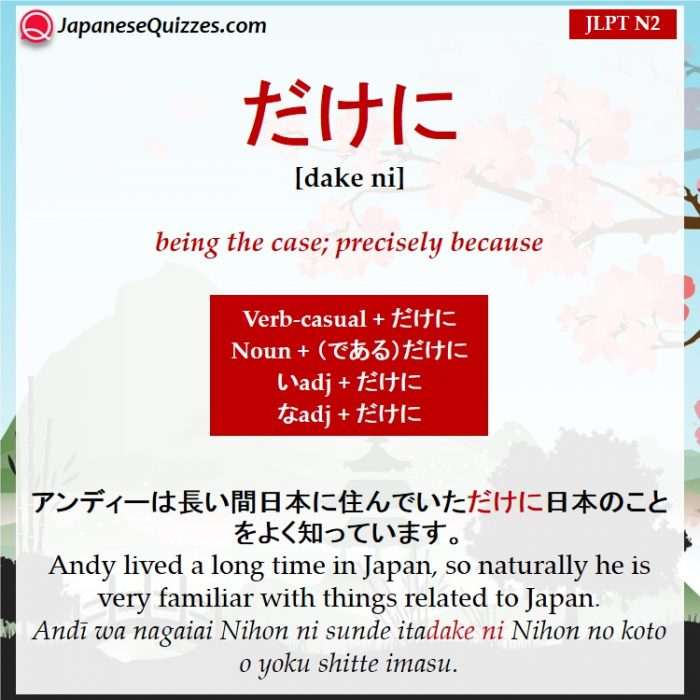
being the case; precisely because.

Formations
Verb-casual + だけに
Noun + (である)だけに
いadj + だけに
なadj + だけに
Examples
一生懸命働いただけに、彼はほどなく昇進しました。
Isshōkenmei hataraita dake ni, kare wa hodonaku shōshin shimashita.
As expected he performed well and got the promotion in little time.
アンディーは長い間日本に住んでいただけに日本のことをよく知っています。
Andī wa nagaiai Nihon ni sunde itadake ni Nihon no koto o shitte imasu.
Andy lived a long time in Japan, so naturally he is very familiar with things related to Japan.
昨年はみかんが不作で、値段が高かっただけに今年の豊作がうれしいです。
Sakunen wa mikan ga fusaku de, nedan ga takakatta dake ni kotoshi no hōsaku ga ureshīdesu.
Last year the oranges were scanty harvest, the price was high, I am happy this year’s good harvest.
See also