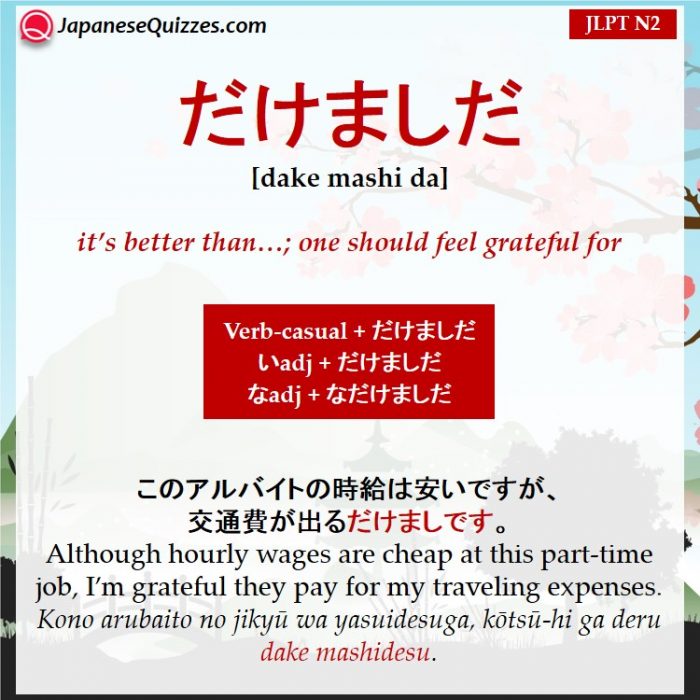
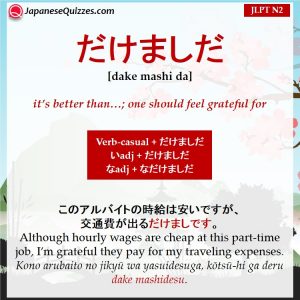
it’s better than…; one should feel grateful for.
Formations
Verb-casual + だけましだ
いadj + だけましだ
なadj + なだけましだ
The patterns are below:
Negative statement + BVerb: Casual
Negative statement + Bい-adjective
Negative statement + Bな-adjective + な
Although A, B is (still) true (and is good)
Follows a negative/restrictive statement A, and draws a contrast to it by adding the positive B
Examples
きょうはさむいが、ゆきがふらないだけましです。
Kyō wa samuiga, yuki ga furanai dake mashidesu.
Although it’s cold today, I feel grateful it’s not snowing.
このアルバイトの時給は安いですが、交通費が出るだけましです。
Kono arubaito no jikyū wa yasuidesuga, kōtsū-hi ga deru dake mashidesu.
Although hourly wages are cheap at this part-time job, I’m grateful they pay for my traveling expenses.
この自転車は古いですが、ないよりましです。
Kono jitensha wa furuidesuga, nai yori mashidesu.
Although this bicycle is old, it’s better than nothing.
See also

Formations
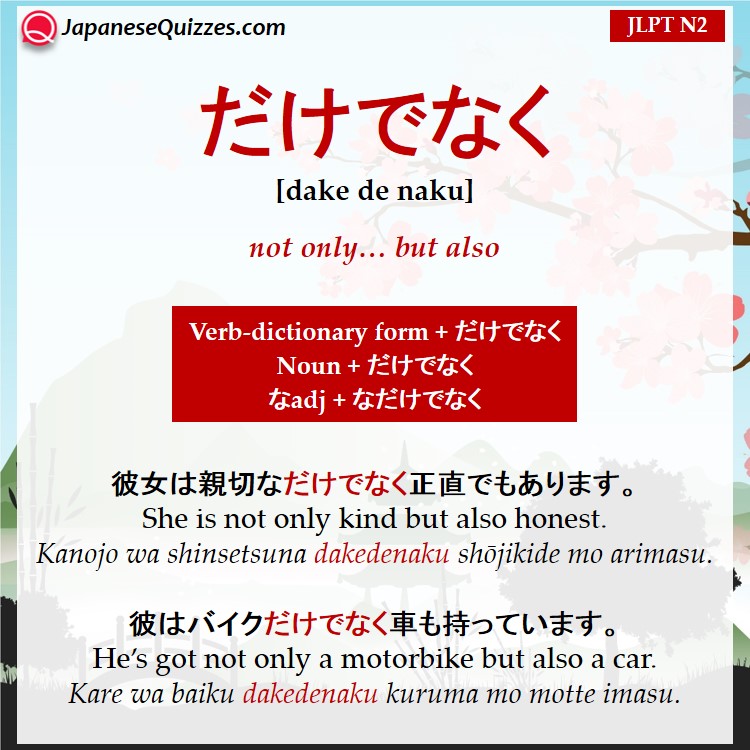
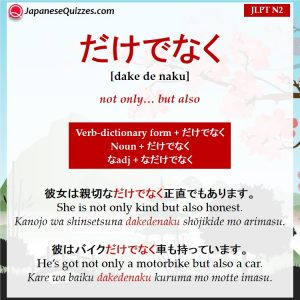
Verb-dictionary form + だけでなく
Noun + だけでなく
なadj + なだけでなく
Examples
彼女は親切なだけでなく正直でもあります。
Kanojo wa shinsetsuna dakedenaku shōjikide mo arimasu.
She is not only kind but also honest.
彼はバイクだけでなく車も持っています。
Kare wa baiku dakedenaku kuruma mo motte imasu.
He’s got not only a motorbike but also a car.
そのレストランは美味しいだけでなく雰囲気もいいです。
Sono resutoran wa oishī dakedenaku funiki mo īdesu.
Not only does that restaurant have nice food, but the atmosphere’s good too.
See also
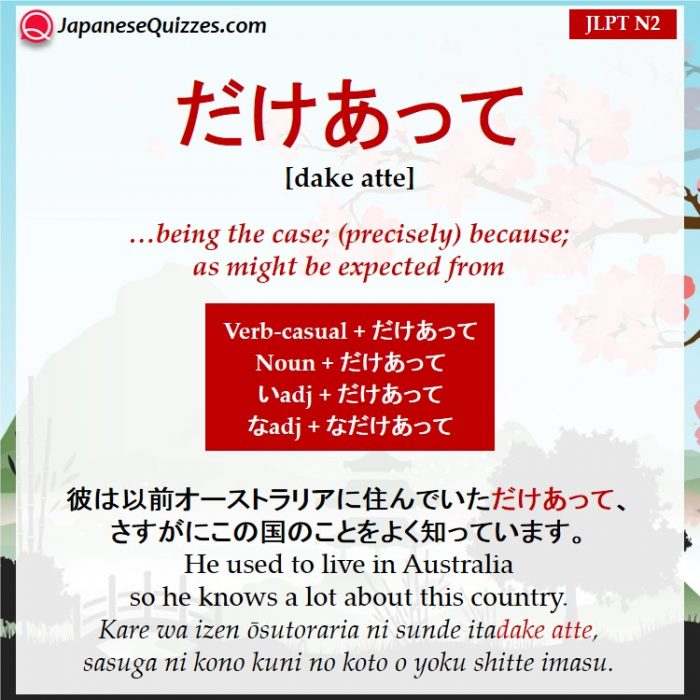
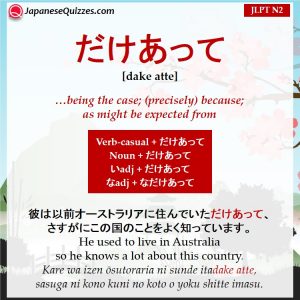
…being the case; (precisely) because; as might be expected from.
Formations
Verb-casual + だけあって
Noun + だけあって
いadj + だけあって
なadj + なだけあって
Examples
彼女は、美術学校を出ただけあって、絵が上手です。
Kanojyo wa, bijyutsugakkou wo detadake atte, e ga jōzu desu.
As expected of a woman who went to art school, she draws well.
彼は以前オーストラリアに住んでいただけあって、さすがにこの国のことをよく知っています。
Kare wa izen ōsutoraria ni sunde itadake atte, sasuga ni kono kuni no koto o yoku shitte imasu.
He used to live in Australia so he knows a lot about this country.
さすが評判のレストランだけあって料理もサービスも素晴らしかったです。
Sasuga hyouban’no resutoran dakeatte ryouri mo saabisu mo subarashikattadesu.
That restaurant has a good reputation, and as expected the food and service was great.
See also

(not) at all; (not) in the least.

Formations
ちっとも + Verb-ないform
Examples
彼女は僕の気持ちなんかちっともわかっていません。
Kanojo wa boku no kimochi nanka chittomo wakatte imasen.
She knows nothing about my feelings.
あなたは私のことをちっとも聞いてくれません。
Anata wa watashi no koto o chittomo kiite kuremasen.
You never listen to me.
これらのデータはちっとも正確ではありませんでした。
Korera no dēta wa chittomo seikakude wa arimasendeshita.
This data is anything but accurate.
See also
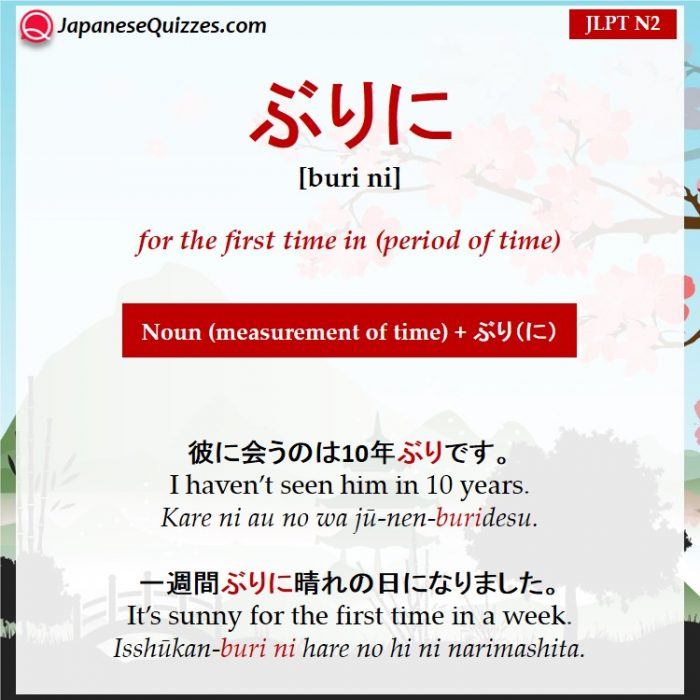
for the first time in (period of time).
Formations
Noun (measurement of time) + ぶり(に)
Examples
彼に会うのは10年ぶりです。
Kare ni au no wa jyuu-nen-buridesu.
I haven’t seen him in 10 years.
一週間ぶりに晴れの日です。
Isshūkan-buri ni hare no hi desu.
It’s sunny for the first time in a week.
昨日、3ヶ月ぶりにまた九州へ撮影に行ってきました。
Kinou ,san kagetsu-buri ni mata Kyūshū e satsuei ni ittekimashita.
Yesterday, we went to Kyushu to film for the first time in 3 months.
See also
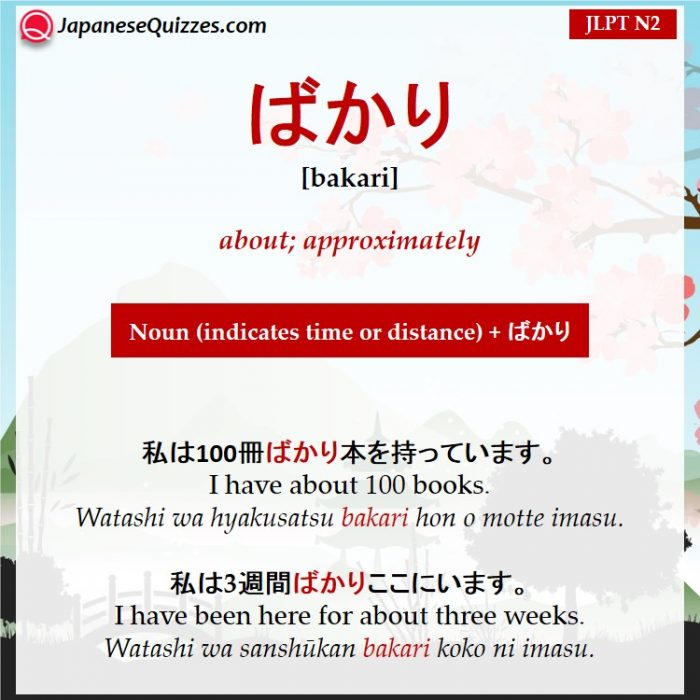

Formations
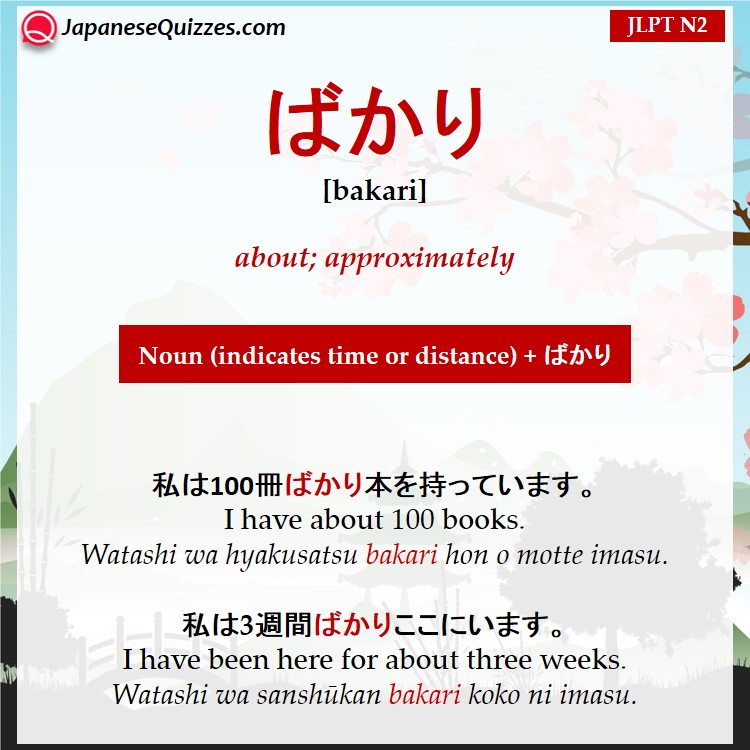
Noun (indicates time or distance) + ばかり
Examples
私は100冊ばかり本を持っています。
Watashi wa hyakusatsu bakari hon o motte imasu.
I have about 100 books.
私は3週間ばかりここにいます。
Watashi wa sanshyuukan bakari koko ni imasu.
I have been here for about three weeks.
私はそこで3時間ばかり並びました。
Watashi wa soko de sanji kan bakari narabimashita.
I lined up there for about three hours.
See also