Formations
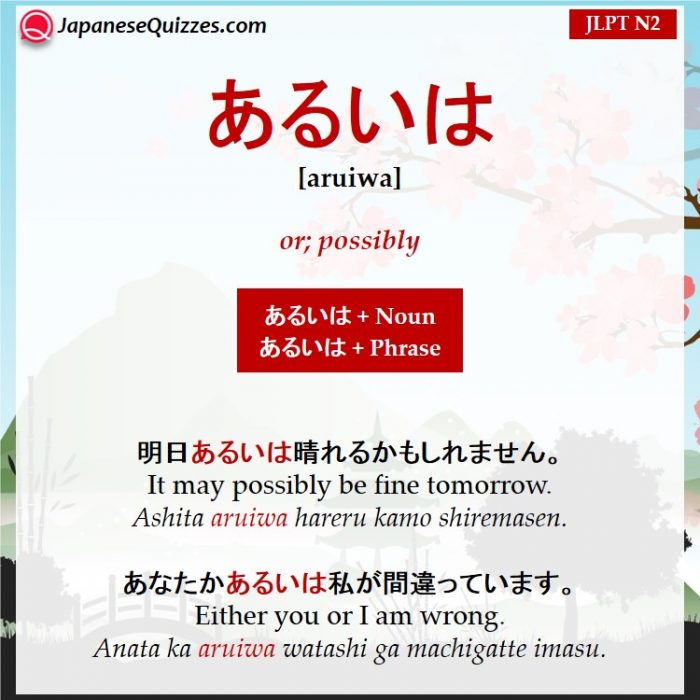
あるいは + Noun
あるいは + phrase
Examples
あなたか、あるいは私が間違っています。
Anata ka, aruiwa watashi ga machigatte imasu.
Either you or I am wrong.
彼はあるいはすぐに回復するかもしれません。
Kare wa aruiwa sugu ni kaifuku suru kamo shiremasen.
He may possibly recover soon.
明日あるいは晴れるかもしれません。
Ashita aruiwa hareru kamo shiremasen.
It may possibly be fine tomorrow.
See also
JLPT N3 Grammar List
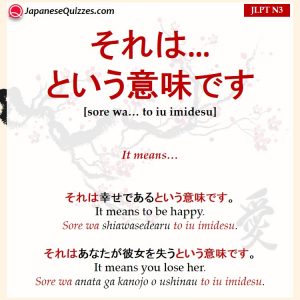
Formations
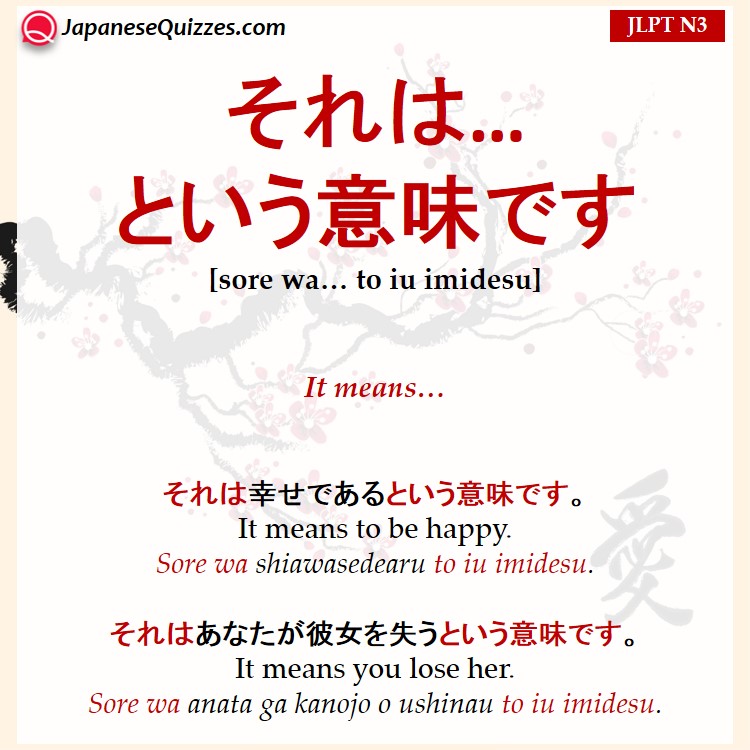
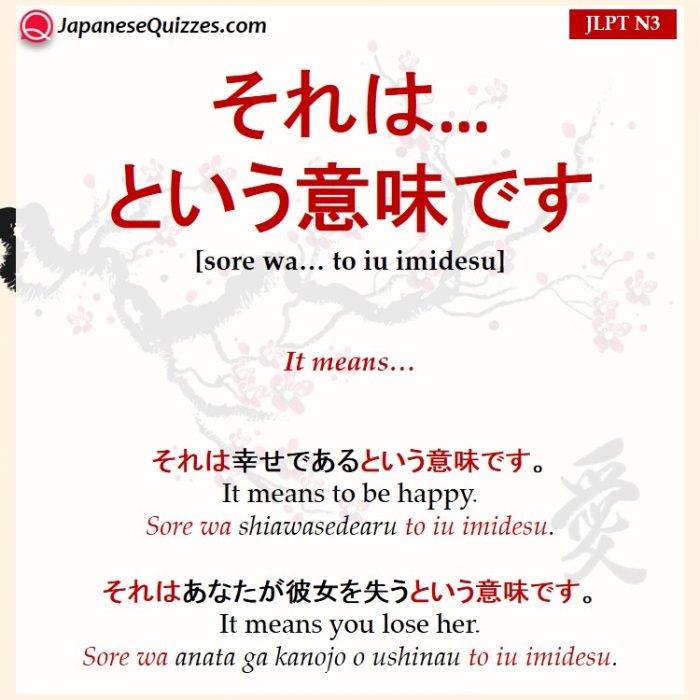
それは + Phrase/clause + という意味です
Examples
それは幸せであるという意味です。
sore wa shiawase de aru to iu imi desu.
It means to be happy.
それは「置く」という意味です。
sore wa oku to iu imi desu.
It means “to put”.
それはあなたが彼女を失うという意味です。
sore wa anata ga kanojo wo ushinau to iu imi desu.
It means you lose her.
See also

JLPT N3 Grammar List
can’t help but feel, can’t help but do .

Formations
Verb-ないform (remove ない) + ずにはいられない
Examples
私はくしゃみをせずにはいられません。
Watashi wa kushyamiwo sezuniiraremasen.
I can’t help sneezing.
ナオミはもう一つ質問をせずにはいられませんでした。
Naomi wa mōhitotsu shitsumon o sezu ni wa iraremasendeshita.
Naomi could not help asking one more question.
私は将来のことを考えずにはいられません。
Watashi wa shōrai no koto o kangaezu ni wa i raremasen.
I can’t help thinking of the future.
See also

JLPT N3 Grammar List

Formations
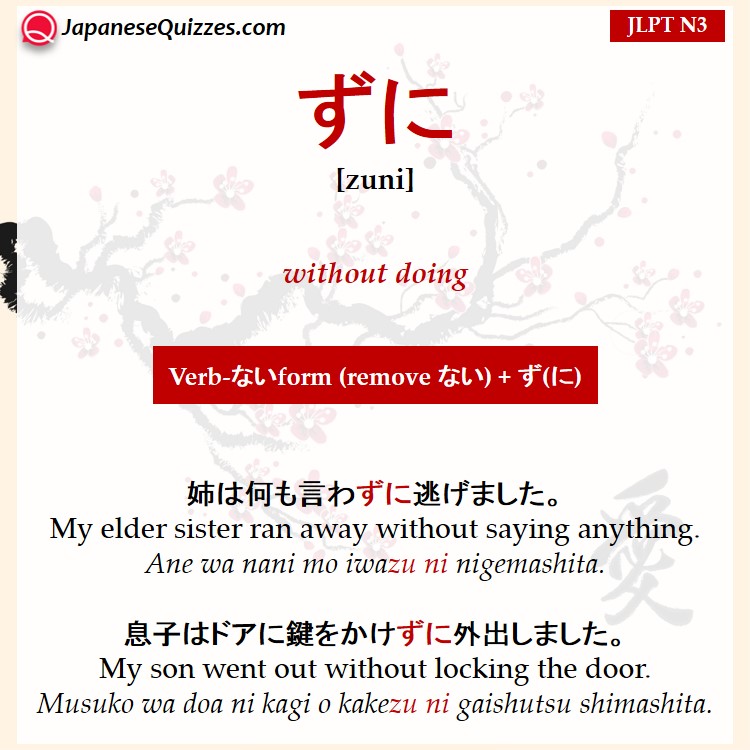
Verb-ないform (remove ない) + ず(に)
Examples
姉は何も言わずに逃げました。
Ane wa nani mo iwazu ni nigemashita.
My elder sister ran away without saying anything.
息子はドアに鍵をかけずに外出しました。
Musuko wa doa ni kagi o kakezu ni gaishutsu shimashita.
My son went out without locking the door.
弟は朝ごはんを食べずに学校に来ました。
Otōto wa asa gohan o tabezu ni gakkō ni kimashita.
My younger brother came to school without eating breakfast.
See also

JLPT N3 Grammar List

Formations
Verb-volitional* + うとする
*done intentionally, not by accident
Examples
私が家を出ようとした時、電話が鳴りました。
Watashi ga ie o deyou to shita toki, denwa ga narimashita.
When I tried to leave home, the telephone rang.
祖父はドアを開けようとしたが、鍵がかかっていました。
Sofu wa doa o akeyou to shitaga, kagi ga kakatte imashita.
My grandfather tried to open the door, but its key was locked.
彼を助けようとする者は誰もいませんでした。
Kare o tasukeyou to suru mono wa dare mo imasendeshita.
There was no one trying to help him.
See also

JLPT N3 Grammar List
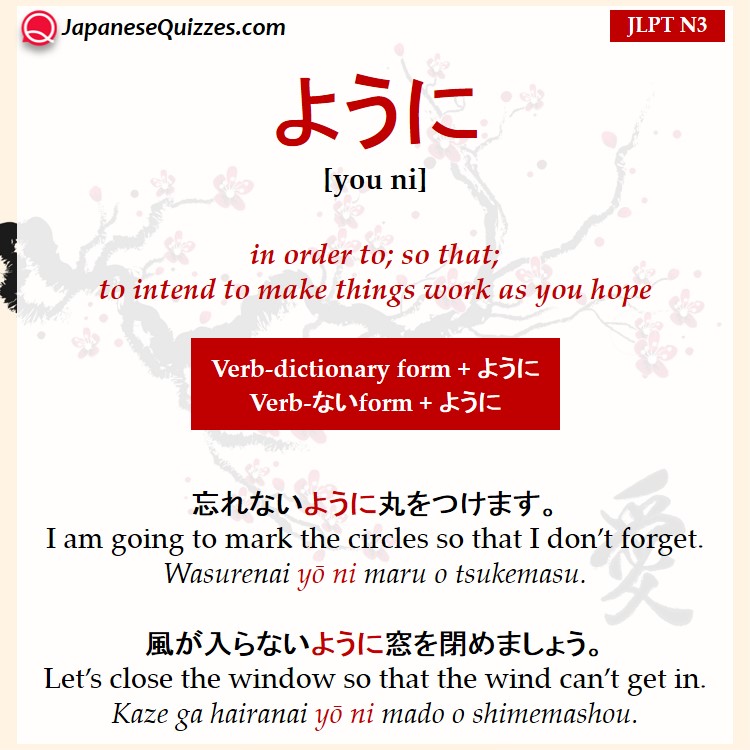
in order to; so that; to intend to make things work as you hope .

Formations
Verb-dictionary form + ように
Verb-ないform + ように
Examples
忘れないように丸をつけます。
Wasurenai yō ni maru o tsukemasu.
I am going to mark the circles so that I don’t forget.
私がわかるようにもっとはっきりと話してください。
Watashi ga wakaru yō ni motto hakkiri to hanashite kudasai.
Please talk more clearly so that I can understand you.
風が入らないように窓を閉めましょう。
Kaze ga hairanai yō ni mado o shimemashou.
Let’s close the window so that the wind can’t get in.
See also