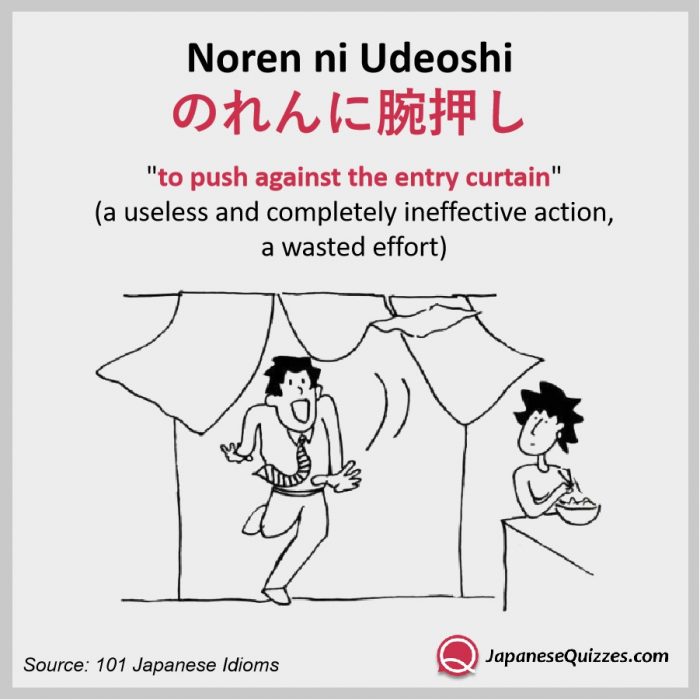
のれんに腕押し
“to push against the entry curtain”
(a useless and completely ineffective action, a wasted effort)

When the noren (curtain with the store name printed on it) is hanging in the doorway of a noodle shop, Japanese restaurant, tea house, or other classically Japanese establishment, the place is “open for business.” Since the noren is a hanging cloth, nothing is achieved by pushing one’s arm against it. Such is the feeling one experiences when talking an action (through words or deeds) which elicits no response whatsoever.
Sample text:
(Style: spoken/casual/male)
A: Dame da na, yappari. Are kore isshookenmei settoku shiyoo to shite mo hannoo nashi. Kore ja mattaku, noren ni udeoshi mo ii toko sa.
B: Yowatta ne.
A: だめだな、やっぱり。あれこれ一生懸命説得しようとしても反応なし。これじゃ全く、のれんに腕押しもいいとこさ。
B: 弱ったね。
A: It’s not working. I’m trying everything I can to convince him, but there’s absolutely no response! It’s complete ineffective…
B: Sorry to hear that.
Japanese Idioms
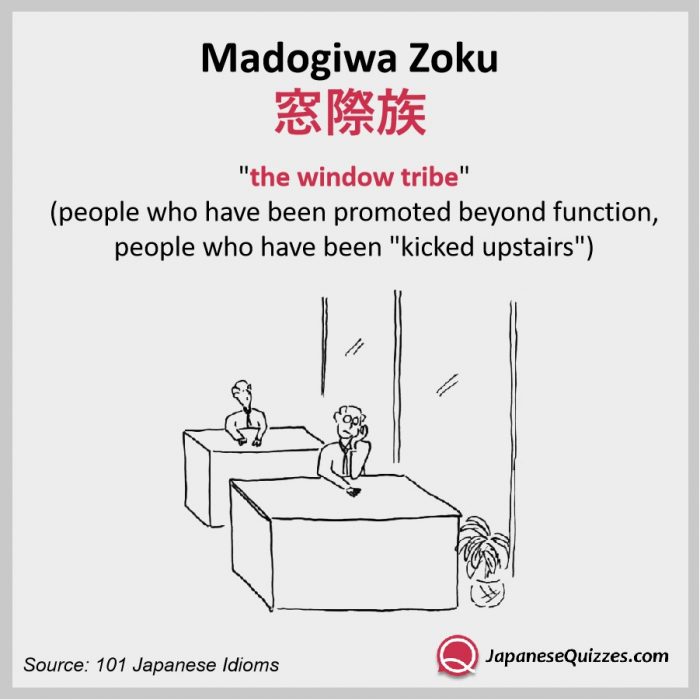
窓際族
“the window tribe”
(people who have been promoted beyond function, people who have been “kicked upstairs”)

The deeply entrenched seniority system of Japanese companies makes it difficult to rise to a top managerial position except after many years of service. Those who fail to attain a top position never enjoy the luxury of a private office, but they may be given a token reward of a desk next to the window in the large, open space where their juniors are also seated. The term “window tribe” refers to people who have been thus rewarded for their years of service but are out of the day-to-day running of the company.
Sample text:
(Style: spoken/casual/male)
A: Yamakawa buchoo wa seki o utsutta no kai?
B: Aa, tonari no sekushon no oku no hoo e. Himitsu da kedo ne, kare madogiwa zoku no nakamairi shita n da.
A: 山川部長は席を移ったのかい?
B: ああ、隣のセクションの奥の方へ。秘密だけどね、彼窓際族の仲間入りしんたんだ。
A: Did Mr. Yamakawa, the manager, move?
B: Yeah, toward the back in the next section. It’s supposed to be a secret, but he’s been kicked upstairs.
Japanese Idioms
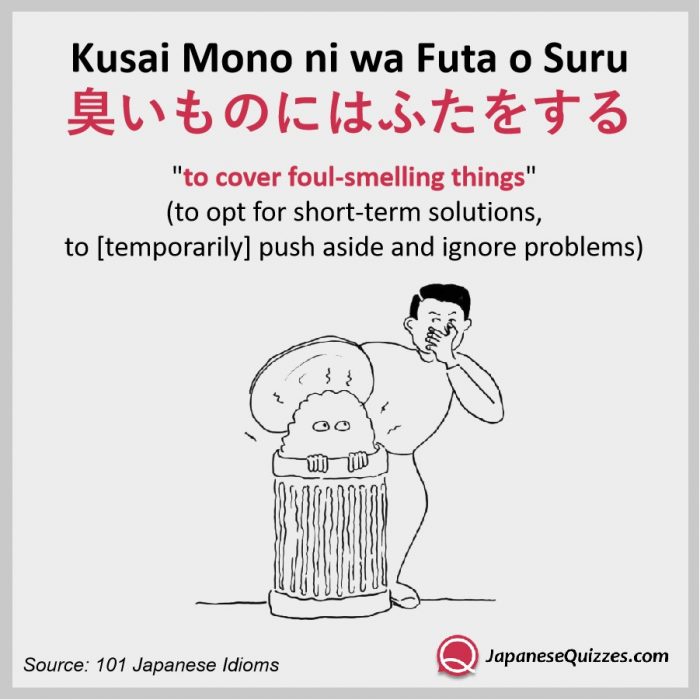
臭いものにはふたをする
“to cover foul-smelling things”
(to opt for short-term solutions, to [temporarily] push aside and ignore problems)

Offenses to the nose are likely to command immediate attention. But simply to put a lid over the smell is not to make the source of the problem go away. Thus the meaning of a stop-gap or temporary fix.
Sample text:
(Style: written/informal)
Ano hookoku de wa, konpontekina mondai ni genkyuu shiteinai. Yoosuruni “kusai mono ni wa fuda o suru” to yuu hooshin na n daroo ga, mondai ga shinkokuka suru no wa, tannaru jikan no mondai to ieru.
あの報告では、根本的な問題に言及していない。要するに『臭いものにはふたをする』という方針なんだろうが、問題が深刻化するのは、単なる時間の問題と言える。
That report completely glosses the fundamental issues. In short, they are talking the position of (temporarily) avoiding and ignoring the problem; but it’s merely a matter of time before the problem assumes serious proportions.
Japanese Idioms
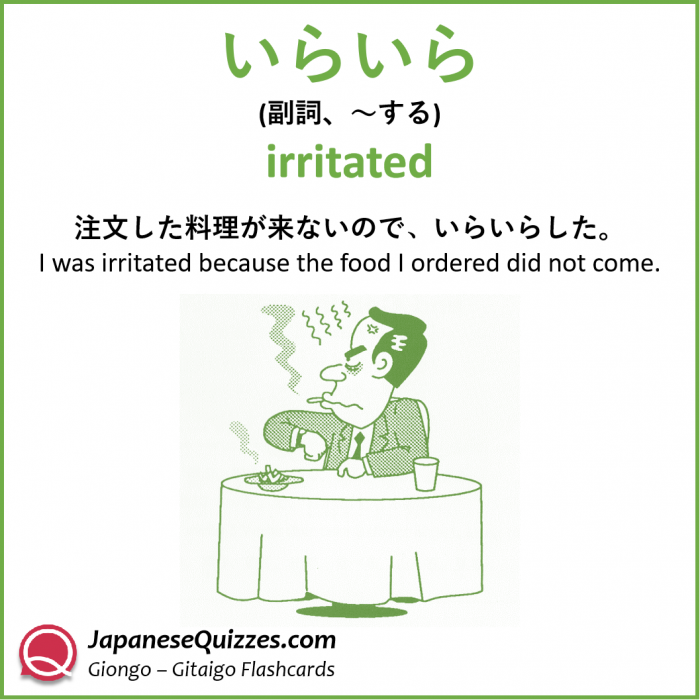
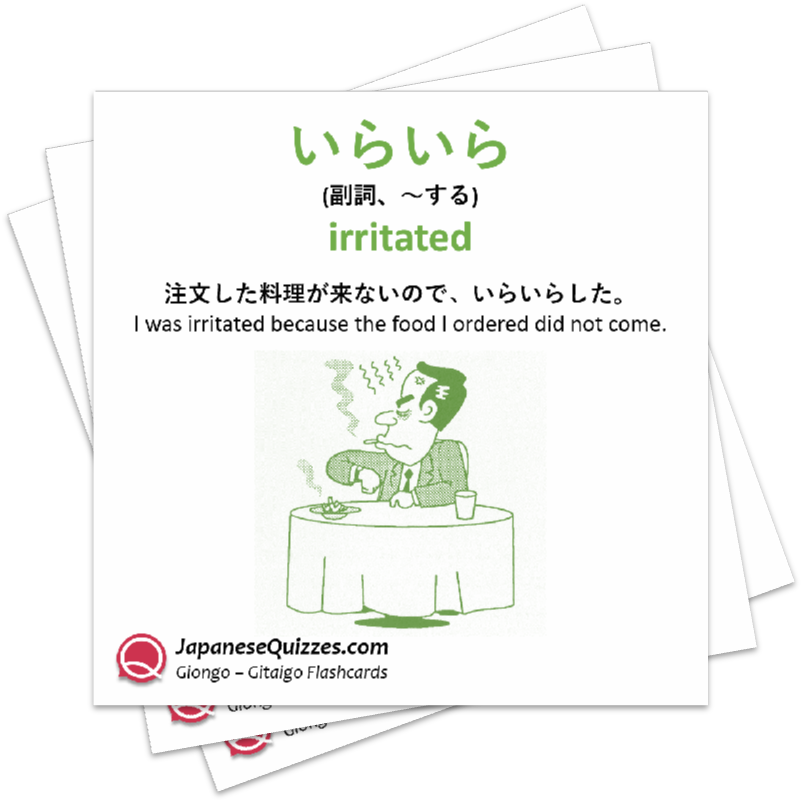
いらいら
(副詞、~する)
“A feeling of irratation caused by an action or event that remains incomplete”

Sample text:
- 注文した料理が来ないので、イライラした。
I was irritated because the food I ordered did not come.
- 彼の話はいつも長いので、イライラする。
I’m irritated, because his story is always long.
(Source: E de wakaru Giongo Gitaigo)
Japanese Giongo Gitaigo
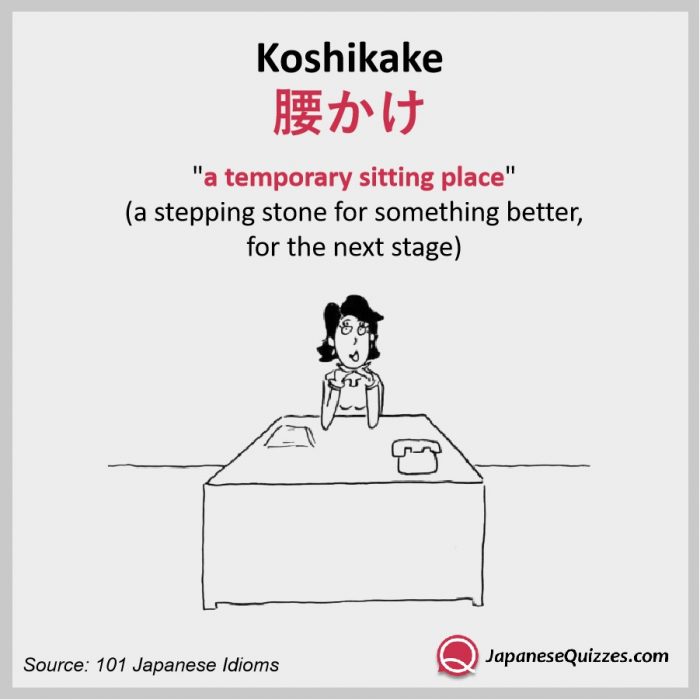
腰かけ
“a temporary sitting place”
(a stepping stone for something better, for the next stage)
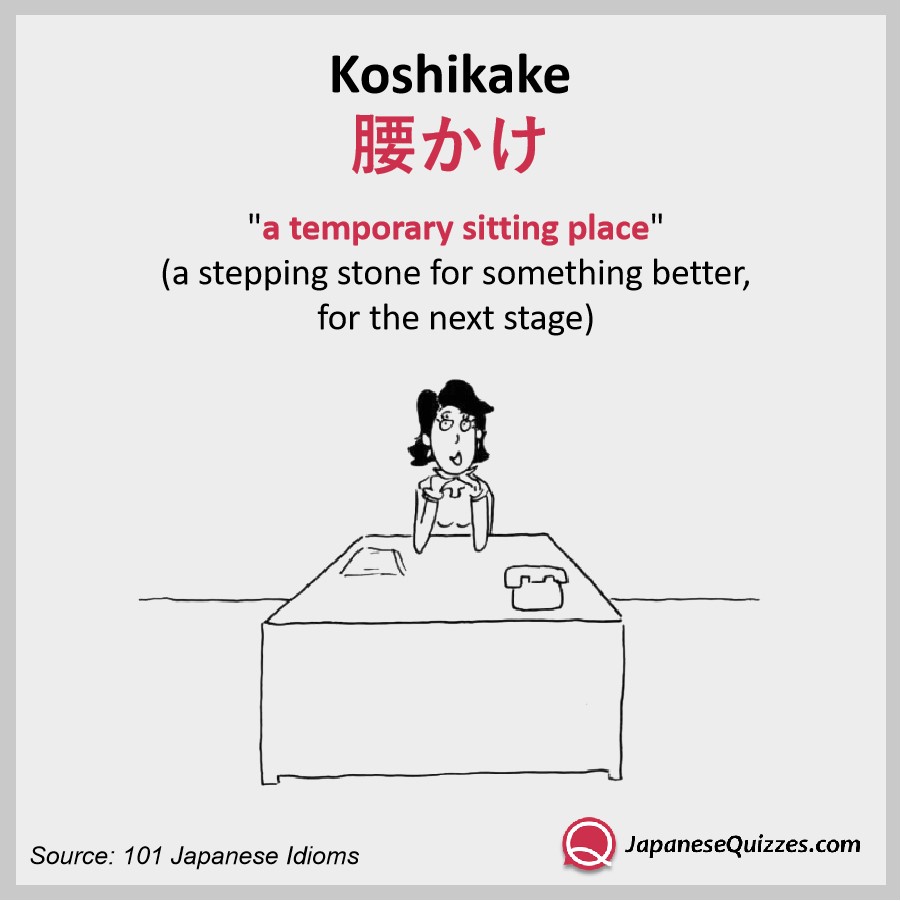
It’s an accepted custom that Japanese women office workers looking for husbands willingly accept menial jobs in corporations. Theirs position is seen as temporary. Koshikake means a chair, a bench, or a stool; an object upon which one rests briefly. It’s easy to see how the phrase would come to mean a stepping stone to the next stage of life (most frequently wife and homemaker).
Sample text:
(Style: spoken/casual/female)
A: Jinjika no Kanai-san, iyoiyo kekkon da tte.
B: Hee, yokatta wa ne. Doose koshikake de tsutometeta n da kara, hayaku aite ga mitsukatte.
A: 人事課の金井さん、いよいよ結婚だって。
B: へーえ、良かったわね。どうせ腰かけで勤めてたんだから、早く相手がみつかって。
A: Did you hear Ms. Kanai is getting married?
B: Really? That’s good. Her job here was only a stepping stone anyway. Good for her to have found someone to marry so quickly.
Japanese Idioms

光陰矢のごとし
“Light and darkness fly like an arrow.”
(Time flies; time and tide wait for no man.)
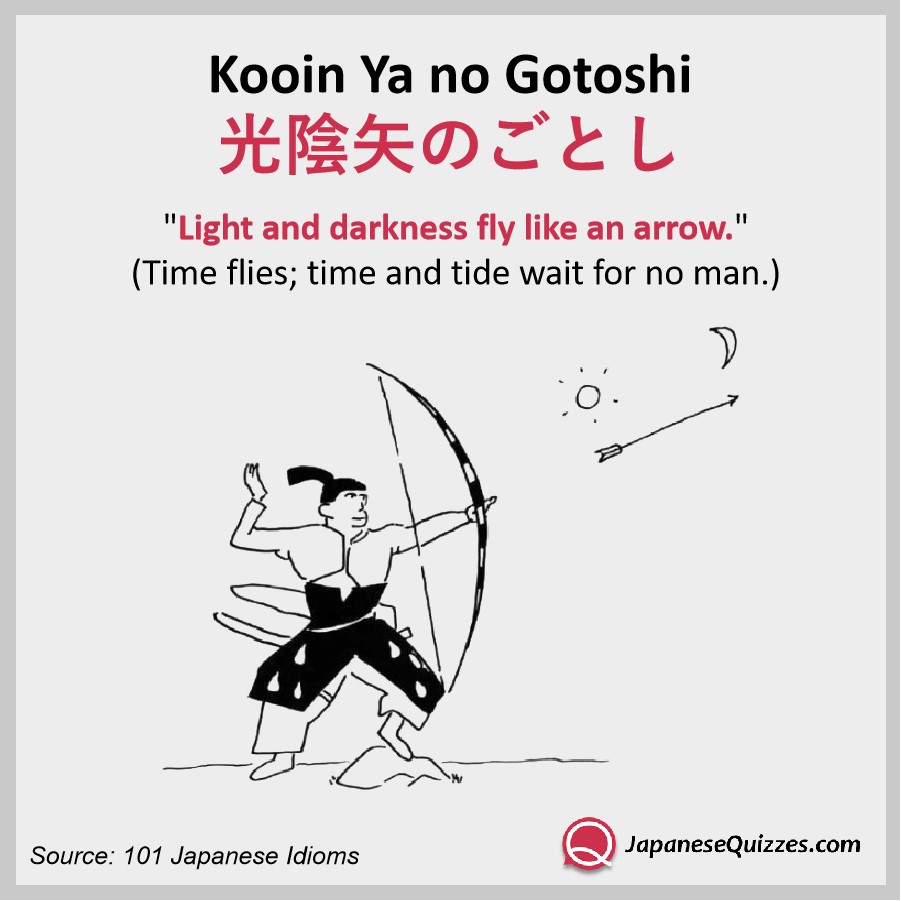
Koo means “light”; in means “shadow” or “darkness.” Together they refer to the passage of light into darkness (day and night) – in other words, time. The sentiment behind the phrase is close to “Life is short.”
Sample text:
(Style: spoken/formal)
Hayai mono de kono kaisha ni haitte kara sanjuunen no nengetsu ga tachimashita. Kooin ya no gotoshi to iwaremasu ga, watashi ni totte no kono sanjuunen wa amarini mijikakatta to yuu no ga jikkan desu.
早いものでこの会社に入ってから、三十年の年月がたちました。『光陰矢のごとし』と言われますが、私にとってのこの三十年は余りに短かったというのが実感です。
It’s been 30 short years since I joined this company. As the proverb “Time flies like an arrow” goes, my 30 years have been indeed too short.
Japanese Idioms