太鼓判を押す
“to stamp a drum-size seal”
(to vouch enthusiastically for a person, to recommend highly, virtually to guarantee a person’s success)
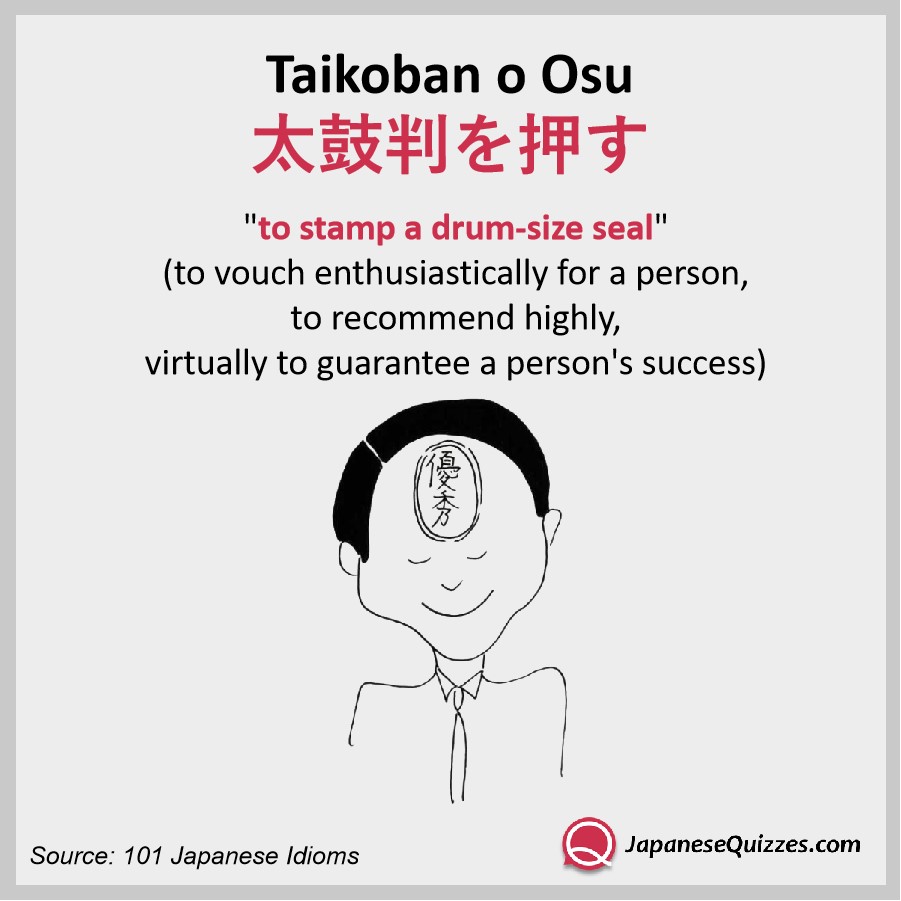
On official documents in Japan, a name-stamp is used rather than a signature. Seals vary in size and shape, but generally the bigger the seal, the greater the status. The seal for a university, for example, will be larger and more impressive-looking than the seal for an individual. Metaphorically, a “drum-size seal” is an enthusiastic endorsement, often used as a strong recommendation.
Sample text:
(Style: spoken/formal/male)
A: Aa, Kawakami ga otaku no kaisha ni nyuusha shita n desu ka. Kare wa yuushuu deshite ne. Hitogara wa watashi ga taikoban o oshimasu yo.
A: ああ、川上がおたくの会社に入社したんですか。彼は優秀でしてね。人柄は私が太鼓判を押しますよ。
A: Oh, Kawakami is now at your company? He’s brilliant, isn’t he? And I can highly recommend his personality, too.
Japanese Idioms

砂をかむよう
“like chewing sand”
(dull, unhappy, and wearisome [life])

Most often used to describe a dull, uninteresting life. It’s hard imagine a more tasteless experience than having to eat (or chew) sand day in and day out. The phrase connotes a dull, bad-tasting, and unhappy life.
Sample text:
(Style: written/informal)
Hannin wa tsuma o koroshite kara gonenkan, tokai no katasumi de tooboo seikatsu o okutta. Jikyoo ni yoruto, seishinteki ni mo busshitsuteki ni mo kurushiku, shakai kara koritsu shiteita tame, mainichi ga ajike naku, masani suna o kamu yoona seikatsu datta to yuu.
犯人は妻を殺してから五年間、都会の片すみで逃亡生活を送った。自供によると、精神的にも物質的にも苦しく、社会から孤立していたため、毎日が味気なく、まさに砂をかむような生活だったと言う。
The murderer, after killing his wife, spent five years as a fugitive. According to his confession, he suffered both mentally and materially and, living isolated from society, he led a dull, unhappy, and wearisome life.
Japanese Idioms
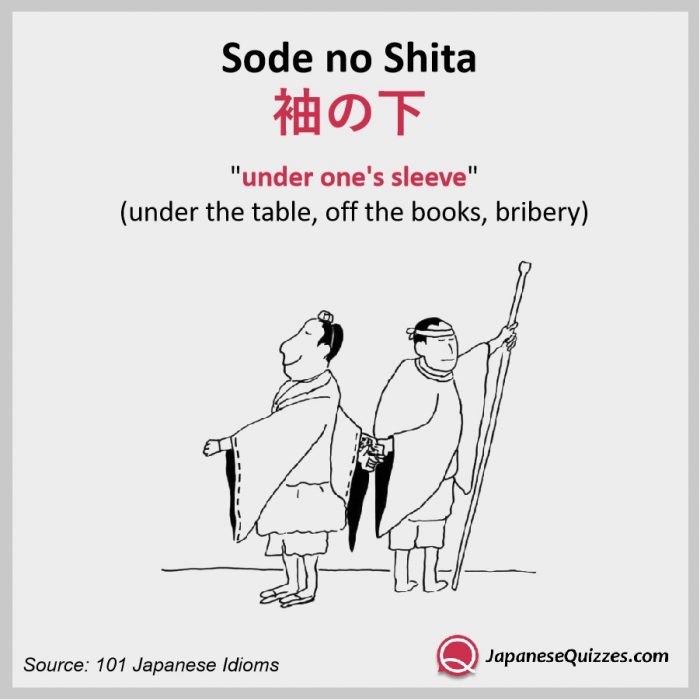
袖の下
“under one’s sleeve”
(under the table, off the books, bribery)

The large sleeve of the Japanese kimono makes for an ideal place to hide or to hand-off money. Today kimonos are seldom worn by Japanese men (and almost never when transacting business), but the phrase sode no shita is still very much in use. Is has come to mean primarily some form of bribe.
Sample text:
(Style: spoken/casual/male)
A: Naze anna an ga tootta n daroo.
B: Iinchoo ga sode no shita demo moratteru n daroo. Soo demo nakya tooru hazu nai yo.
A: なぜあんな案が通ったんだろう。
B: 委員長が袖の下でももらってるんだろう。そうでもなきゃ通るはずないよ。
A: I wonder why that proposal passed.
B: Maybe the committee chairman was given some sort of bribe. Otherwise, it should never have passed.
Japanese Idioms
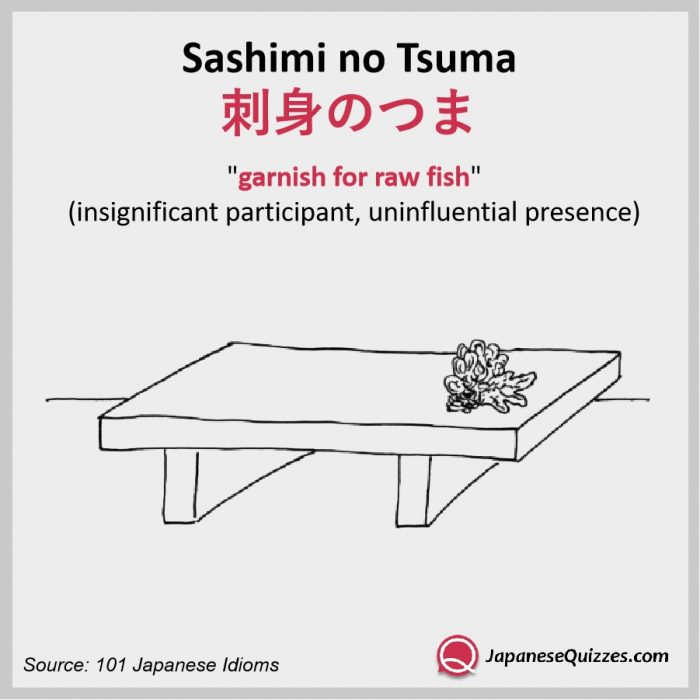
刺身のつま
“garnish for raw fish”
(insignificant participant, uninfluential presence)

However attractive, the garnish that accompanies a serving of sashimi is of no significance. Some people may not even notice its presence. Such is the degree of dismissal sashimi no tsuma carries when used in discounting the importance of a person’s attendance at a meeting or gathering.
Sample text:
(Style: spoken/casual/female)
A: Yuri-san to yuushoku ni iku yotei janakatta no?
B: Doose watashi ga shusseki shite mo sashimi no tsuma da kara docchi demo ii no yo.
A: ゆりさんと夕食に行く予定じゃなかったの?
B: どうせ私が出席しても刺身のつまだからどっちでもいいのよ。
A: Weren’t you supposed to go to a dinner party with Yuri?
B: Well, even if I attend, my presence there doesn’t really matter, so it’s not important if I go or not.
Japanese Idioms
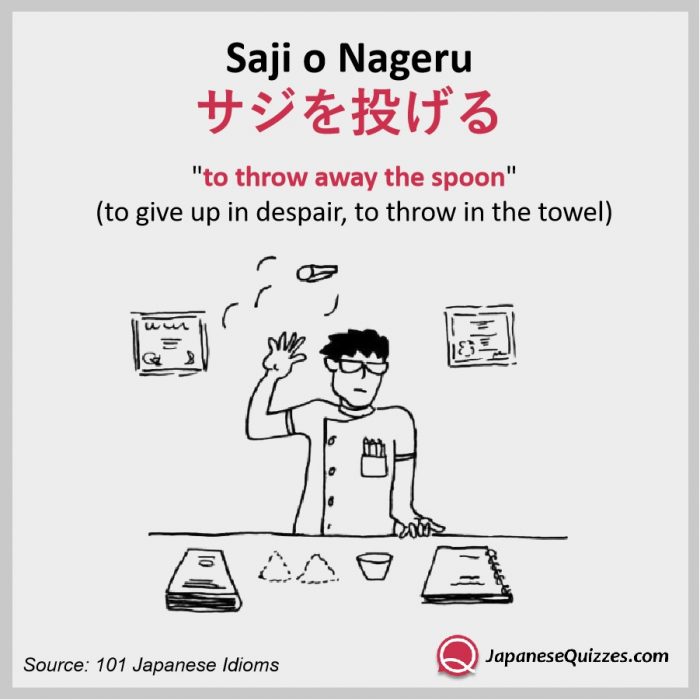
サジを投げる
“to throw away the spoon”
(to give up in despair, to throw in the towel)

In ancient times the Japanese doctor or pharmacist was expected to concoct a special formula that would cure the patient. The pressure to find the correct mixture of ingredients was so great that many a doctor would hurl the measuring spoon into the air in despair.
Metaphorically, saiji o nageru means to give up out of frustration. Often the phrase is used as admonishment not to give up.
Sample text:
(Style: spoken/casual/male)
Kyooikusha naru mono wa, donna gakusei ni taishite mo saji o nagete wa naranai. Ningen wa dare de mo nanika no kakusareta sainoo ga aru mono da kara dearu.
教育者なるものは、どんな学生に対してもサジを投げてはならない。人間は誰でも何かの隠された才能があるものだからである。
Educators must not give up on any student, for every human being has some ability yet to be tapped.
Japanese Idioms
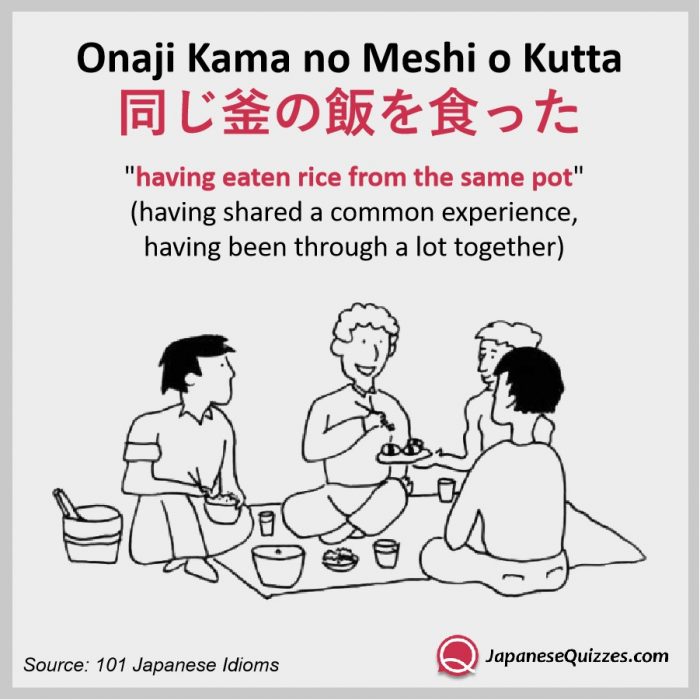
同じ釜の飯を食った
“having eaten rice from the same pot”
(having shared a common experiences, having been through a lot together)

Eating rice from the same pot is the Japanese equivalent of “breaking bread together.” Communal eating establishes a sense of friendship and loyalty among those who literally eat out of the same pot. Most often used in reaffirming a special relationship developed through shared experiences.
Sample text:
(Style: spoken/casual/male)
A: Doonika tanomu yo. Onaji kama no meshi o kutta naka daroo. Soo tsumetai koto o yuu na yo.
A: どうにかたのむよ。同じ釜の飯を食った仲だろう。そう冷たいことを言いなよ。
A: Won’t you do this for me? Haven’t we been through a lot together? Don’t disappoint me, huh.
Japanese Idioms