山椒は小粒でも[ぴりりと]辛い
“Japanese peppers are hot, though small.”
(small but powerful, a mighty mite, a person of ability although small in size)
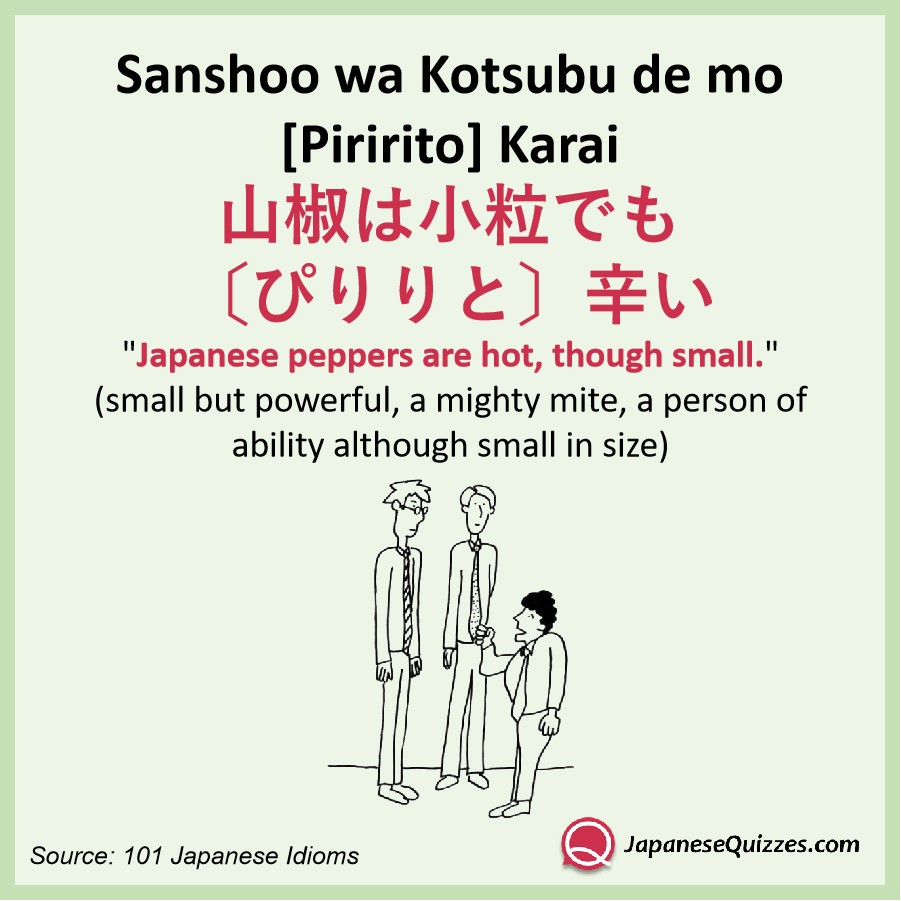
Despite the small size of the Japanese pepper, it packs a powerful, spicy punch. The phrase suggests that size isn’t the only determinant of strength or ability.
Sample text:
(Style: spoken/casual/male)
A: Yoru naa. Kachoo mata shooshin da te. Iyoiyo buchoo rashii.
B: “Sanshoo wa kotsubu de mo karai” tte ne.
A: やるなあ、課長また昇進だって。いよいよ部長らしい。
B:「山椒は小粒でも辛い」ってね。
A: Great! Our section chief has been promoted again. Looks like he’s going to be a manager now.
B: Well, they say, “Japanese peppers are hot, though small.”
Japanese Idioms
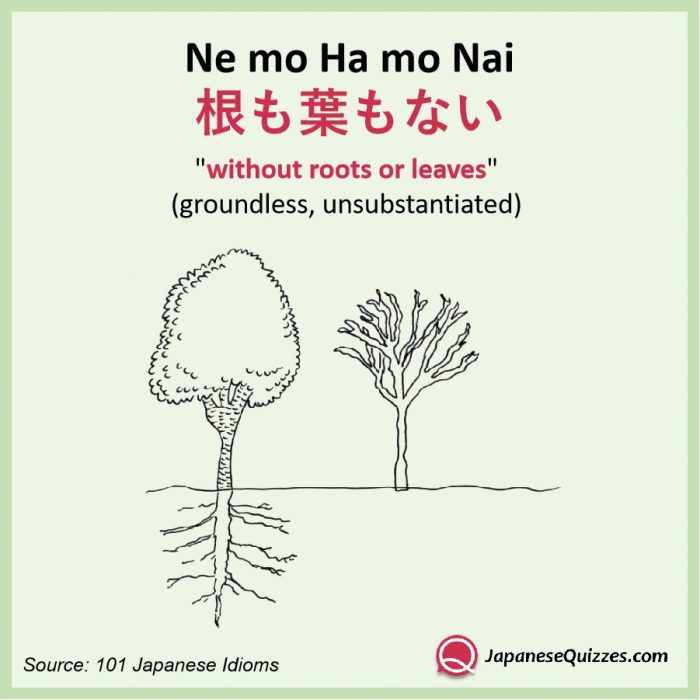
根も葉もない
“without roots or leaves”
(groundless, unsubstantiated)

Roots give support to a tree much as facts give support to claims and allegations. Leaves validate the health of a tree, proving its life and vitality. With neither support (roots) nor evidence (leaves), the (tree) allegation cannot stand.
Sample text:
(Style: spoken/casual/A=male, B=female)
A: Yamada-san no okusan, uwaki shiteru rashii yo.
B: Sonna koto, Uso yo. Mattaku ne mo ha mo nai uwasani kimatteru wa.
A: 山田さんの奥さん、浮気してるらしいよ。
B:そんなこと、うそよ。全く根も葉もないうわさに決まってるわ。
A: Mrs. Yamada seems to be having an affair.
B: That’s not true. That’s a groundless rumor, for sure.
Japanese Idioms
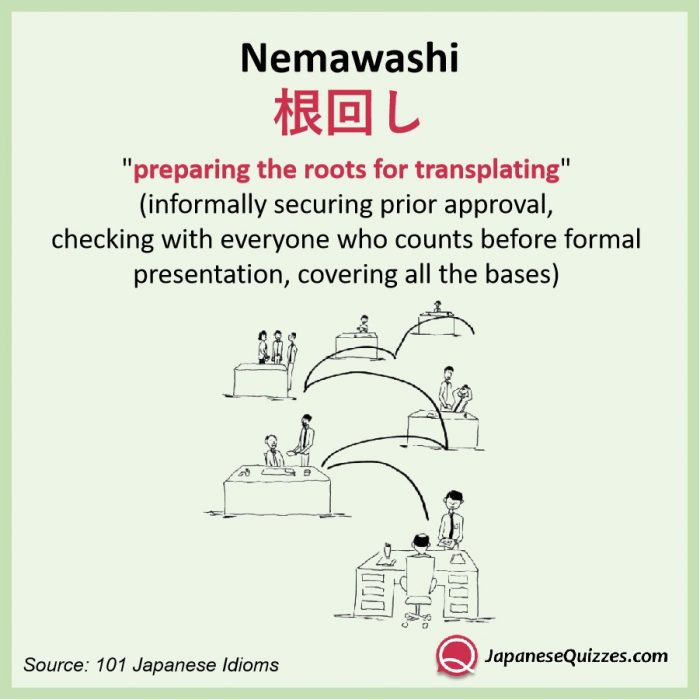
根回し
“preparing the roots for transplanting”
(informally securing prior approval, checking with everyone who counts before formal presentation, covering all the bases)

Nemawashi now is used worldwide to characterize the consensus-building nature of Japanese business practices. Literally, nemawashi means cutting off excess roots and wrapping the remaining roots with a straw mat for protection when transplanting the tree. In business terms it means an informal solicitation of agreement before formal submission of approval at a meeting.
Sample text:
(Style: spoken/casual/male)
A: Kyoo no kaigi umaku iku ka naa.
B: Daijoobu daroo. Kanari nemawashi ni jikan o kakete kitashi, konkai no purojekuto wa buchoo mo noriki da kara.
A: 今日の会議うまくいくかなあ。
B: 大丈夫だろう。かなり根回しに時間をかけてきたし、今回のプロジェクトは部長も乗り気だから。
A: I wonder if today’s meeting is going to go well.
B: I think it will be fine. I spent a lot of time covering all the bases, and I know the manager likes our proposal.
Japanese Idioms

さくら
“cherry blossom”
(a shill, a plant, a confederate)
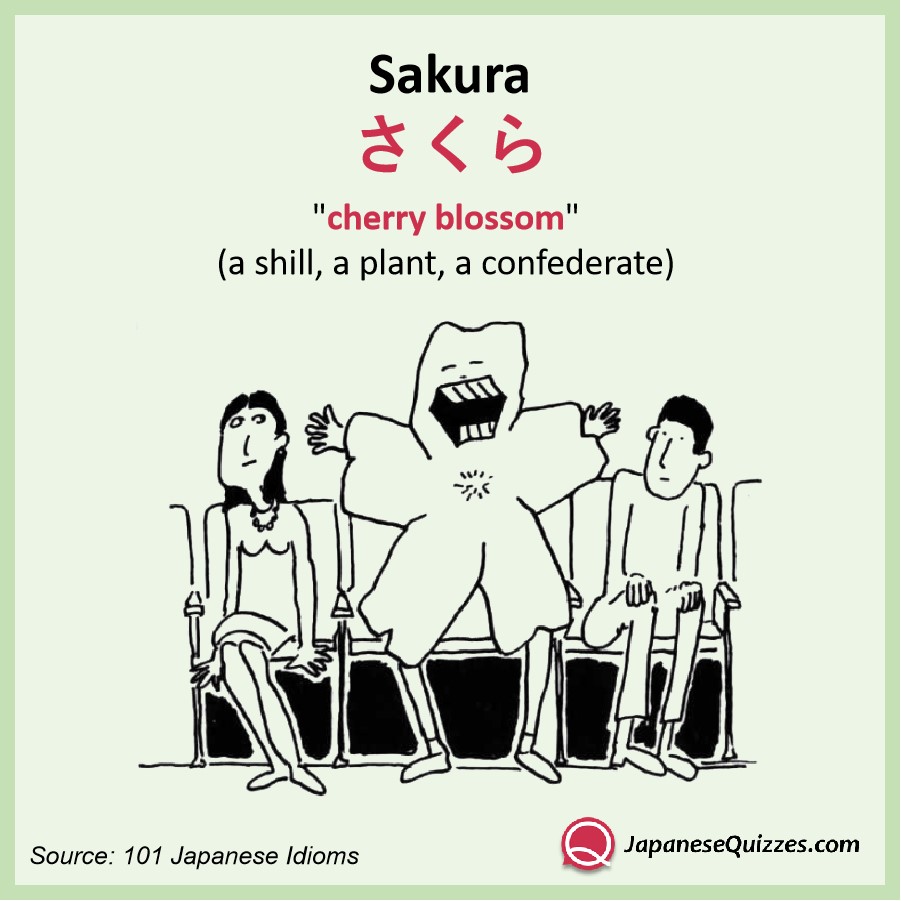
This expression originates from the Edo period. A paid audience hired to applaud and cheer the show was seated in the section of the theater called “sakura.”
Sample text:
(Style: spoken/casual/A=female, B=male)
A: Nani ga sonnani okashii no kashira. Ano hito sakki kara zutto waratteru wa.
B: Sakura janai ka. Okashikumo nai mandan ni hitori de geragera waratteru n da kara.
A: 何がそんなにおかしいのかしら。あの人さっきからずっと笑ってるわ。
B: さくらじゃないか。おかしくもない漫談にひとりでゲラゲラ笑ってるんだから。
A: What’s so funny? That guy’s been laughing awfully long.
B: Isn’t he a shill? He’s the only one laughing at the boring monologue.
Japanese Idioms
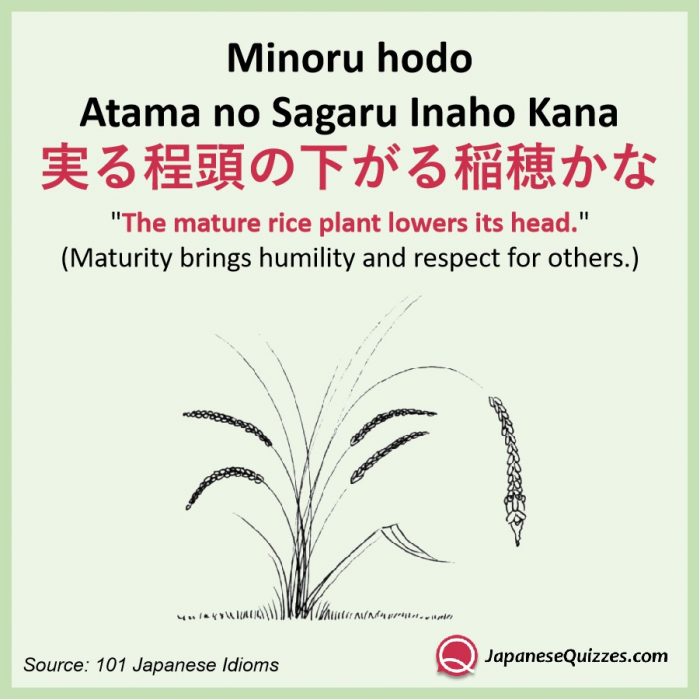
実る程頭の下がる稲穂かな
“The mature rice plant lowers its head.”
(Maturity brings humility and respect for others.)

For the Japanese, moss is something to be admired. Associated with beauty, moss grows on rocks and in pathways of old temples in places like Kyoto. Yet the stone that continues to tumble will never have moss. So this expression is often used to admonish others to stay put, to continue on in the same job. Ironically, this expression is also used by some Japanese to mean the very opposite, i.e., the meaning understood by Americans: keep moving or you’ll get old.
Sample text:
(Style: written/informal)
A: Kondo irashita Tayama fukushachoo ne, rippana katarashii wa nee. Mooshibun nai hitogara tte uwasa yo.
B: Soo na n da. Sore ni tottemo kenkyode, ibatteiru tokoro ga mattaku nai hito rashii ne.
A: “Minoru hodo atama no sagaru inaho kana” tte kotowaza ga pittari no kata yo.
A: 今度いらした田山副社長ね、立派な方らしいわねえ。申し分ない人柄ってうわさよ。
B: そうなんだ。それにとっても謙虚でいばっているところが全くない人らしいね。
A:「実る程頭の下がる稲穂かな」ってことわざがピッタリの方よ。
A: You know the new vice-president Tayama. I hear he’s a wonderful person. They say his personality is just ideal.
B: I agree. Besides, he seems to be humble and never arrogant.
A: He’s the type that perfectly fits the proverb, “The mature rice plant lowers its head.”
Japanese Idioms
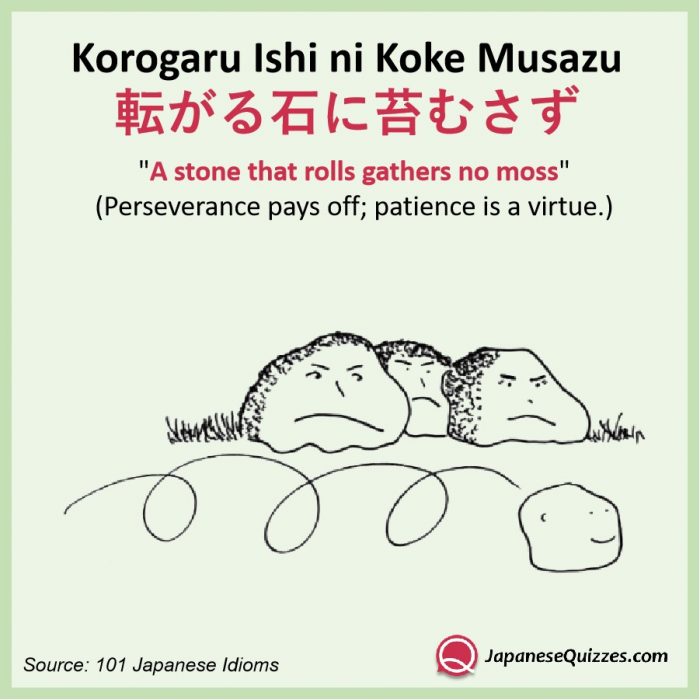
転がる石に苔むさず
“A stone that rolls gathers no moss.”
(Perseverance pays off; patience is a virtue.)

For the Japanese, moss is something to be admired. Associated with beauty, moss grows on rocks and in pathways of old temples in places like Kyoto. Yet the stone that continues to tumble will never have moss. So this expression is often used to admonish others to stay put, to continue on in the same job. Ironically, this expression is also used by some Japanese to mean the very opposite, i.e., the meaning understood by Americans: keep moving or you’ll get old.
Sample text:
(Style: written/informal)
Ichido nyuusha shitara, shooshoo taihenna koto ga atte mo, zutto sono kaisha ni tsutometa hoo ga ii. “Korogaru ishi ni koke musazu” to iwareru yooni shokuba o amari kawaru no wa konomashii koto dewa nai.
一度入社したら、少々大変なことがあっても、ずっとその会 社に勤めたほうがいい。「転がる石に苔むさず」と言われる ように職場を余り変わるのは好ましいことではない。
Once a person is employed, he or she is better off staying in the same company even when facing hardships. As the proverb “A stone that rolls gathers no moss” goes, it is not advisable to job-hop.
Japanese Idioms