後ろ指をさされるよう
“like having a finger pointed at one’s back”
(being the object of social contempt, scorn and criticism)
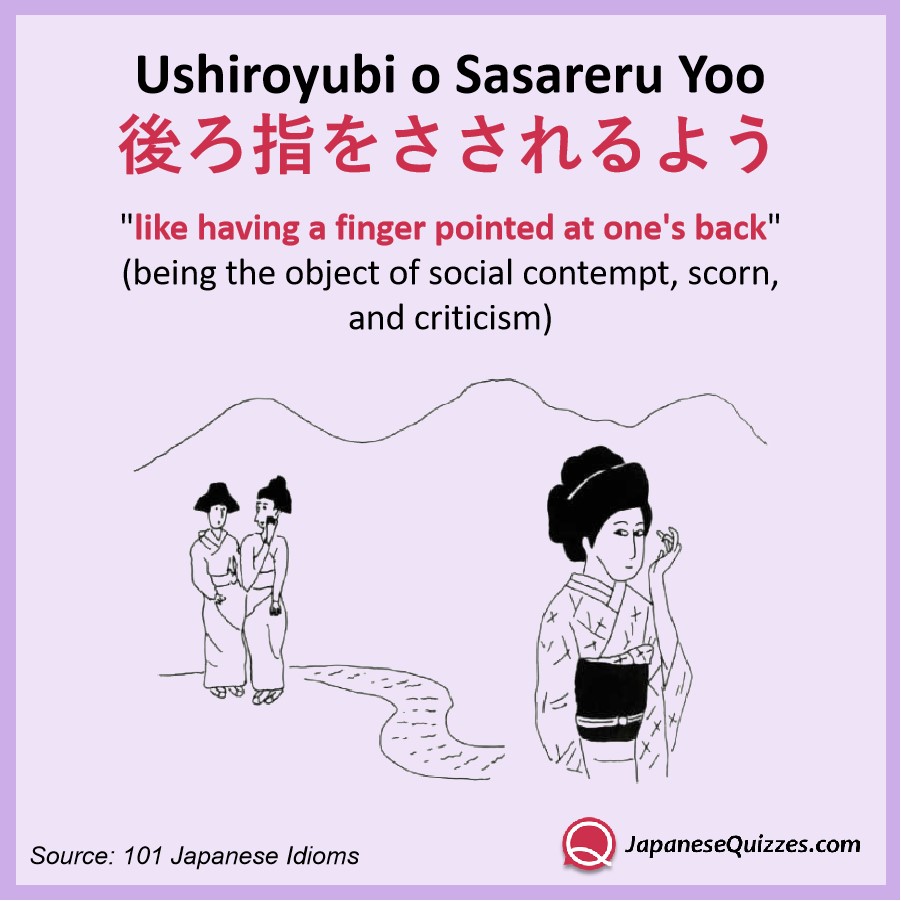
Social control through shame is highly develope in Japan. Japanese are keenly sensitive to being the object of scorn or ostracism. This expression conveys the feeling that everyone is pointing an accusatory finger at one’s back for one’s shameful conduct.
Sample text:
(Style: spoken/casual/A=female, B=male)
A: Hamada-san ne, kaisha ni uso itte kattenni ryokoo shita n da tte. Watashi mo yatte miyoo ka na.
B: Iya, hitoni ushiroyubi o sasareru yoona koto wa shinai hoo ga ii yo. Kitto ato de kookai suru kara.
A: 浜田さんね、会社にうそ言って勝手に旅行したんだって。私もやってみようかな。
B: いや、人に後ろ指をさされるようなことはしない方がいいよ。きっとあとで後悔するから。
A: You know Ms. Hamada. She lied to the company and went off on a vacation. I’m thinking about doing something like that myself.
B: You really shoudn’t do something you’ll be socially criticized for. You’ll regret it later, I’m sure.
Japanese Idioms
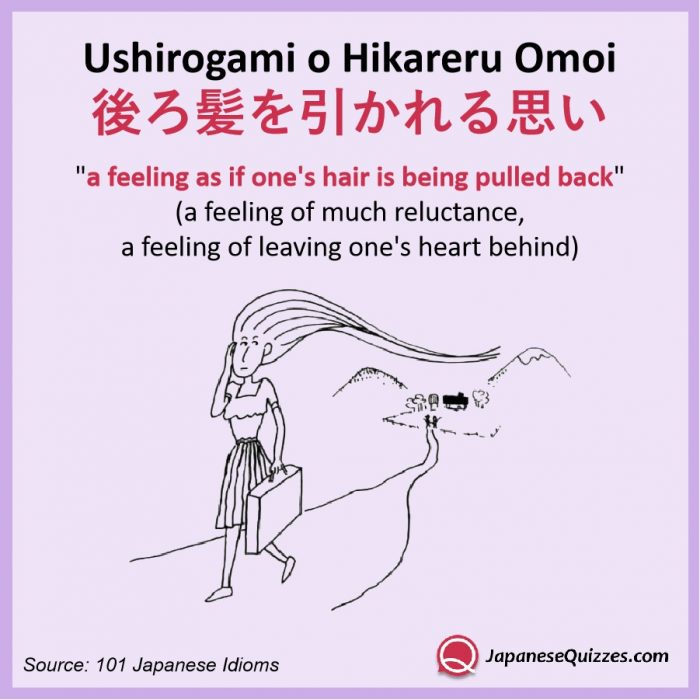
後ろ髪を引かれる思い
“a feeling as if one’s hair is being pulled back”
(a feeling of much reluctance, a feeling of leaving one’s heart behind)

A deep feeling of guilt for discarding one option in life in favor of another. Japanese feel a lingering tug of loyalty toward the discarded option. The tug, however, is not at the heart strings but at the hairs at the back of the head.
Sample text:
(Style: written/informal)
Ima kara sannen mae, toshioita fubo o nokoshite Tookyoo ni dete kita. Sono toki no ushirogami o hikareru omoi wa ima mo wasurerarenai.
今から三年前、年老いた祖母を残して東京に出てきた。その時の後ろ髪を引かれる思いは今も忘れられない。
Three years ago, I left my aged parents and moved to Tokyo. I still can’t forget that strong feeling of reluctance I felt then.
Japanese Idioms
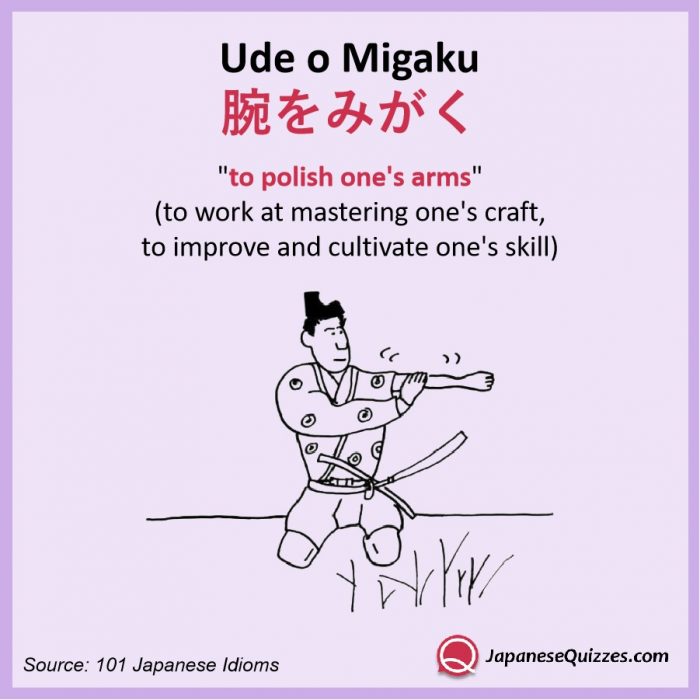
腕をみがく
“to polish one’s arms”
(to work at mastering one’s craft, to improve and cultivate one’s skill)

Ude o migaku is most often used in advice to the young, warning them constantly to improve their skills. In Japan discipline and training are considered essential to success in any field.
Sample text:
(Style: spoken/formal/male)
A: Wakai uchi ni isshokenmei ude o migaite okanai to shoorai komarimasu yo.
B: Isshoukenmei yatteru n desu kedo, nakanaka omou yooni dekinakute.
A: 若いうちに一生懸命腕をみがいておかないと将来困りますよ。
B: 一生懸命やってるんですけど、なかなか思うようにできなくて。
A: You’ll be in trouble later on if you don’t work at mastering your craft while you are young.
B: I’m doing my best, but I don’t seem to be able to achieve what I want.
Japanese Idioms
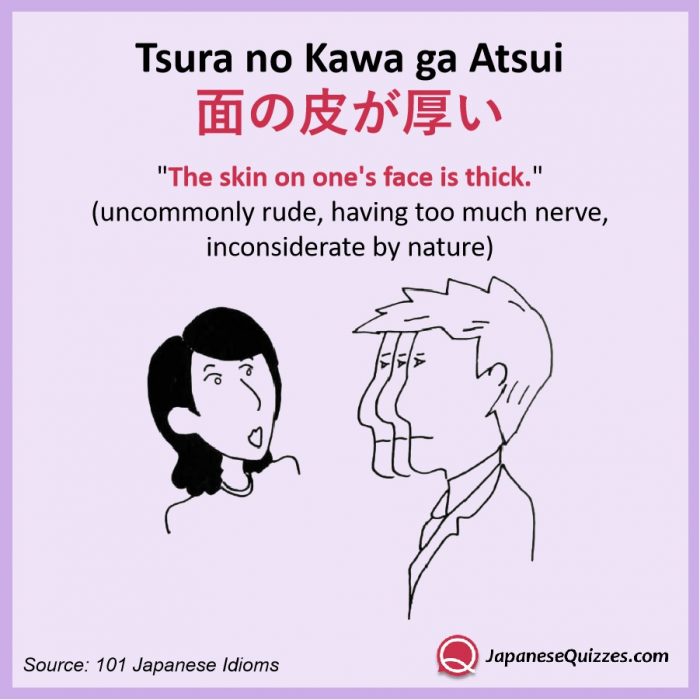
面の皮が厚い
“The skin on one’s face is thick”
(uncommonly rude, having too much nerve, inconsiderate by nature)
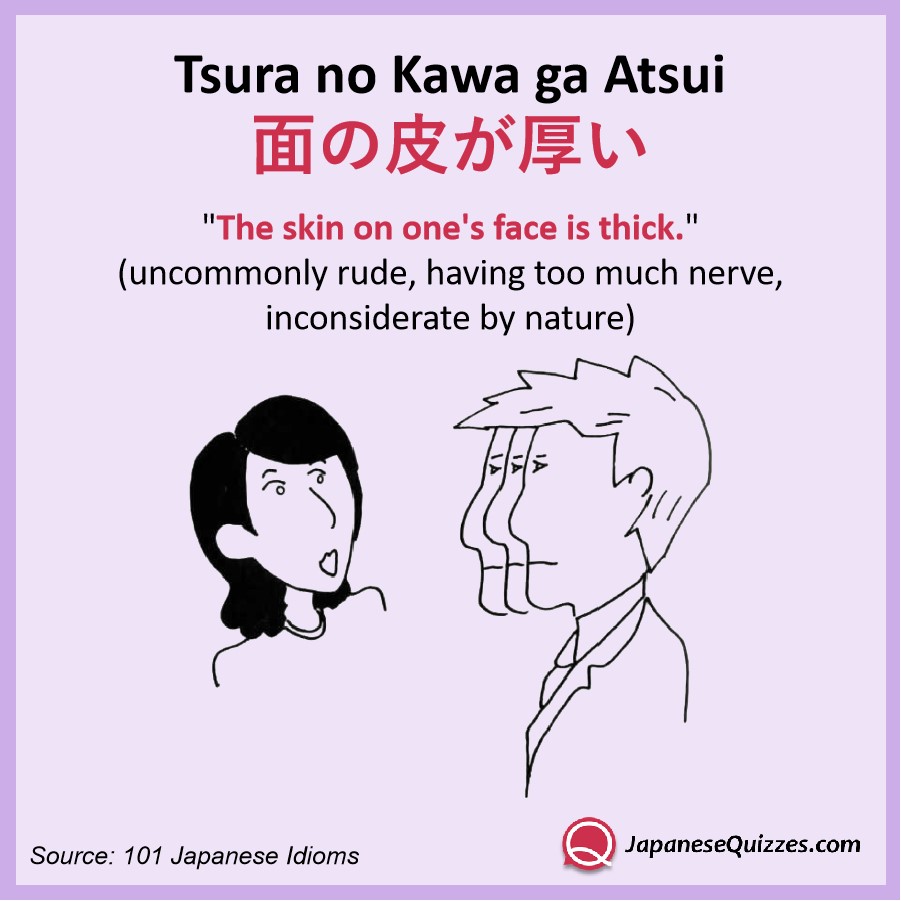
The ideal face in Japan figuratively has a thin layer of skin so as to respond with sensitivity to others. In contrast, a thick-skinned, un-Japanese face reflects an inability to blush (to show shame), to reveal vulnerability, or to show empathy.
Sample text:
(Style: spoken/casual/female)
A: Murai-san ne, jibun ga wasureta noni, zenzen hansei shinai no yo. Sono kuse hoka no wasureta hito ni monku itteru no.
B: Sooyuu no wa tsura no kawa ga atsui tte yuu no yo. Futsuu no hito nara sonna koto zettai dekinai to omou wa.
A: 村井さんね、自分が忘れたのに、ぜんぜん反省しないのよ。そのくせ他の忘れた人に文句言ってるの。
B: そういうのは面の皮が厚いって言うのよ。普通の人ならそんなこと絶対できないと思うわ。
A: You know Ms. Murai, she herself forgot, but she wouldn’ think of apologizing! Instead, she criticizes everybody who forgot.
B: That’s what I call being uncommonly rude. A normal person could never do such a thing!
Japanese Idioms
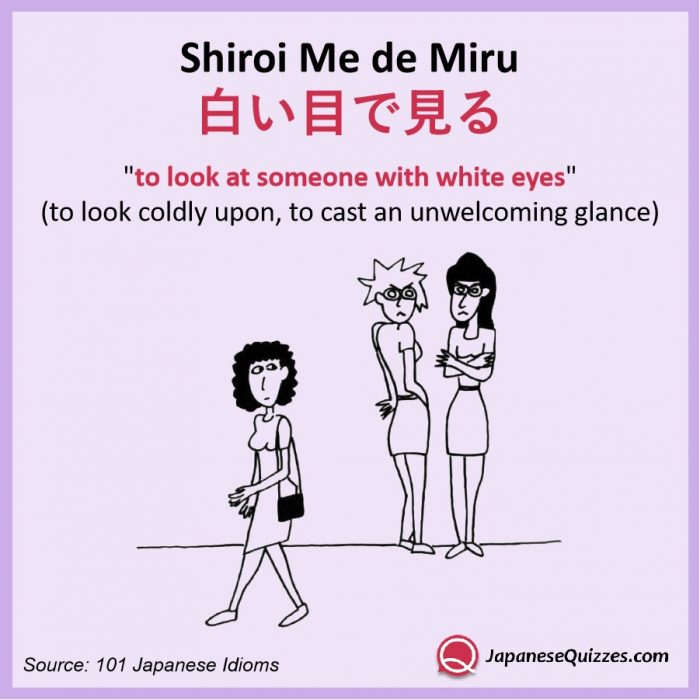
白い目で見る
“to look at someone with white eyes”
(to look coldly upon, to cast an unwelcoming glance)

This expression means to treat someone with disdain bodering on contempt. This is an especially appropriate phrase when the person is outside of one’s group. Why shiroi (white) eyes? One theory is that eyes without pupils would have a cold, ghostly look analogous to a scornful rebuke.
Sample text:
(Style: spoken/casual/female)
A: Kondo hikkoshite kita Inoue-san ne. Ano hito wa honto no okusan janakute, aijin na n datte. Sore ga shirete kara mawari no shufu wa minna shiroi me de mihajimeta yoo yo.
A: 今度引っ越してきた井上さんね。あの人はほんとの奥さんじゃなくて、愛人なんだって。それが知れてからまわりの主婦はみんな白い目で見はじめたようよ。
A: You know the Inoues who just moved in? I hear Mrs.Inoue is not the wife, but a mistress. Once the news spread, housewives in the neighborhood began to look at her coldly.
Japanese Idioms
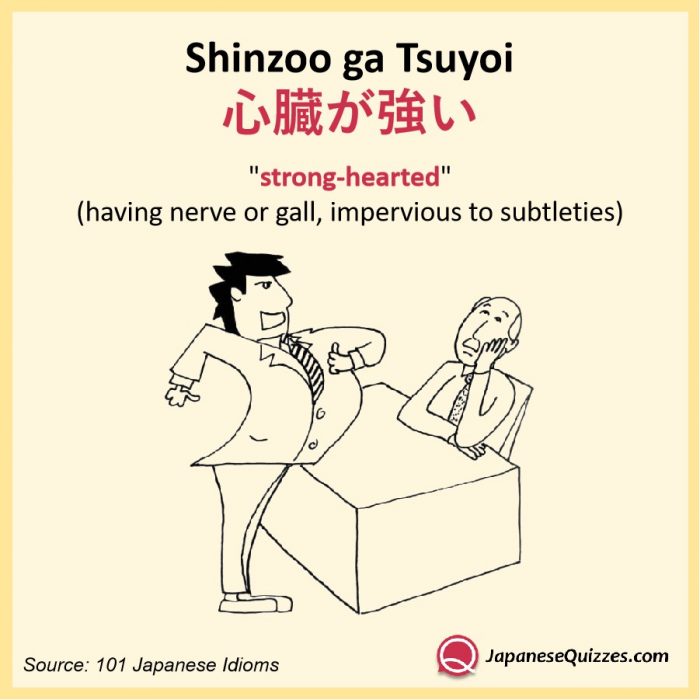
心臓が強い
“strong-hearted”
(having nerve or gall, impervious to subtleties)

Shinzoo ga tsuyoi describes a socially bold, cheeky person. Usually considered a negative trait, the phrase also may refer to having the courage (or gall) to behave against what is normally expected, like an employee who questions his boss, or a student who challenges the teacher.
Sample text:
(Style: spoken/casual/A=female, B=male)
A: Sachiko-san, daijoobu kashira. Minna o daihyoo shite fuhei o ji ni itta kedo.
B: Kanojo nara daijoobu sa. Shinzoo ga tsuyoi kara hakkiri monku ieru daro.
A: 佐知子さん、大丈夫かしら。みんなを代表して不平を言いに行ったけど。
B: 彼女なら大丈夫さ。心臓が強いからはっきり文句言えるだろ。
A: I wonder if Sachiko is OK. She went to register a complaint on behalf of the group.
B: She’ll be fine. She has a lot of nerve; she’ll tell them exactly what they did wrong.
Japanese Idioms