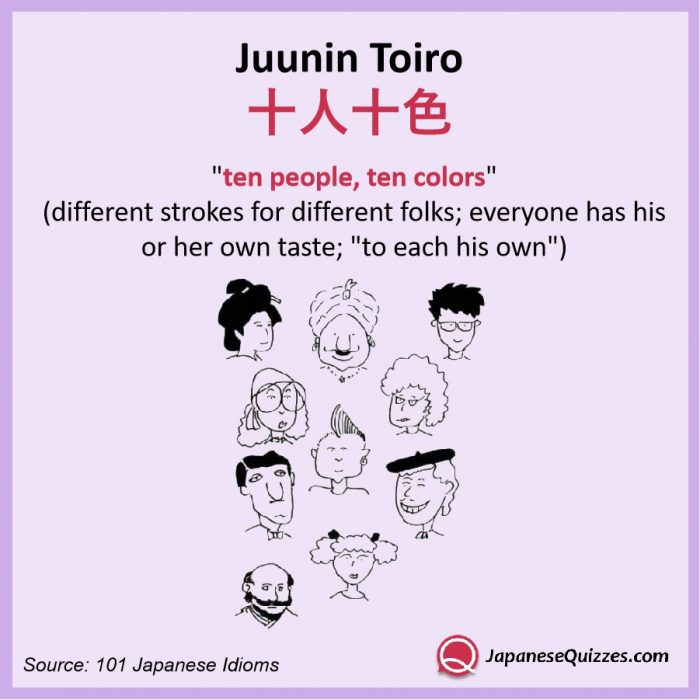
十人十色
“ten people, ten colors”
(different strokes for different folks; everyone has his or her own taste; “to each his own”)

Even though there is a large measure of truth to the widespread belief that Japanese conform to the group, this often-heard phrase attests to their awareness of the differences in individual tastes.
Sample text:
(Style: spoken/casual/A=female, B=male)
A: Kondo no paatii no ryoori wa nani o tanonda no?
B: Nanika ii mono to itte mo juunin toiro dakara, nakanaka kimaranakute ne. De, kekkyoku iroiro torimazete tanomu koto ni shita n da yo.
A: 今度のパーティーの料理は何をたのんだの?
B: 何がいいものと言っても十人十色だから、なかなか決まらなくてね。で、結局いろいろとりまぜてたのむことにしたんだよ。
A: What kind of food did you order for the party?
B: Since everybody has his or her own taste, we had a hard time deciding, but we finally came up with a menu that offers a lot of variety.
Japanese Idioms
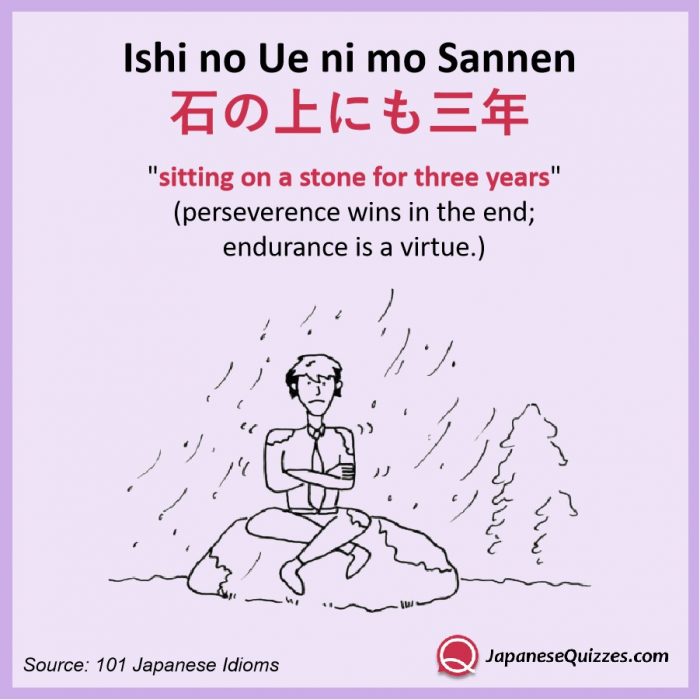
石の上にも三年
“sitting on a stone for three years”
(perseverence wins in the end; endurance is a virtue)
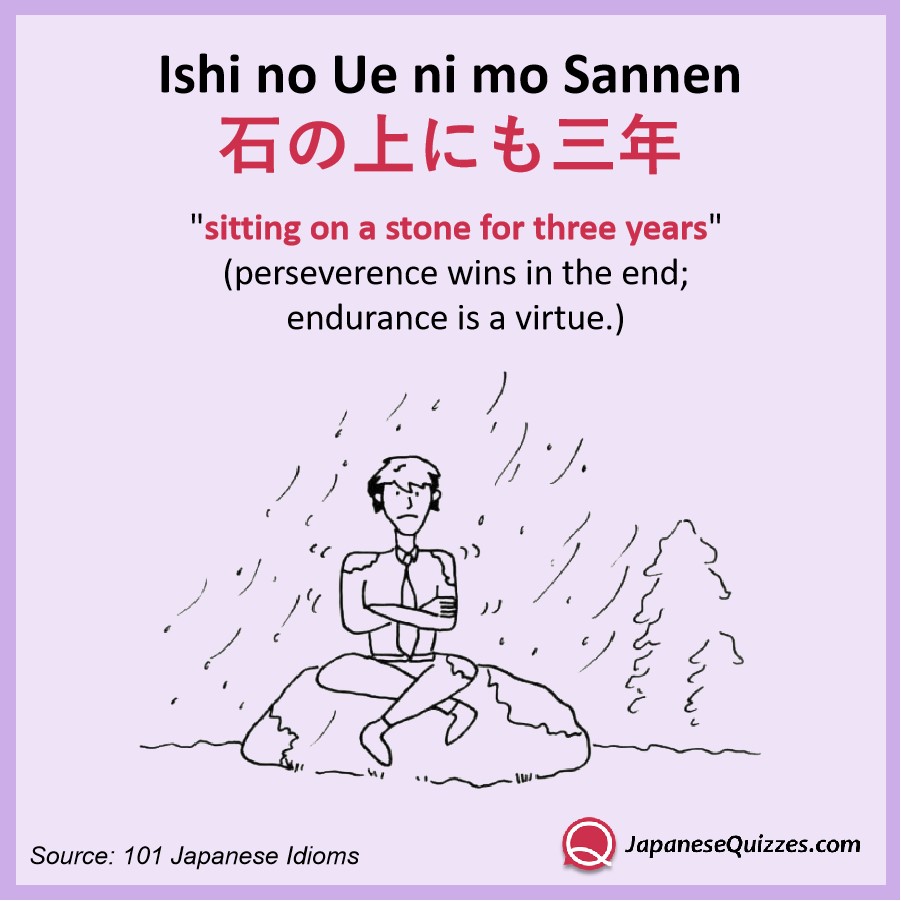
Japanese consider it a virtue to out-sit the competition. The common practice of making an investment, even at a loss, with the belief that a return will come in the long run comes from this simple, down-to-earth philosophy. Sitting on a rock for three years requires outrageous tenacity, but the longer you sit, the more secure you are in your position. And more to the point, you become the master of the situation because you have stuck with it. In fact, the cold “stone” may even seem warm and comfortable after three long years.
Sample text:
(Style: spoken/casual/A=female, B=male)
A: Konna chiisana mise ja nakanaka okyakusan kisooni naishi, yappari dame kashira.
B: Sonna koto nai yo. Moo chotto jikan ga hitsuyoona n da yo. “Ishi no ue ni mo sannen” tte yuu daroo.
A: こんな小さな店じゃなかなかお客さん来そうにないし、やっぱりだめかしら。
B: そんなことないよ。もうちょっと時間が必要なんだよ。『石の上にも三年』って言うだろう。
A: Customers just aren’t coming to this small a shop. It may not work after all.
B: Nonsense. Give it time. You know what they say: “Perseverence wins in the end.”
Japanese Idioms
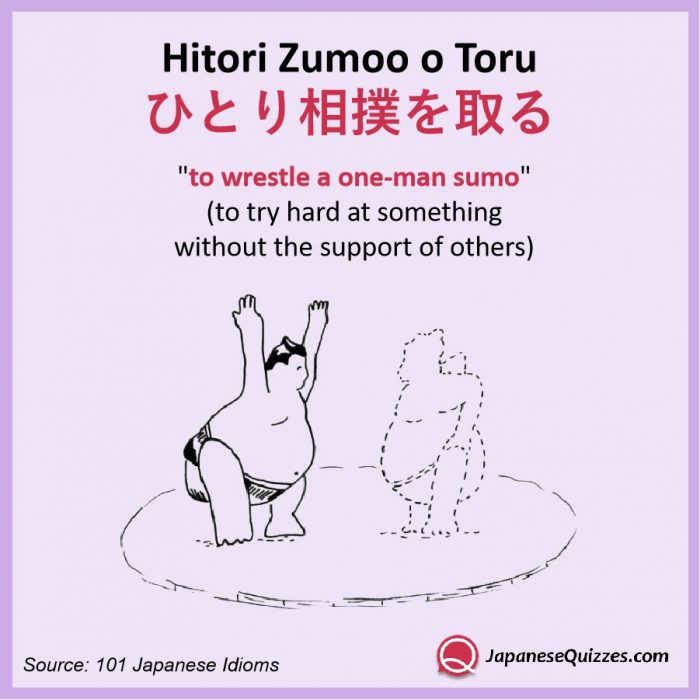
ひとり相撲を取る
“to wrestle a one-man sumo”
(to try hard at something without the support of others)
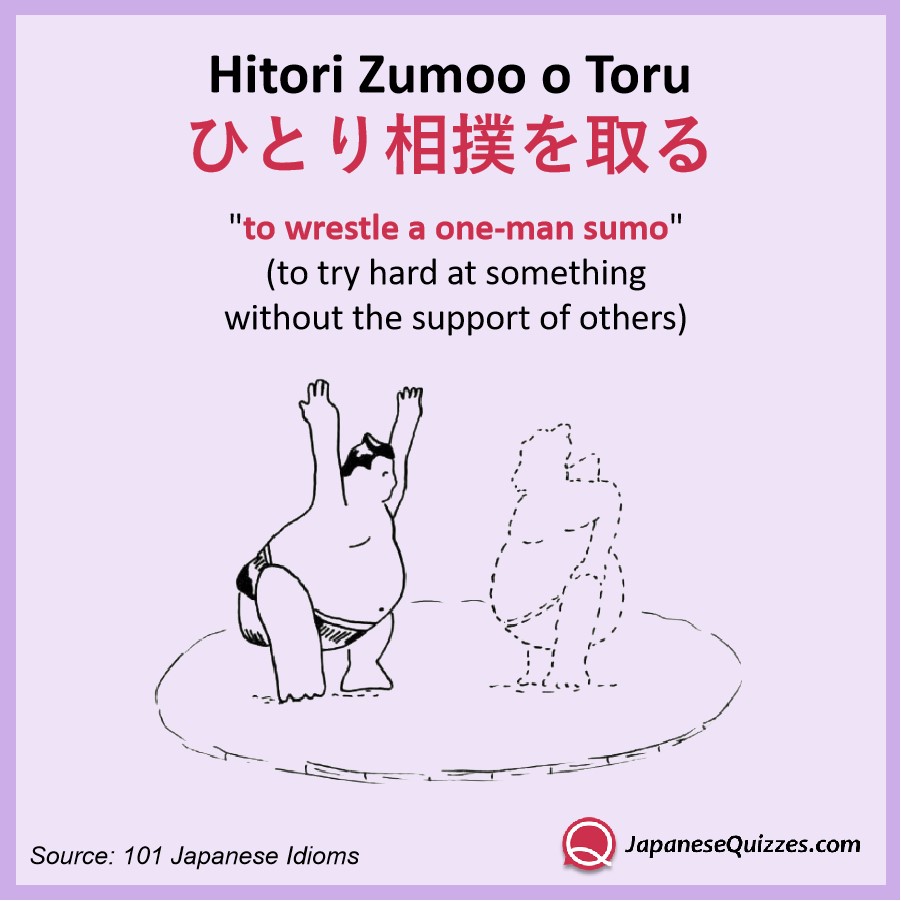
Obviously it takes two wrestlers to participate in a sumo match. However enthusiastically one way wrestle with oneself, the action itself will be incomplete. Therein lies the off-on-one’s-own (on a tangent) meaning of hitori zumoo.
Sample text:
(Style: spoken/casual/male)
A: Rei no an, iinkai de teian shita n daroo?
B: Iya, sore ga ne, teian shita koto wa shita kedo hitori zumoo o totta kanji de dare mo shiji shite kurenakatta n da.
A: 例の案、委員会で提案したんだろう?
B: いや、それがね、提案したことはしたけどひとり相撲を取った感じで誰も支持してくれなかったんだ。
A: You proposed that plan at the committee meeting, didn’t you?
B: Yeah, I did. I proposed it, but it was like wrestling a one-man sumo. No one supported it.
Japanese Idioms

ひと旗あげる
“to hoist one’s own flag”
(to succeed in business, particularly one’s own enterprise)

In feudal times, conquering warriors would raise the flag of their lord on the battle site. Raising the flag in Japan today still symbolizes victory, particularly in reference to independent entrepreneurs who succeed in business after starting from scratch.
Sample text:
(Style: spoken/casual/A=female, B=male)
A: Kawakami-san no musukosan, kondo jigyoo o hajimeru n desu tte.
B: Hoo, sorya taihen daroo na. Kono keiki ja, hitohata ageru no mo muzukashiku naru ippoo daroo kara naa.
A: 川上さんの息子さん、今度事業をはじめるんですって。
B: ほう、そりゃ大変だろうな。この景気じゃ、ひと旗あげるのもむずかしくなる一方だろうからなあ。
A: Did you know that Mr. Kawakami’s son is lauching a new business?
B: Is that right? Its’s going to be an uphill climb. To succeed in your own enterprise in today’s business climate is getting harder and harder.
Japanese Idioms
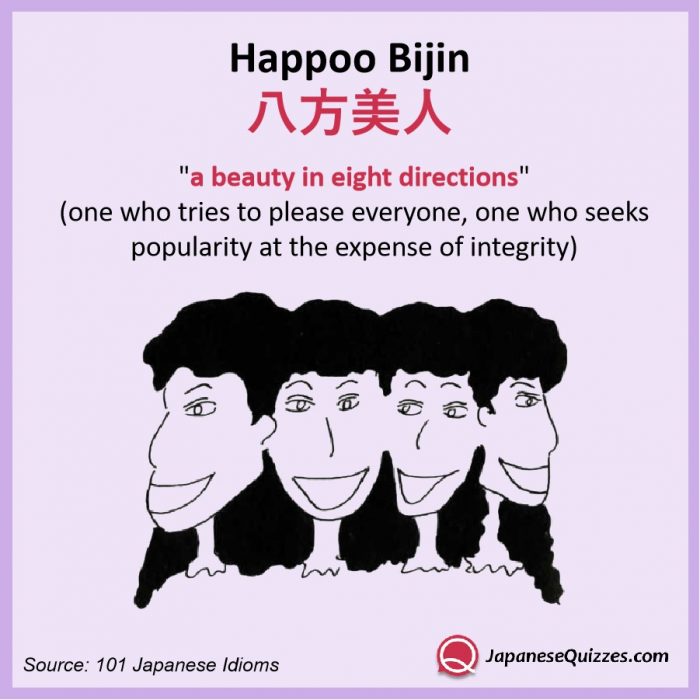
八方美人
“a beauty in eight directions”
(one who tries to please everyone, one who seeks popularity at the expense of integrity)
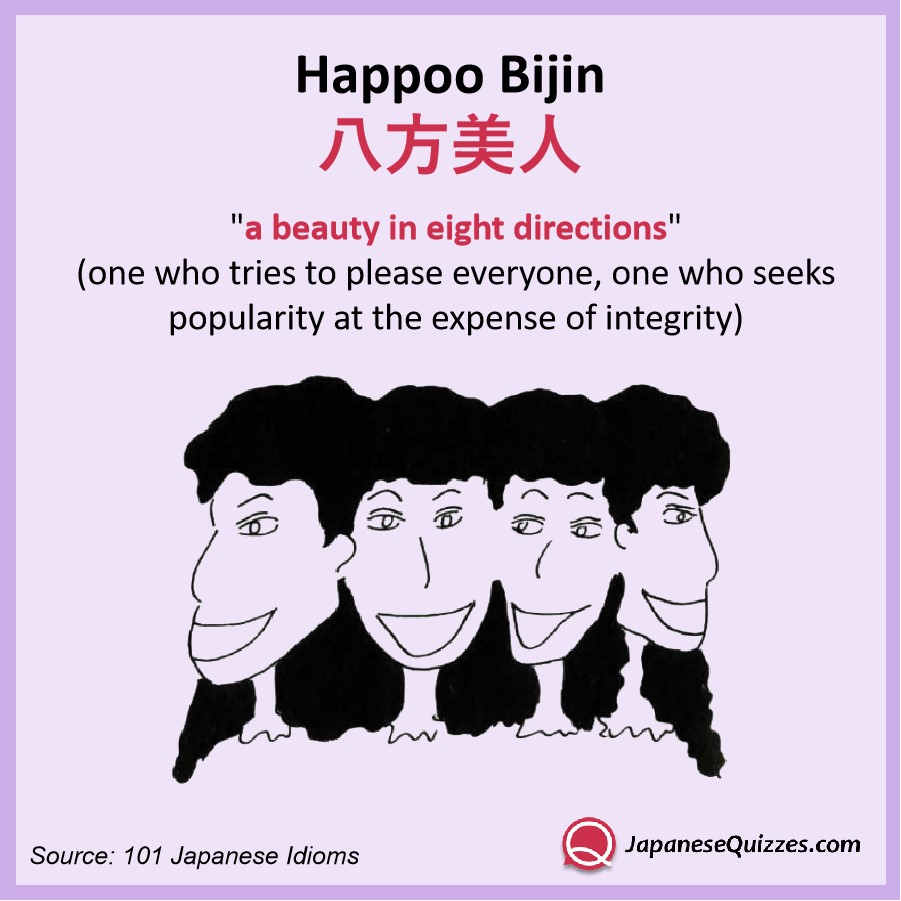
Happo means eight directions. Bijin literally means a beautiful woman. A person who wants to look attractive in eight different directions is a person trying too hard to please everyone, thus revealing a lack of integrity.
Sample text:
(Style: spoken/casual (blunt)/male)
A: Akio no yatsu, kyooryoku shite kureru tte. Saisho wa iya da tte itta n da kedo sa.
B: Iya, aitsu wa happoo bijin da kara, ate ni naranai yo.
A: 昭男のやつ、協力してくれるって。最初はいやだって言ったんだけどさ。
B: いや、あいつは八方美人だから、あてにならないよ。
A: Akio says he’ll help us. He said he didn’t want to at first, though.
B: Well, he’s the type who tries to please everyone, so you really can’t count on him.
Japanese Idioms
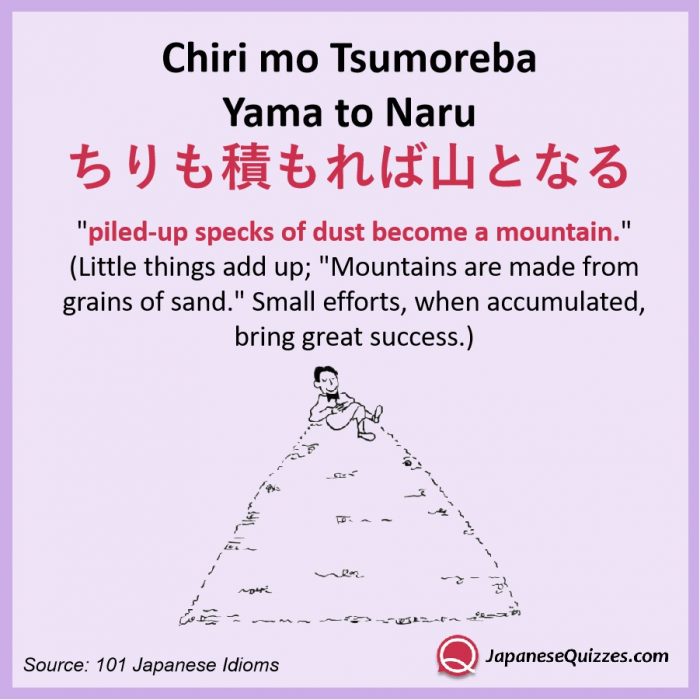
ちりも積もれば山となる
“piled-up specks of dust become a mountain”
(Little things add up; “Mountains are made from grains of sand.” Small efforts, when accumulated, bring great success.)
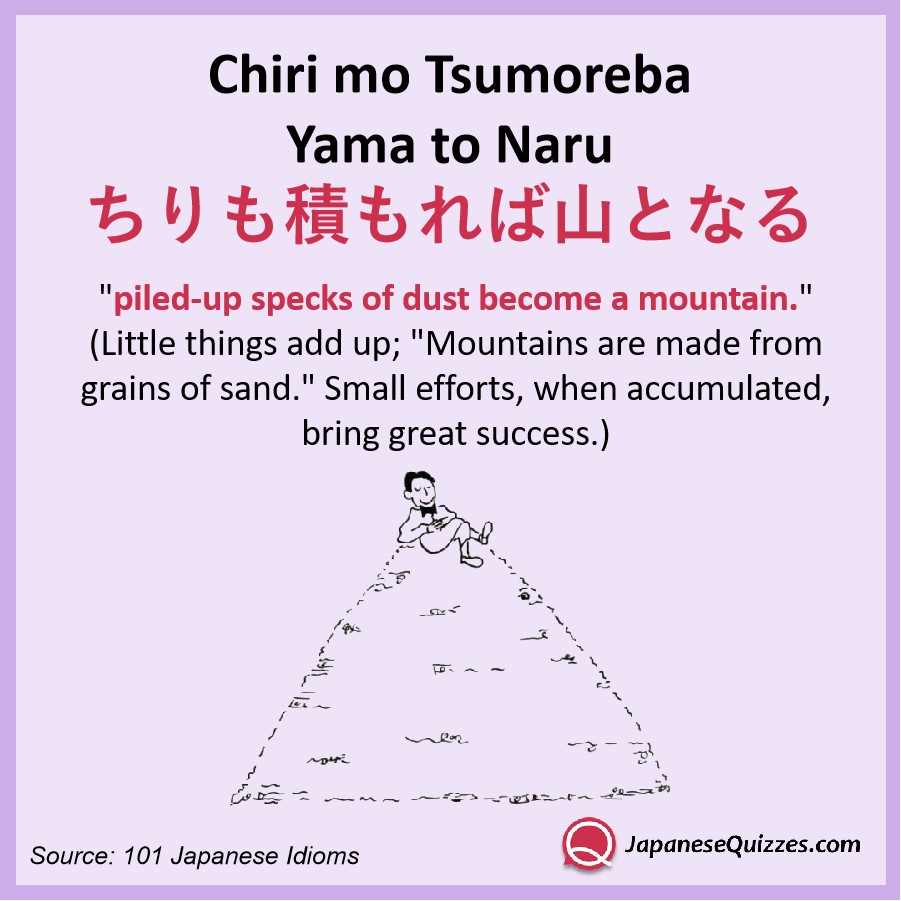
This expression teaches the moral that, little by little and bit by bit, one’s persistent efforts will lead to achievement. Even the smallest of efforts, however trivial they may seem at the time, will contribute toward one’s ultimate success.
Sample text:
(Style: spoken/casual/A=male, B=female)
A: Okane sonna sukoshi zutsu no chokin ja, nakanaka tamaranai ne.
B: Demo “chiri mo tsumoreba yama to naru” tte yuu desho.
A: お金そんな少しずつの貯金じゃ、なかなかたまらないね。
B: でも、「ちりも積もれば山となる」って言うでしょ。
A: What good is it going to do me to put aside so little savings each time?
B: But remenber the saying, “Mountains are made from grains of sand”.
Japanese Idioms