立つ鳥跡を濁さず
“the cry of the crane”
(voice of authority, unchallengeable order)

According to Japanese folklore, cranes live for a thousand years. It seems that old, white-haired village leaders live nearly as long. As the respected authority, the “wise old bird” is able to mobilize the village. Thus, a powerful voice from the acknowledged leader (regardless of age) is tsuru no hitokoe.
Sample text:
(Style: spoken/casual/male)
A: Kyoo no kaigi wa zuibun shussekiritsu ga ii nee.
B: Sasaki-san shitteru daro? Kanojo no tsuru no hitokoe de isogashii noni minna atsumattan da yo.
A: 今日の会議は随分出席率がいいねえ。
B: 佐々木さん知ってるだろ?彼女の鶴の一声で忙しいのにみんな集まったんだよ。
A: Attendance at today’s meeting was terrific, wasn’t it?
B: You know Ms. Sasaki, don’t you? It’s her voice of authority that got everyone to attend.
Japanese Idioms
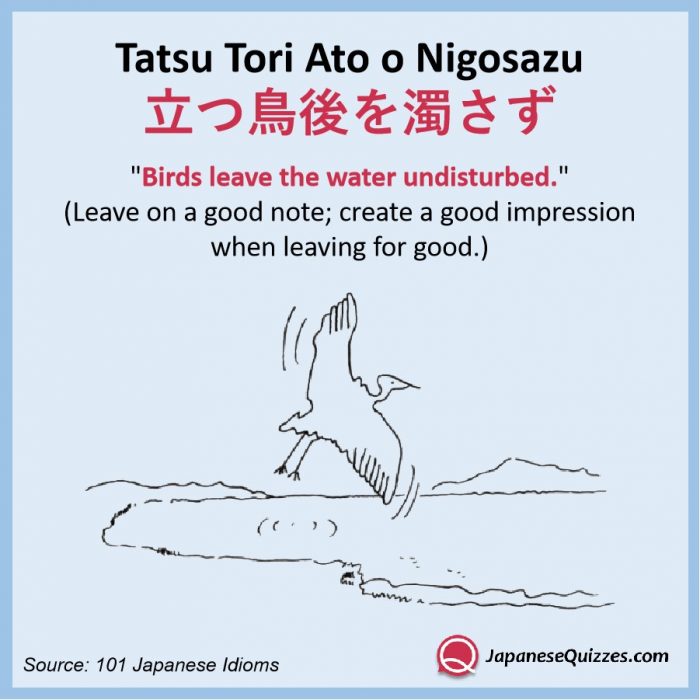
立つ鳥跡を濁さず
“Birds leave the water undisturbed.”
(Leave on a good note; create a good impression when leaving for good.)

This is what we should remind people who are about to go into a nature preserve. Used most frequently in reference to one’s place of work. Just as birds leave the water undisturbed, we should leave our current place of work undisturbed; i.e., in the best condition for one’s replacement.
Sample text:
(Style: spoken/casual/A=male, B=female)
A: Iyoiyo kaisha o yamete Nyuu Yooku e iku n da te ne.
B: Ee. Sorede ima tottemo isogashii no yo. Iroiro seiri shite okanakereba naranai koto ga takusan atte. Soreni “tatsu tori ato o nigosazu” da kara.
A: いよいよ会社を辞めてニューヨークへ行くんだってね。
B: ええ。それで今とっても忙しいのよ。いろいろ整理しておかなければならないことがたくさんあって。それに「立つ鳥後を濁さず」だから。
A: I hear you’re quitting the company and going to New York soon.
B: That’s right. So I’m really busy now. There are so many things I need to organize and put away. Besides, as the saying goes, “Birds leave the water undisturbed.”
Japanese Idioms
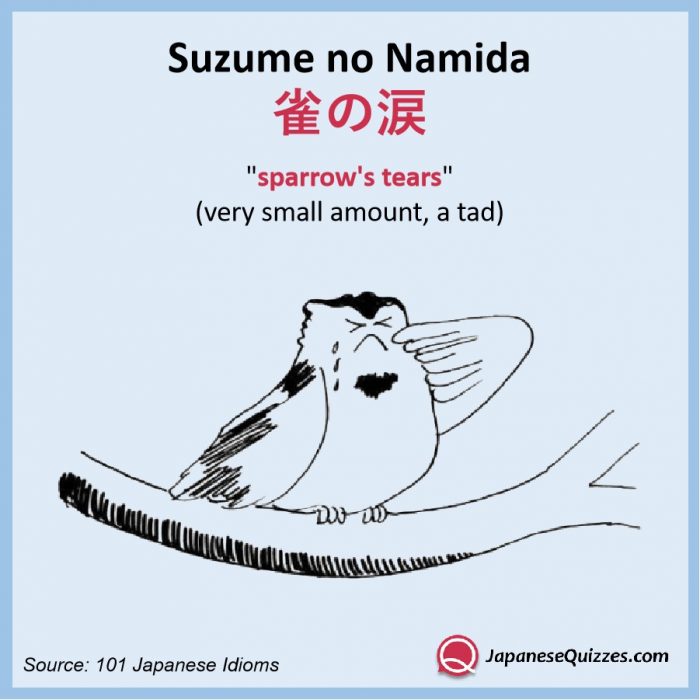
雀の涙
“sparrow’s tears”
(very small amount, a tad)

The implication of this expression is “not enough” -one wishes it were more. If sparrows could cry, their tears would be tiny. Sparrows are commonly found throughout Japan and often represent ordinary people in Japanese folktales.
Sample text:
(Style: spoken/casual/male)
A: Kyuuryoo agatta n da tte?
B: Iya, honno sukoshi.
A: Sonna koto nai daroo.
B: Agatta koto wa agatta kedo sa, honno suzume no namida de nee.
A: 給料上がったんだって?
B: いや、ほんの少し。
A: そんなことないだろう。
B: 上がったんことは上がったけどさ、ほんの雀の涙でねえ。
A: I hear you got a pay raise. Is it true?
B: Well…just a little.
A: You expect me to believe that?
B: OK, I got a pay raise, but it’s such a small amount.
Japanese Idioms

同じ穴のむじな
“badgers from the same hole”
(co-conspirators, brothers in crime)

Japanese fairy tales characterize badgers as sometimes villainous and at other times comical cheaters who play tricks on people. This is based on the fact that badgers and raccoons steal harvested produce from farmers. The phrase suggests a gang/group of bad guys.
Sample text:
(Style: spoken/casual/male)
A: Murata-san no fusei ga hakkaku shite, onaji ka no Sakai-san mo taihen rashii yo.
B: Iya, Sakai-san mo onaji ana no mujina janai ka. Murato-san hitori de anna fusei ga dekiru wake nai yo.
A: 村田さんの不正が発覚して、同じ課の酒井さんも大変らしいよ。
B: いや、酒井さんも同じ穴のむじなじゃないか。村田さんひとりであんな不正ができるわけないよ。
A: Murata’s illegal doings have been discovered and Sakai, who is in the same section, seems to be very concerned.
B: But isn’t Sakai a co-conspirator? Murata couldn’t havedone all that single-handedly, you know.
Japanese Idioms

猫の手も借りたい
“willing to accept even the helping hand of a cat”
(swamped, shorthanded, “up to one’s eyeballs” in work)
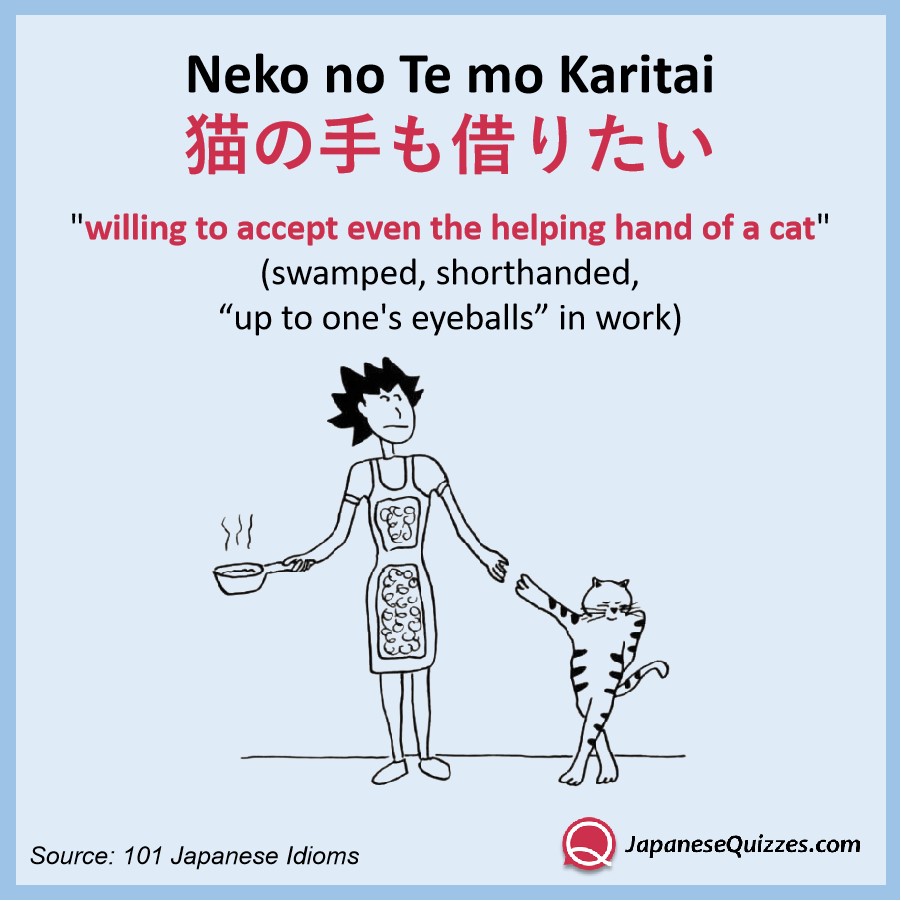
This phrase indicates an intense degree of need. Cats are useless when it comes to assisting people. If one will go so far as to accept even the help of a cat, one really is in desperate need.
Sample text:
(Style: spoken/casual/female)
A: Ano, chotto gomennasai. Koko no jimusho, kyoo, hikkoshi de, neko no te mo karitai yoona isogashisa na no. Atode denwa suru wa.
A: あの、ちょっとごめんなさい。個々の事務所、今日、引っ越しで、猫の手も借りたいような忙しさなの。あとで電話するわ。
A: Uh, sorry. You know at our office we’re in the middle of a move today and we’re swamped. I’ll call you later.
Japanese Idioms

猫のひたい
“cat’s forehead”
(extremely small in size)

Cats are not known to have high foreheads. The expression exaggerates the inadequacy of a space. Neko no hitai is often heard when prospective home buyers in Japan first see the size of their yard.
Sample text:
(Style: spoken/casual/A= female, B=male)
A: Atarashii niwatsuki no uchi ni utsutta n desu tte?
B: Iya ne, niwa to ieru ka doo ko, honno neko no hitai no yoona uraniwa ga tsuiteru teido na n da.
A: 新しい庭つきの家に移ったんですって?
B: いやね、と言えるかどうか、ほんの猫のひたいのような裏庭がついてる程度なんだ。
A: I hear you moved into a single family home with a yard.
B: Yeah, but I’m not sure you can call it a yard; it’s an extremely small backyard area.
Japanese Idioms